Skip to content
Tired of water spots ruining your perfect wash? The right drying tool makes all the difference between a spotless finish and frustrating streaks.
Premium waffle-weave microfiber drying towels outperform all alternatives - absorbing 8-10 times their weight in water without leaving lint or scratches on your paint.
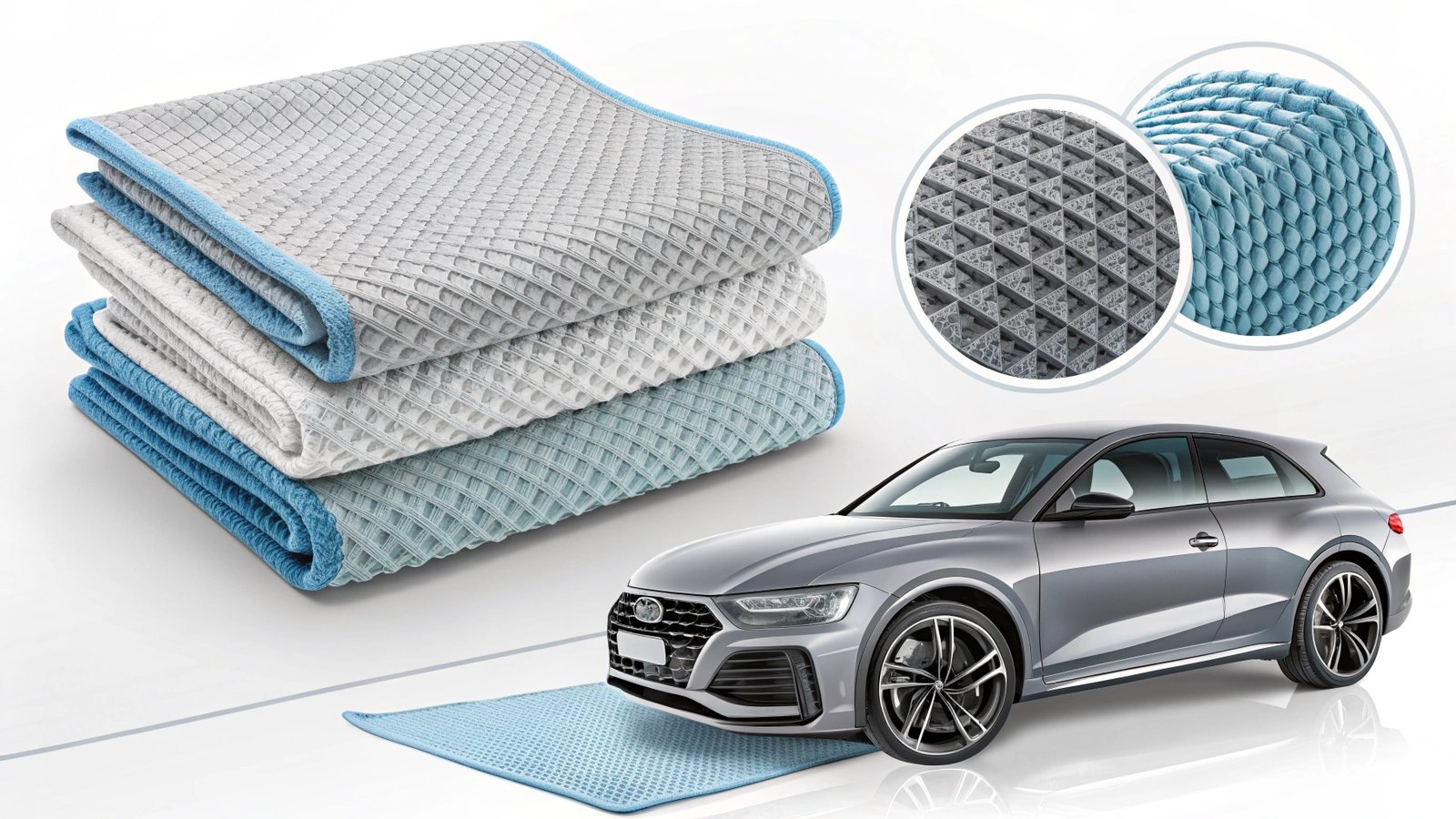
Professional detailers use specific drying techniques combined with engineered microfiber towels to achieve flawless, spot-free results.
What cloth should I use to dry my car?
Not all microfiber towels work equally well for drying - specialized designs exist for this critical step.
Optimal drying towel specifications:
- 600-800 GSM weight
- Dual-layer honeycomb weave
- Silk-edged construction
- 70/30 microfiber blend
- Minimum 16" x 24" size
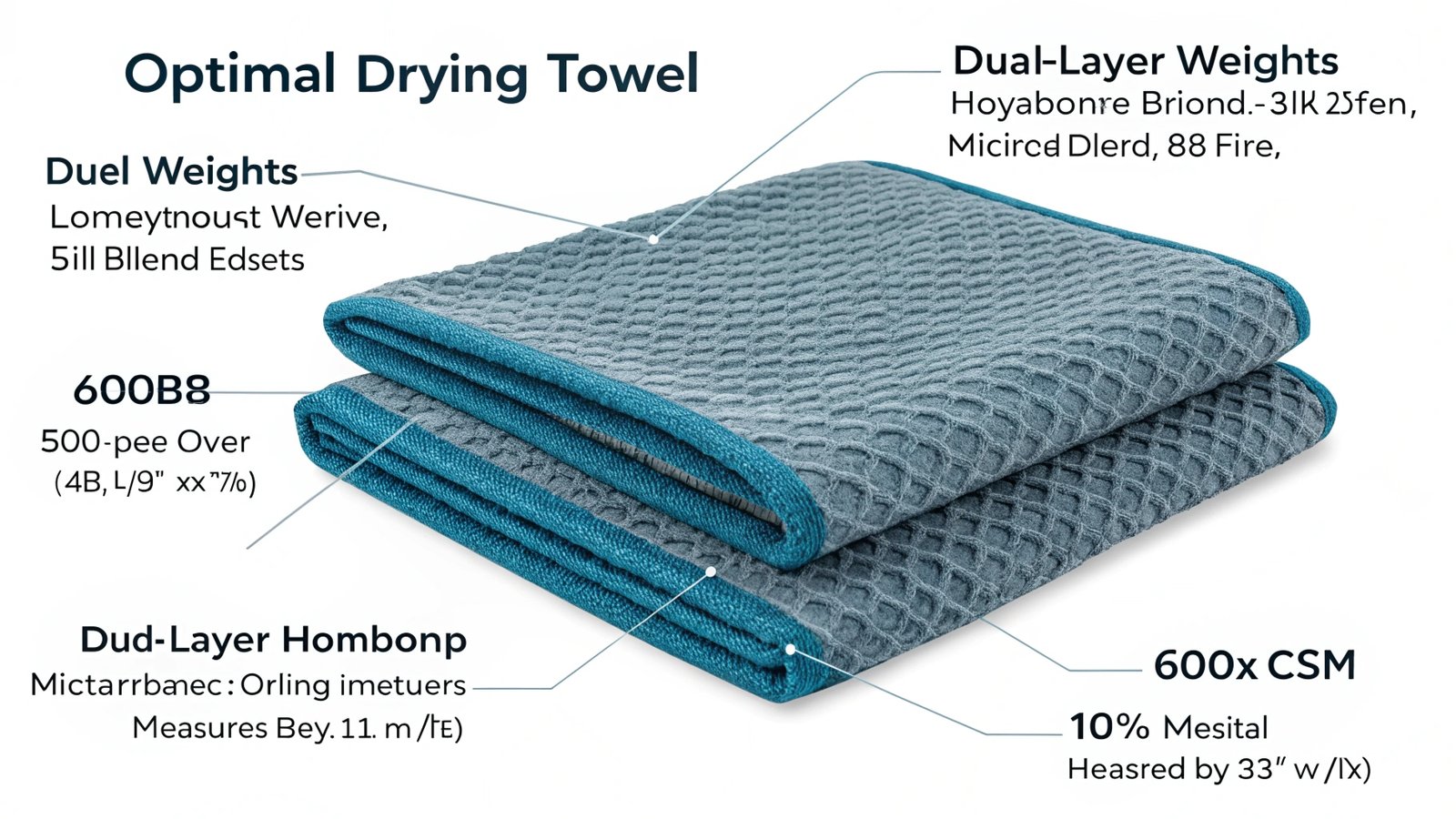
Drying Towel Comparison:
| Feature | Entry-Level | Professional | Premium |
|---|---|---|---|
| Weight | 300 GSM | 500 GSM | 700 GSM |
| Absorbency | 5x | 8x | 12x |
| Size | 12"x12" | 16"x24" | 20"x30" |
| Edging | Overlock | Silk-Bound | Laser-Cut |
| Lifespan | 20 washes | 50 washes | 100+ washes |
Warning: Always wash new towels before first use.
What is the best thing to dry your car with?
The drying process involves multiple tools working together for perfect results.
Complete drying system components:
- Absorbent waffle-weave towel
- Blow-drying air blower
- Detailing spray lubricant
- Secondary plush towel
- Spot-check microfiber
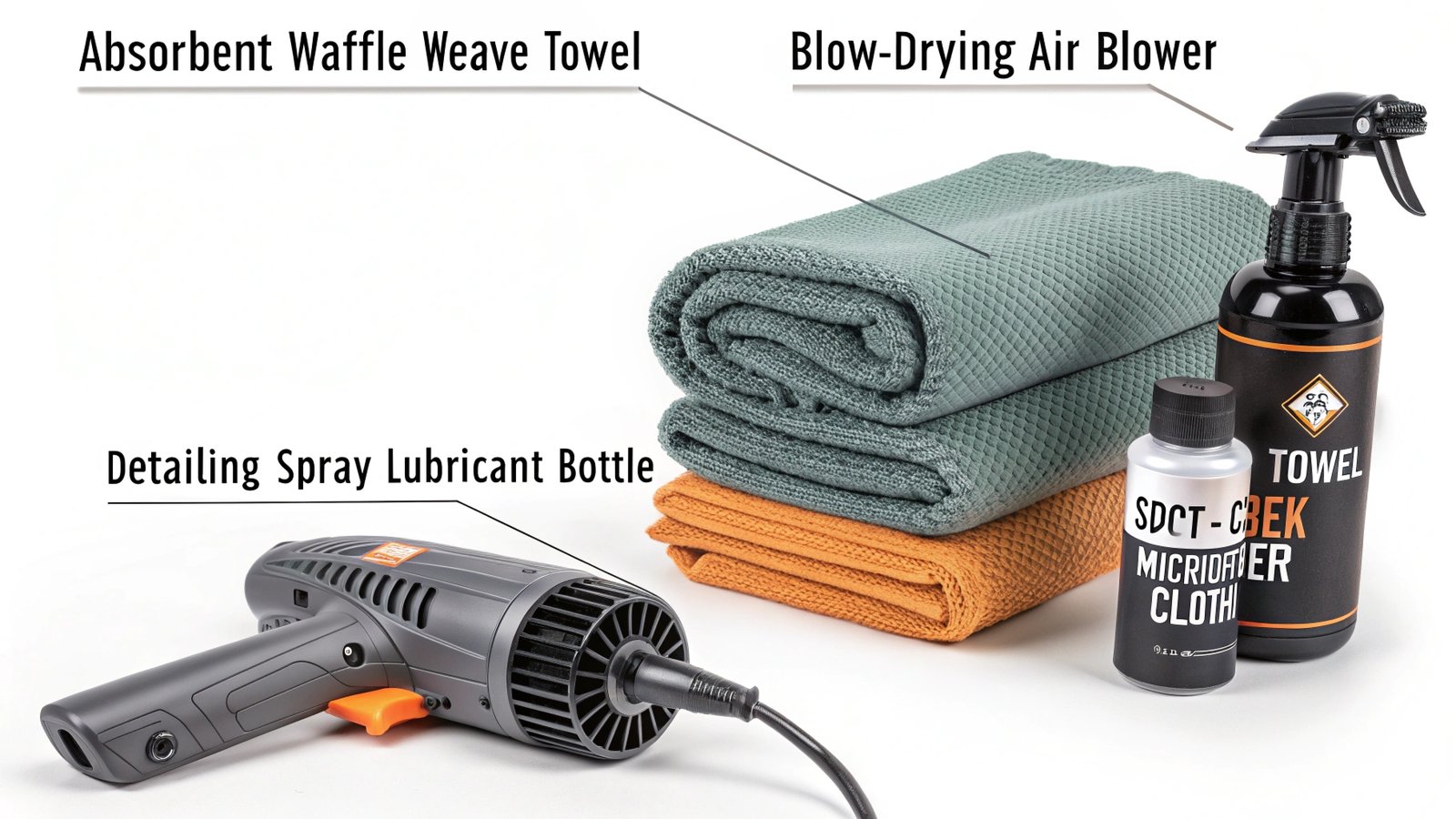
Drying Tool Hierarchy:
| Tool | Primary Use | Secondary Use | Alternatives |
|---|---|---|---|
| Waffle Weave | Water Removal | Final Buff | None |
| Air Blower | Hard Surfaces | Crevices | Compressor |
| Detail Spray | Lubrication | Shine Boost | Quick Wax |
| Plush MF | Inspection | Touch-Ups | Suede MF |
| Towel Bundle | Full Vehicle | Large Panels | Multiple Singles |
Pro Tip: Use sheeting technique before drying.
Can I use a cotton towel to dry my car?
Traditional bath towels create multiple problems on automotive finishes.
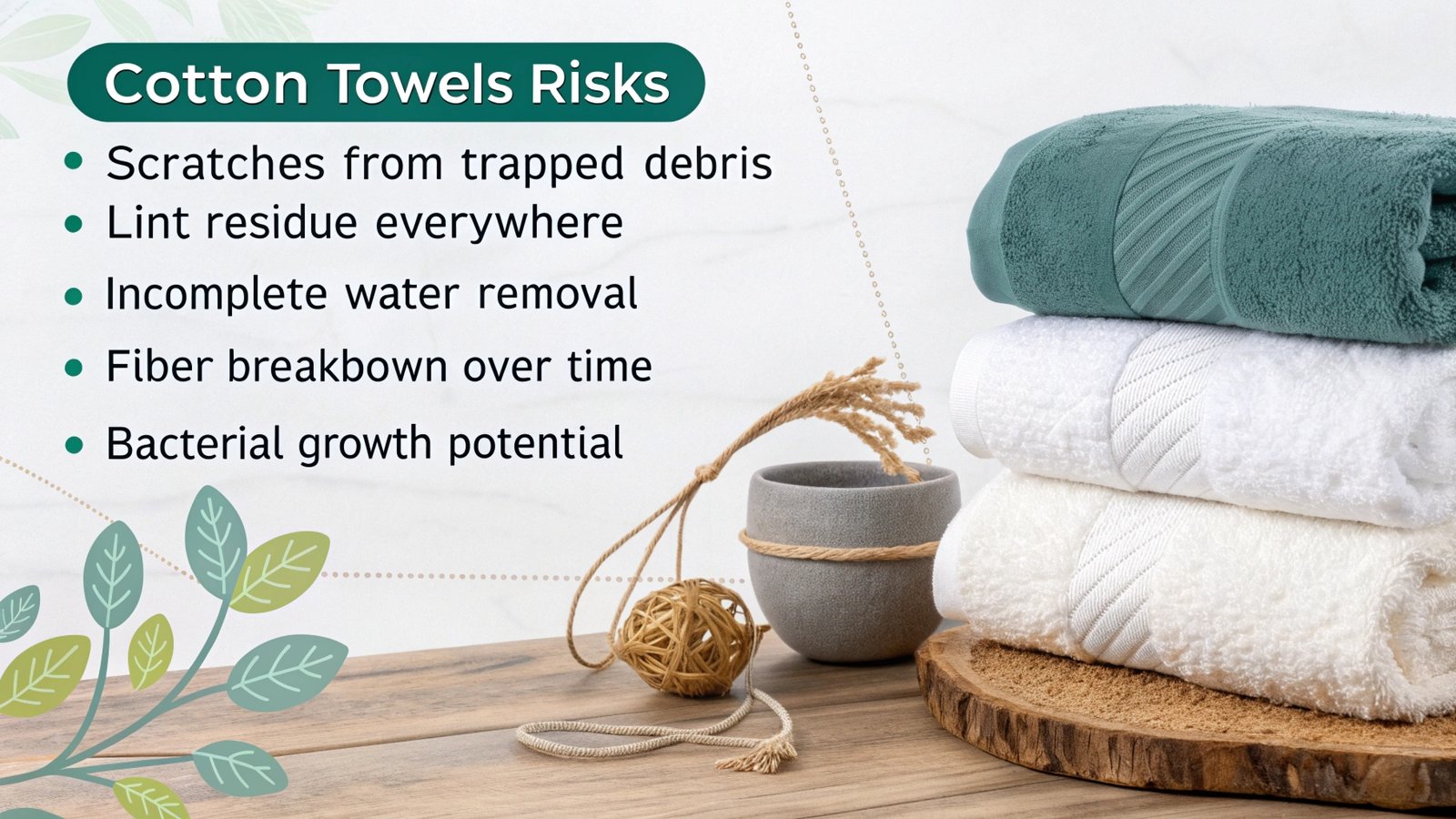
Cotton towel risks:
- Scratches from trapped debris
- Lint residue everywhere
- Incomplete water removal
- Fiber breakdown over time
- Bacterial growth potential
Damage Potential:
| Factor | Cotton Towel | Microfiber | Result |
|---|---|---|---|
| Scratching | High | None | Swirl Marks |
| Linting | Severe | Minimal | Surface Contamination |
| Absorption | Poor | Excellent | Water Spots |
| Durability | 5-10 Uses | 50-100 Washes | Long-Term Cost |
| Hygiene | Bacteria Breeding | Antimicrobial | Surface Safety |
Critical: Never reuse household towels.
What type of cloth should I use to wash my car?
Washing requires different towel characteristics than drying.
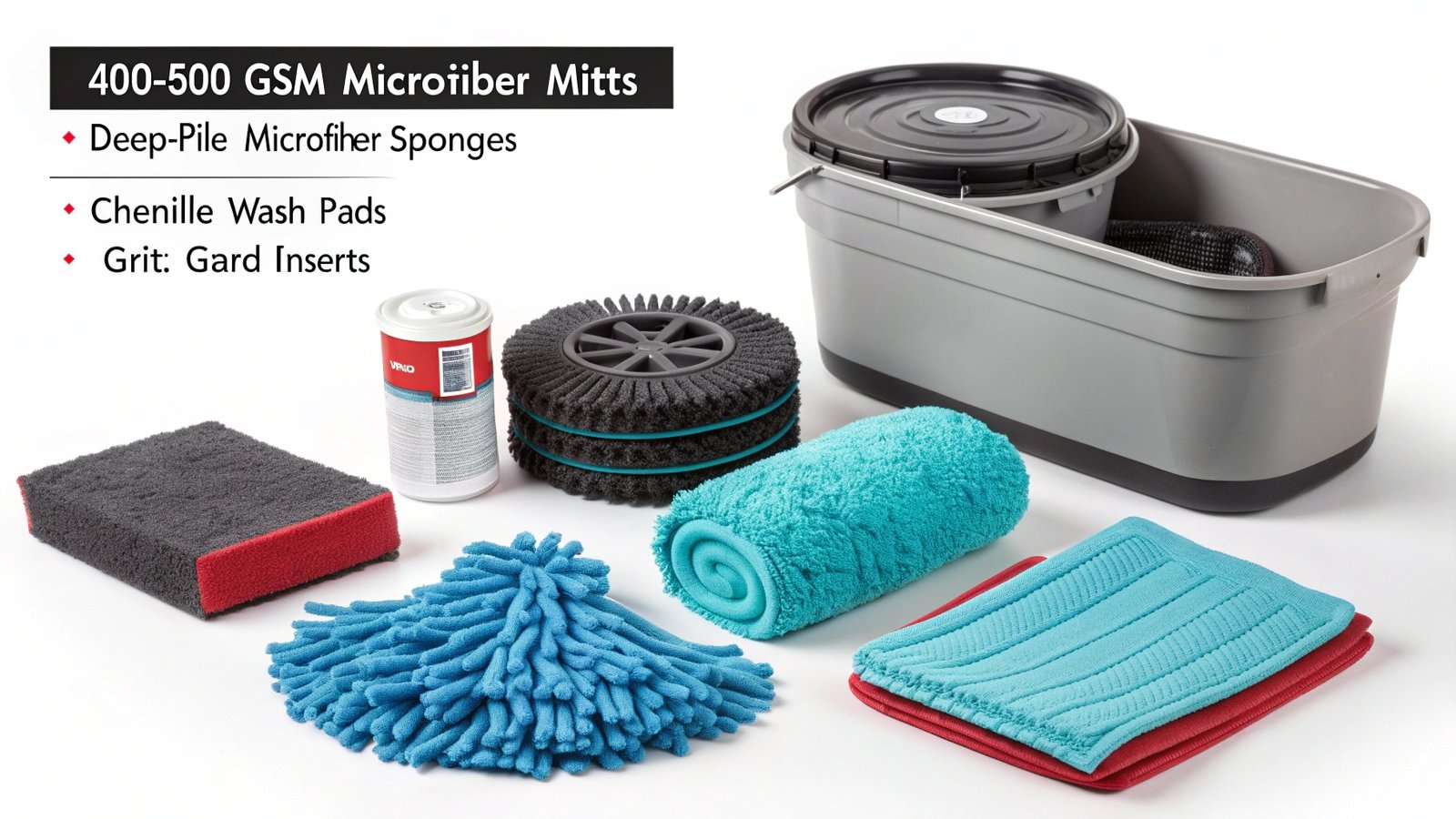
Optimal washing tools:
- 400-500 GSM microfiber mitts
- Deep-pile microfiber sponges
- Chenille wash pads
- Multiple-bucket system
- Grit guard inserts
Washing Tool Guide:
| Tool | Best For | Benefits | Limitations |
|---|---|---|---|
| Chenille Mitt | Panels | Safe | Bulk Storage |
| Microfiber Pad | Wheels | Durable | Less Contour |
| Wool Mitt | Paint | Soft | High Maintenance |
| Noodle Sponge | Details | Flexible | Wear Quickly |
| Multiple Mitts | Colors | Cross-Contamination | Storage Space |
Essential: Use separate wash media per vehicle zone.
Conclusion
Specialized microfiber drying systems provide safe, efficient water removal that protects your finish while eliminating water spots and swirl marks.