Skip to content
Ever wondered how that soft, super-absorbent towel transforms from raw materials to your garage shelf? Having operated microfiber towel factories for 12 years, I'll take you behind the scenes of our automated production lines.
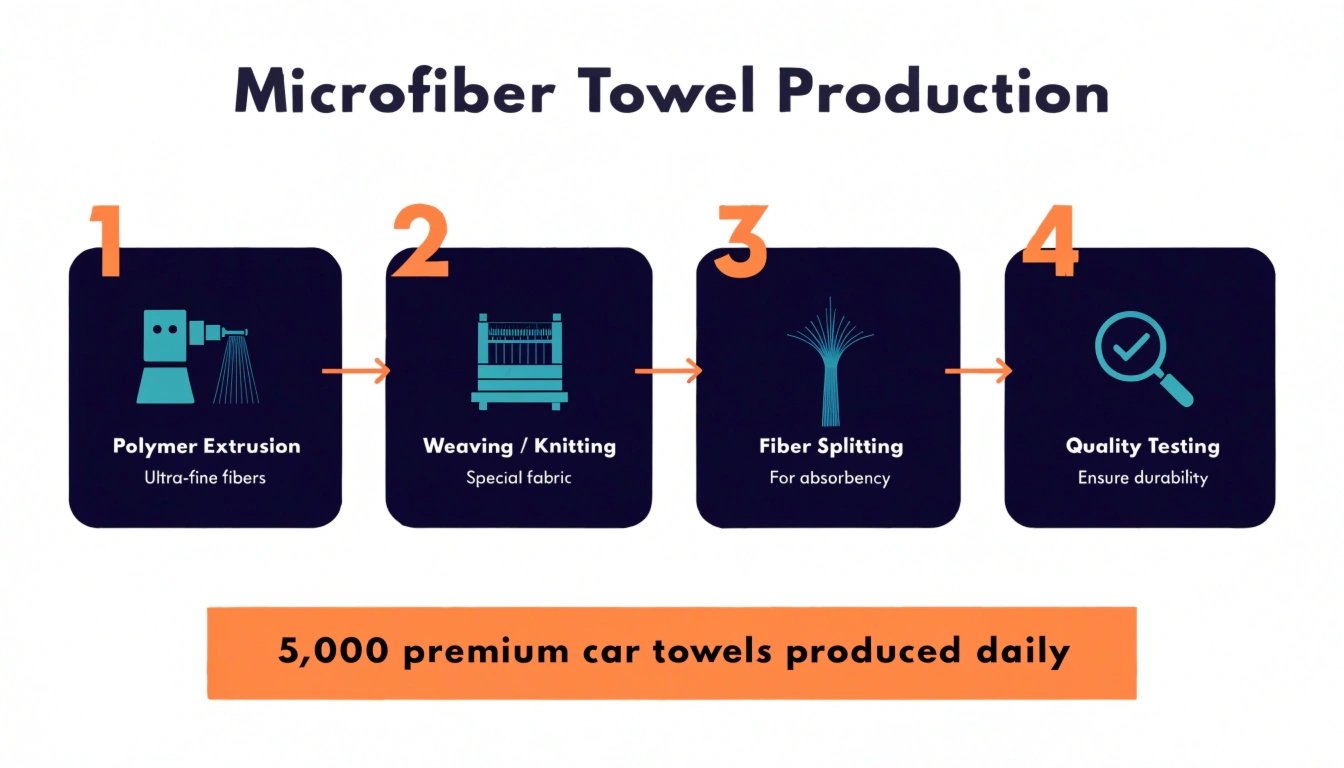
Microfiber towel production involves: 1) Polymer extrusion into ultra-fine fibers; 2) Special weaving/knitting; 3) Splitting fibers for absorbency; 4) Quality testing. Our factory produces 5,000 premium car towels daily using this controlled process.
Let's examine each stage of converting plastic pellets into high-performance car care products.
What is the Manufacturing Process for Microfiber Cloth?
Our 17-step standardized production ensures consistent quality across every batch - here's how we transform raw materials into premium detailing towels.
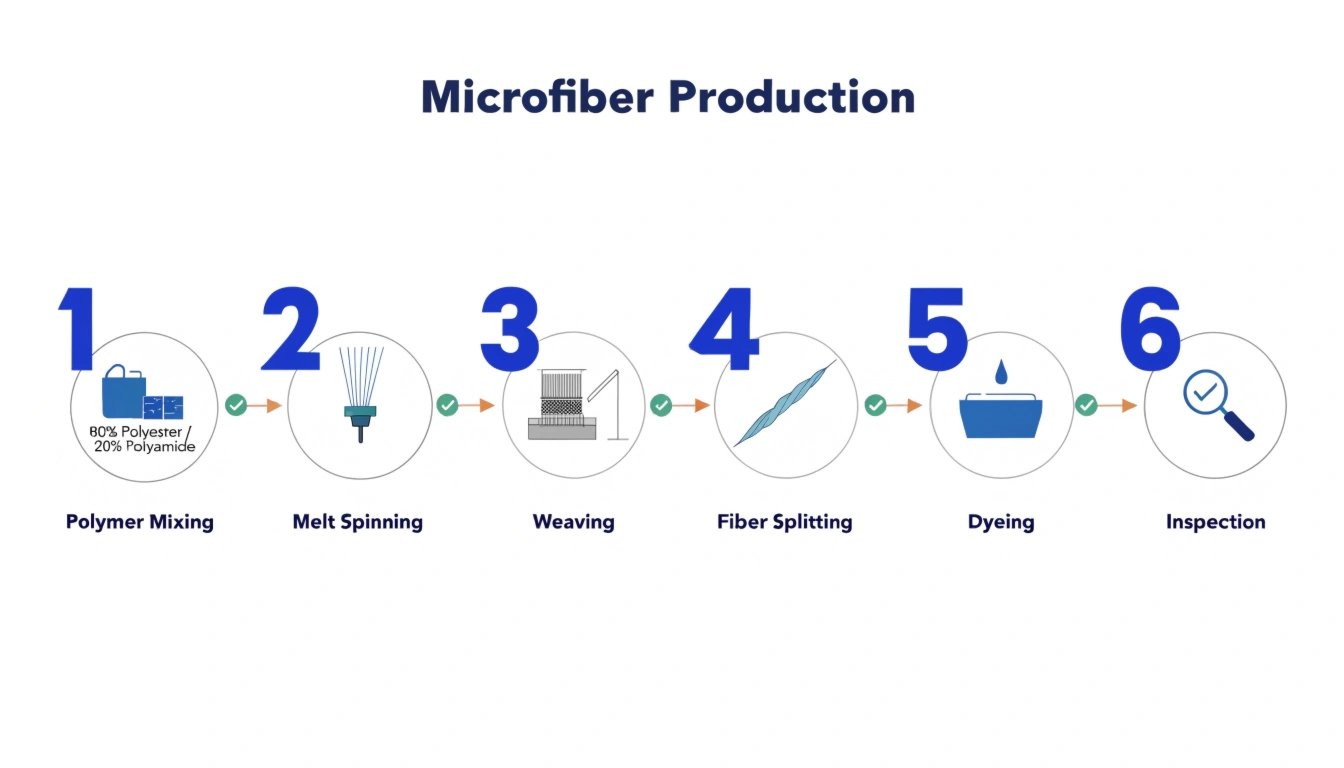
Key stages: 1) Polymer mixing (80% polyester/20% polyamide); 2) Melt-spinning ultra-fine fibers; 3) Weaving on computerized looms; 4) Fiber splitting; 5) Dyeing; 6) Quality inspection. Each step undergoes strict quality checks.
Detailed Production Flowchart
| Stage | Process | Equipment Used | Quality Checks |
|---|---|---|---|
| 1 | Polymer compounding | Mixing vats | Material purity tests |
| 2 | Fiber extrusion | Spinning machines | Fiber diameter checks |
| 3 | Yarn formation | Drawing frames | Tensile strength tests |
| 4 | Weaving/Knitting | Computerized looms | Thread count verification |
| 5 | Fiber splitting | Hydroentanglement | Absorbency tests |
| 6 | Dyeing | Industrial dye vats | Color fastness checks |
| 7 | Cutting/Sewing | Laser cutters | Dimension verification |
| 8 | Final inspection | Light tables | 17-point checklist |
How Do Microfiber Towels Look?
From spools of thread to finished products, microfiber undergoes dramatic visual transformations throughout production - each serving specific functions.
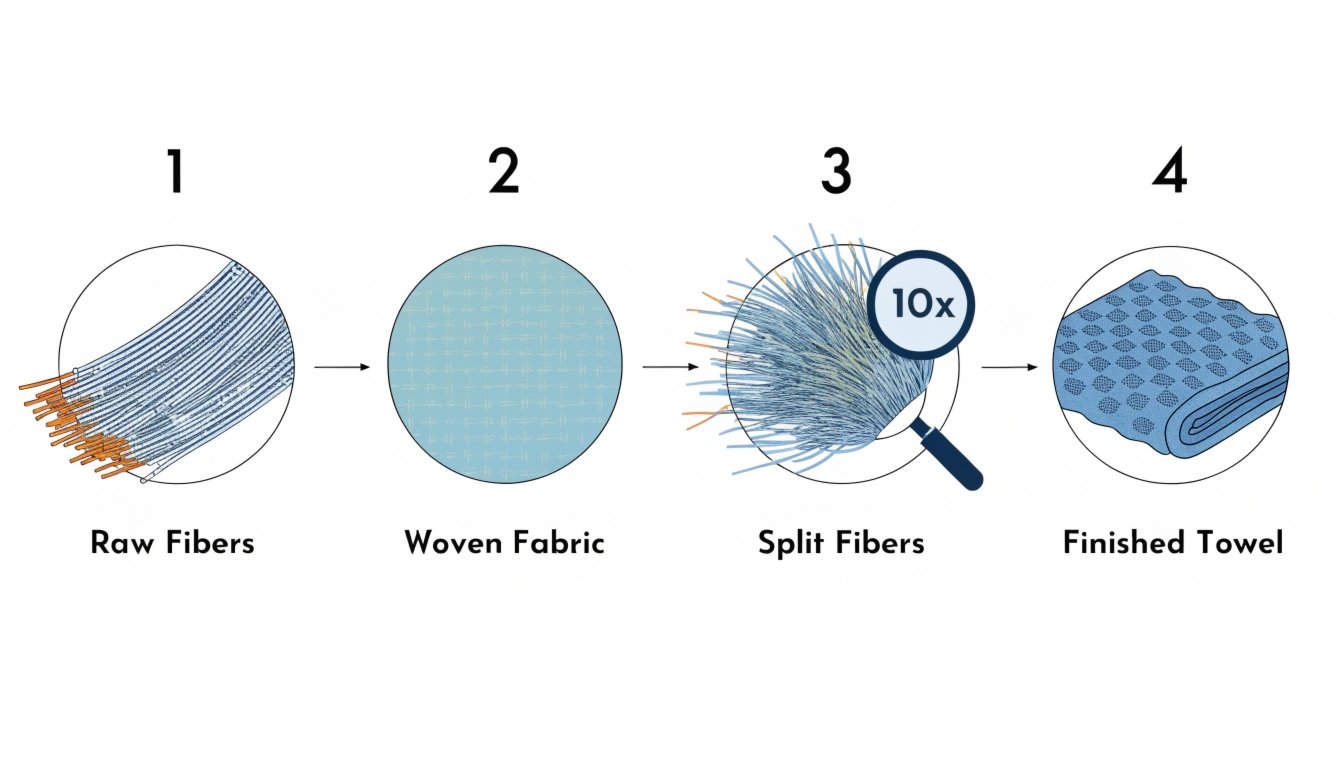
Appearance evolution: 1) Raw fibers (hair-thin filaments); 2) Woven fabric (smooth surface); 3) Split fibers (fuzzy texture); 4) Finished towel (plush or waffle patterns). Our quality team inspects texture under 10x magnification daily.
Visual Characteristics by Production Stage
| Production Stage | Visual Features | Magnified View |
|---|---|---|
| Polymer Pellets | Small plastic beads | Smooth spherical shapes |
| Extruded Fibers | Shiny continuous filaments | Uniform cylindrical strands |
| Woven Fabric | Flat, tight surface | Grid-like structure |
| Split Fibers | Fuzzy, textured surface | Micro-hooks visible |
| Finished Towel | Patterned surface | 3D fiber structure |
Key Visual Tests:
-
Fiber Uniformity
- Consistent diameter
- No lumps/knots
- Even coloration
-
Surface Texture
- Proper fiber splitting
- Even pile height
- No manufacturing defects
What Are the Steps Involved in the Manufacturing Process of Towels?
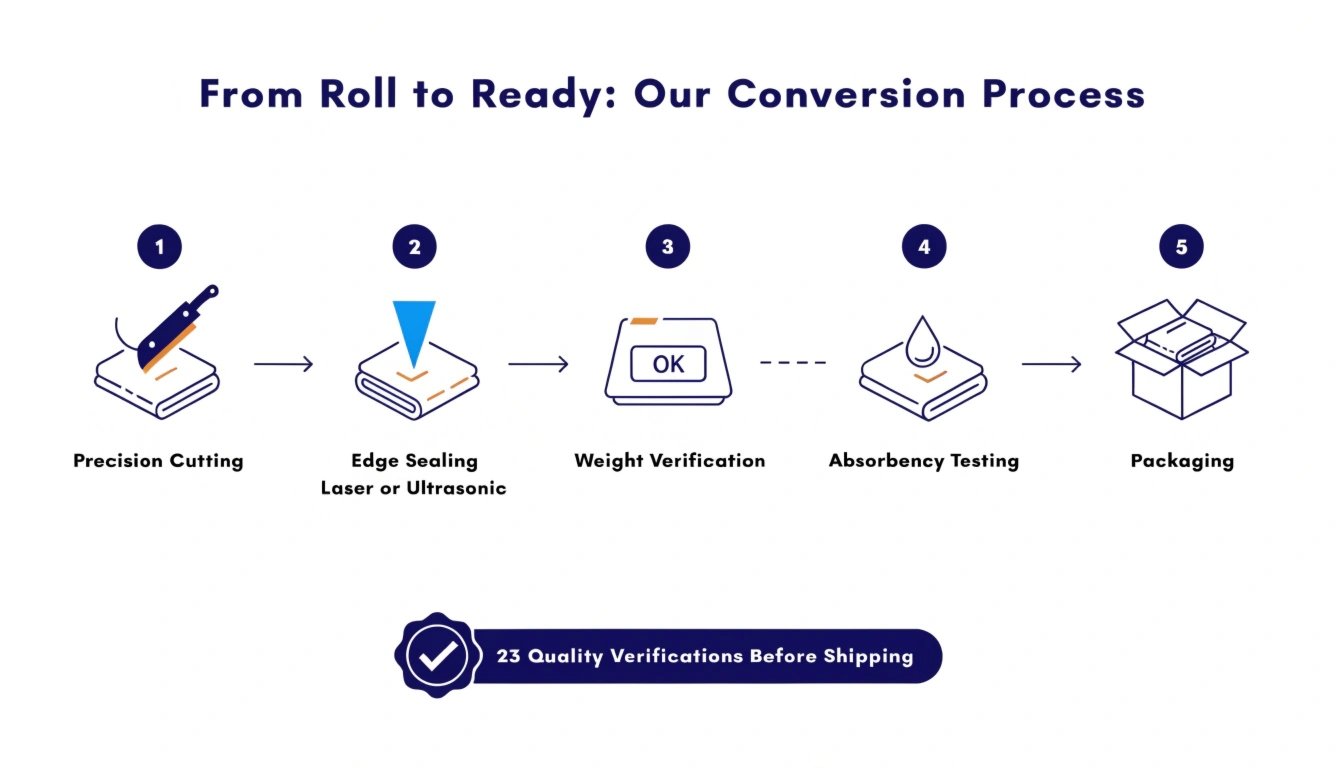
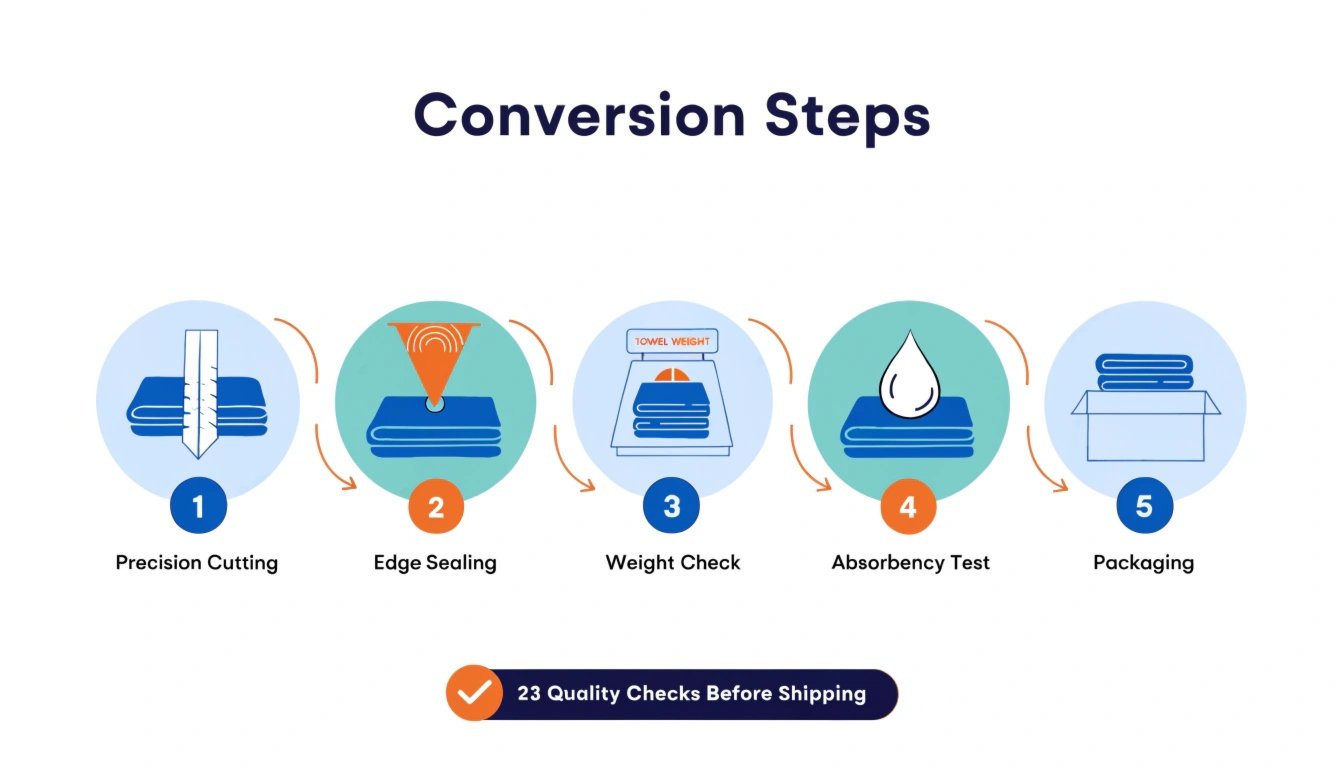
Beyond fiber production, converting microfiber yarn into car-specific towels requires specialized finishing processes honed over years of refinement.
Conversion steps: 1) Precision cutting; 2) Edge sealing (laser or ultrasonics); 3) Weight verification; 4) Absorbency testing; 5) Packaging. Our automotive towels undergo 23 quality verifications before shipping.
Comprehensive Manufacturing Timeline
| Day | Process | Details | Equipment |
|---|---|---|---|
| 1 | Yarn preparation | Conditioning, loading | Humidity chambers |
| 2 | Weaving | Setting patterns | Computerized looms |
| 3 | Fiber splitting | Creating microfibers | High-pressure water jets |
| 4 | Dyeing | Color application | Industrial dye machines |
| 5 | Drying | Moisture control | Conveyor dryers |
| 6 | Finishing | Softening treatments | Chemical baths |
| 7 | Cutting | Size standardization | Laser cutting machines |
| 8 | Packaging | Folding/labeling | Automated systems |
How Does Microfiber Material Look?
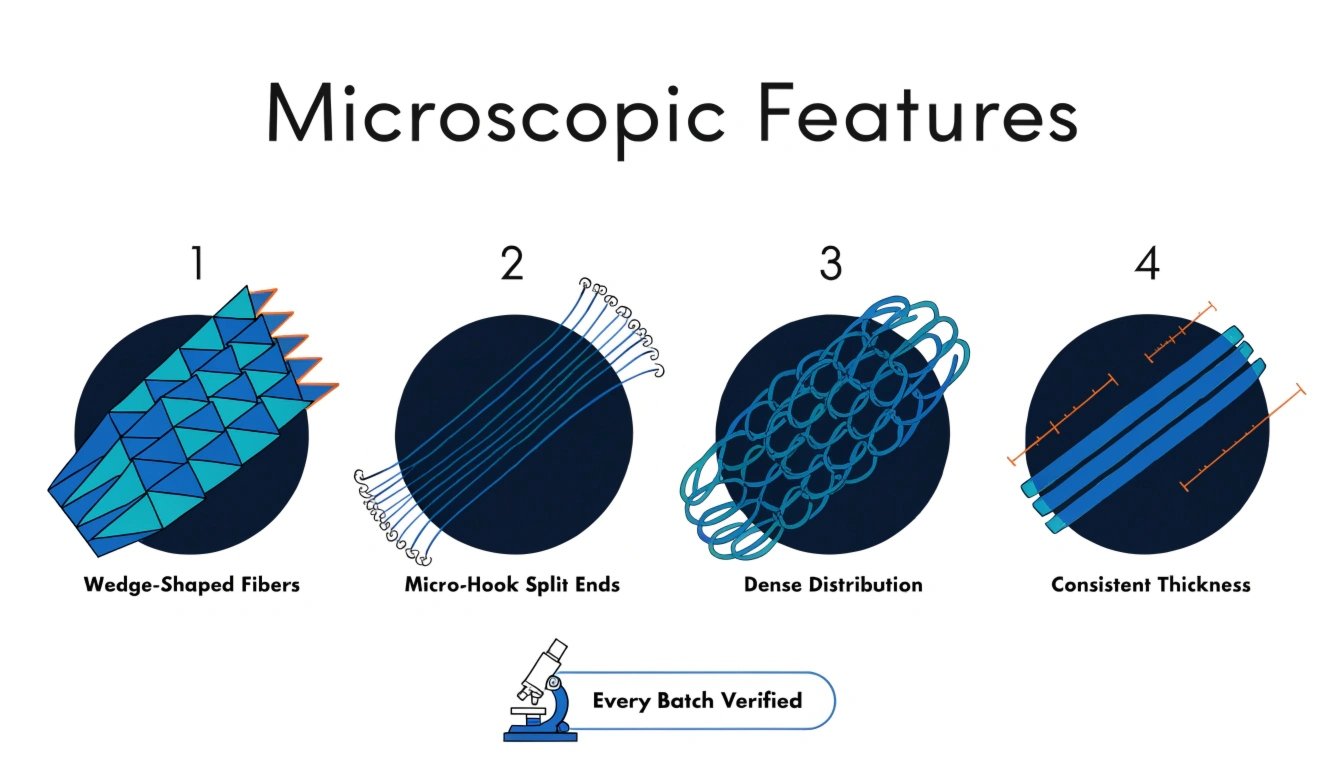
Under microscopic examination, quality microfiber reveals the secrets behind its superior cleaning performance - structure determines function.
Microscopic features: 1) Wedge-shaped fibers; 2) Split ends (micro-hooks); 3) Dense fiber distribution; 4) Consistent thickness. Our QC lab uses electron microscopes to verify every production batch meets specifications.
Fiber Structure Comparison
| Fiber Type | Magnified Appearance | Key Features |
|---|---|---|
| Standard Polyester | Smooth cylinders | Limited surface area |
| Quality Microfiber | Split wedge shapes | Microscopic hooks |
| Premium Automotive | Deep grooves | Enhanced capillary action |
| Defective Fibers | Inconsistent splits | Clumped areas |
Structural Advantages:
-
Cleaning Mechanism
- Traps particles in grooves
- Electrostatic attraction
- Oil absorption
-
Durability Factors
- Strong base fibers
- Secure splits
- Resilient structure
Quality Control Laboratory
Essential Testing Equipment ($150,000 Investment)
-
Absorbency Station
- Water immersion tester
- Drying rate analyzer
- Wicking measurement
-
Durability Tests
- Wash cycle simulator
- Abrasion machine
- Tensile strength gauge
-
Microscopy
- Optical microscope
- Electron microscope
- Fiber diameter analyzer
Conclusion
From polymer pellets to precision-cut towels, microfiber production combines advanced technology with meticulous quality control to create superior car care products that professionals trust.