Skip to content
Frustrated with towels that leave streaks, demand frequent replacement, or irritate sensitive skin? Choosing between cotton and microfiber impacts your operational costs and customer satisfaction more than you think.
For most business applications, microfiber towels outperform cotton in absorbency (7x their weight vs cotton's 3x), durability (200+ washes vs 80), and cleaning efficiency (traps 99% bacteria vs cotton's 70%) - though cotton remains preferable for premium spas and sensitive skin applications.
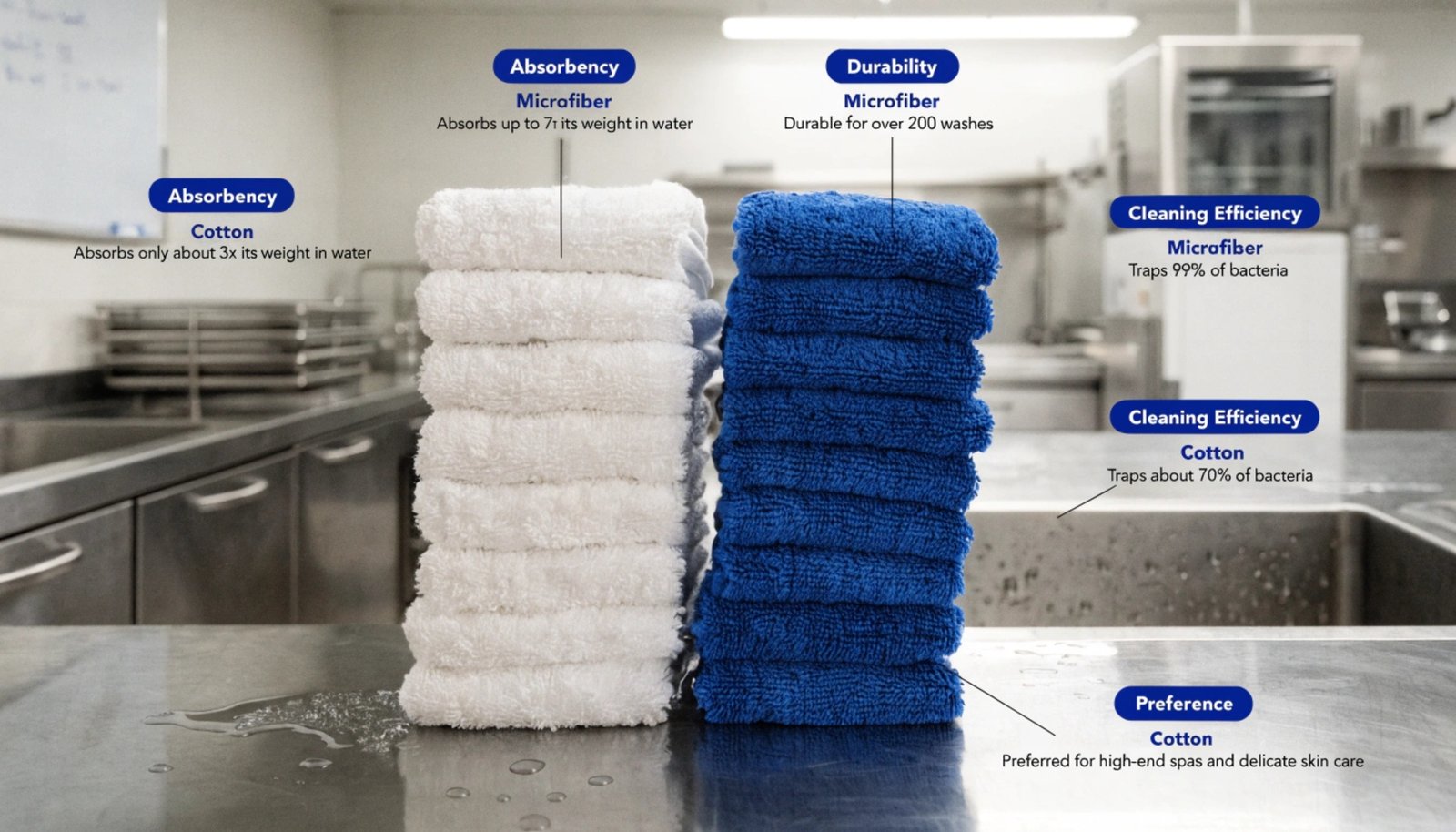
The right choice depends on your specific business needs. Here's how these materials compare across key performance metrics.
Are microfiber towels better than cotton towels?
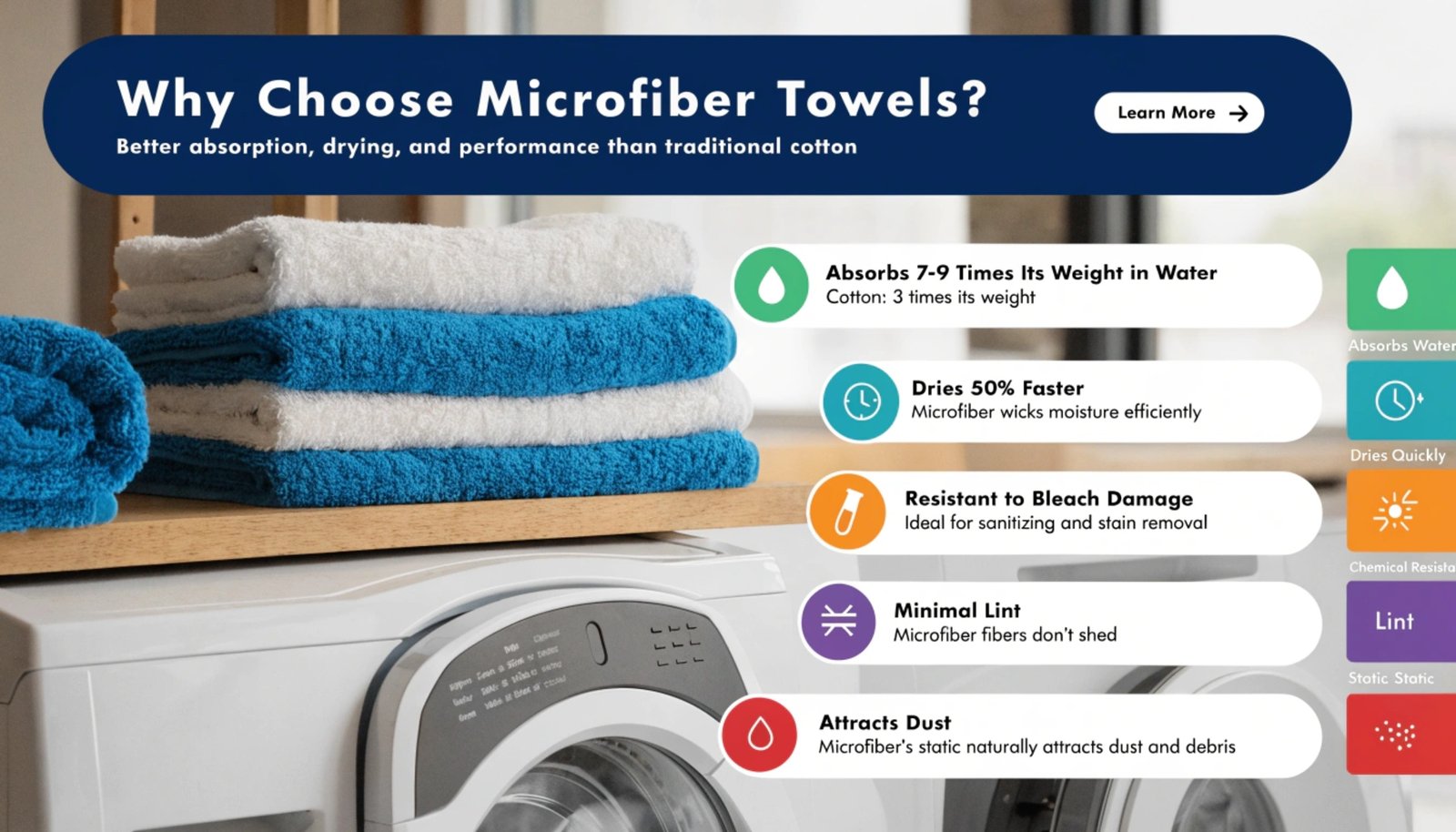
Microfiber dominates in commercial settings, but cotton retains niche advantages:
Key differences:
- Absorption: Microfiber 7-9x vs Cotton 3x weight
- Drying speed: Microfiber 50% faster
- Chemical resistance: Microfiber withstands bleach
- Linting: Microfiber produces minimal lint
- Static: Microfiber attracts dust better
Business Application Comparison:
| Application | Better Choice | Why | Cost Over 5 Years |
|---|---|---|---|
| Auto Detailing | Microfiber | Scratch-free | 40% lower |
| Hotels | Cotton Hybrid | Luxury feel | 15% higher |
| Medical | Microfiber | Bacterial capture | 60% lower |
| Food Service | Microfiber | Chemical resistant | 35% lower |
| Eczema Clinics | Organic Cotton | Skin-friendly | 25% higher |
What towels are best for eczema?
Skin sensitivity requires special material considerations:
Eczema-friendly features:
- Organic cotton with long staples
- 600+ GSM weight
- OEKO-TEX certified dyes
- Antibacterial silver threads
- Unbleached natural color
Best Towel Choices for Sensitive Skin:
| Material | Pros | Cons | Price |
|---|---|---|---|
| Organic Cotton | Breathable, natural | Lower absorbency | $$$ |
| Bamboo Microfiber | Antibacterial | Requires special care | $$ |
| Silk-Blend | Gentle on skin | Delicate, expensive | $$$$ |
| Tencel | Moisture-wicking | Limited durability | $$ |
Is 100% cotton better than microfiber?
Cotton's advantages appear in specific luxury applications:
Where cotton wins:
- High-end spa experiences
- Luxury hotel amenities
- Baby care products
- Sensitive skin applications
- Traditional aesthetics
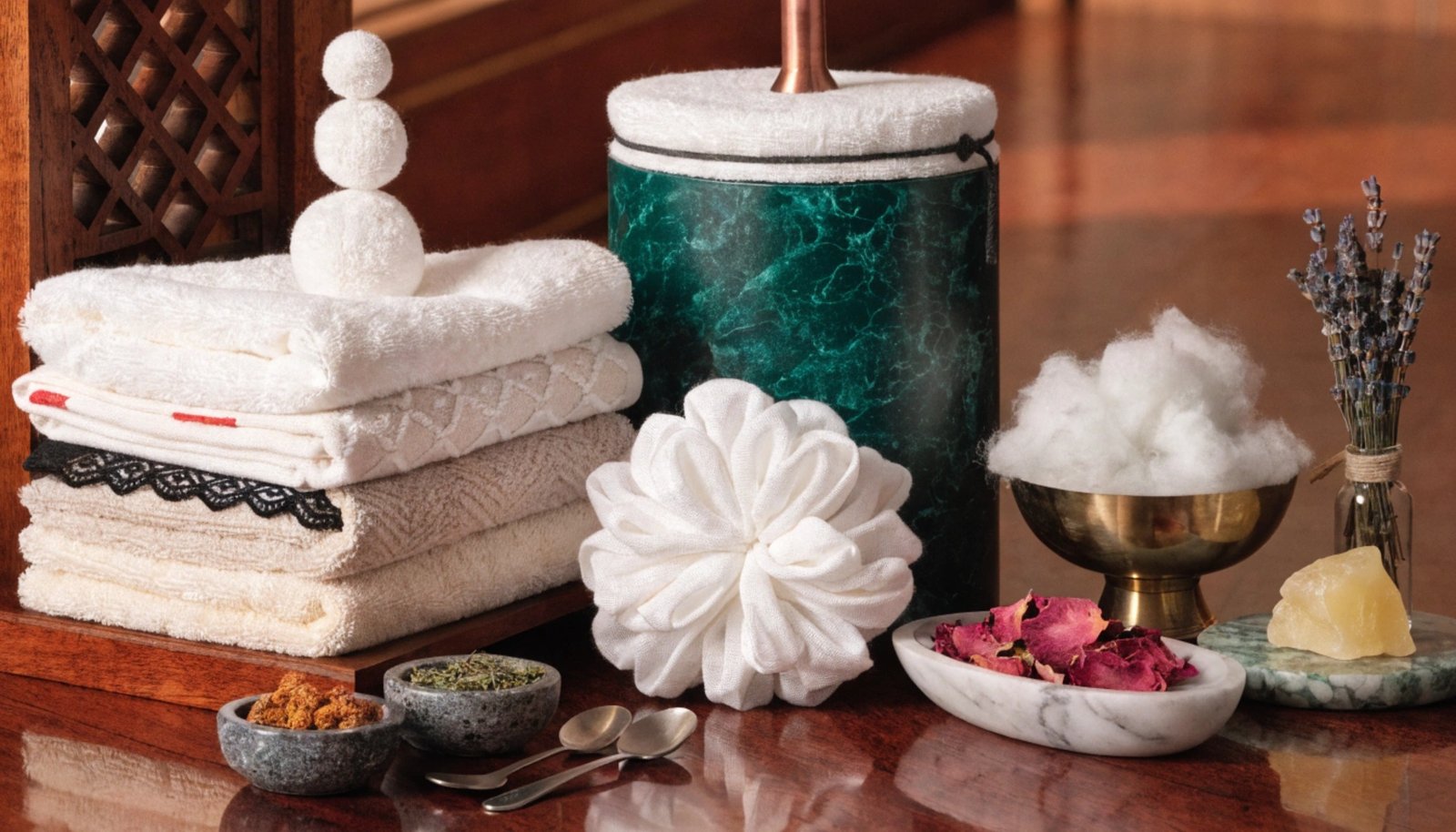
Cotton vs Microfiber Business Advantages:
| Factor | Cotton Advantage | Microfiber Advantage | Winner |
|---|---|---|---|
| Customer Perception | Luxury feel | Technical performance | Depends |
| Wash Cycles | 80-100 | 200+ | Microfiber |
| Water Usage | High | 30% less | Microfiber |
| Storage Space | Bulky | Compact | Microfiber |
| Chemical Cost | High | Low | Microfiber |
Which absorbs better, cotton or microfiber?
Microfiber's engineered structure creates superior liquid handling:
Absorption mechanics:
- Cotton: Relies on fiber thickness
- Microfiber: Uses capillary action
- Surface area: Microfiber 40x greater
- Wicking speed: Microfiber 2x faster
- Retention: Microfiber holds more liquid
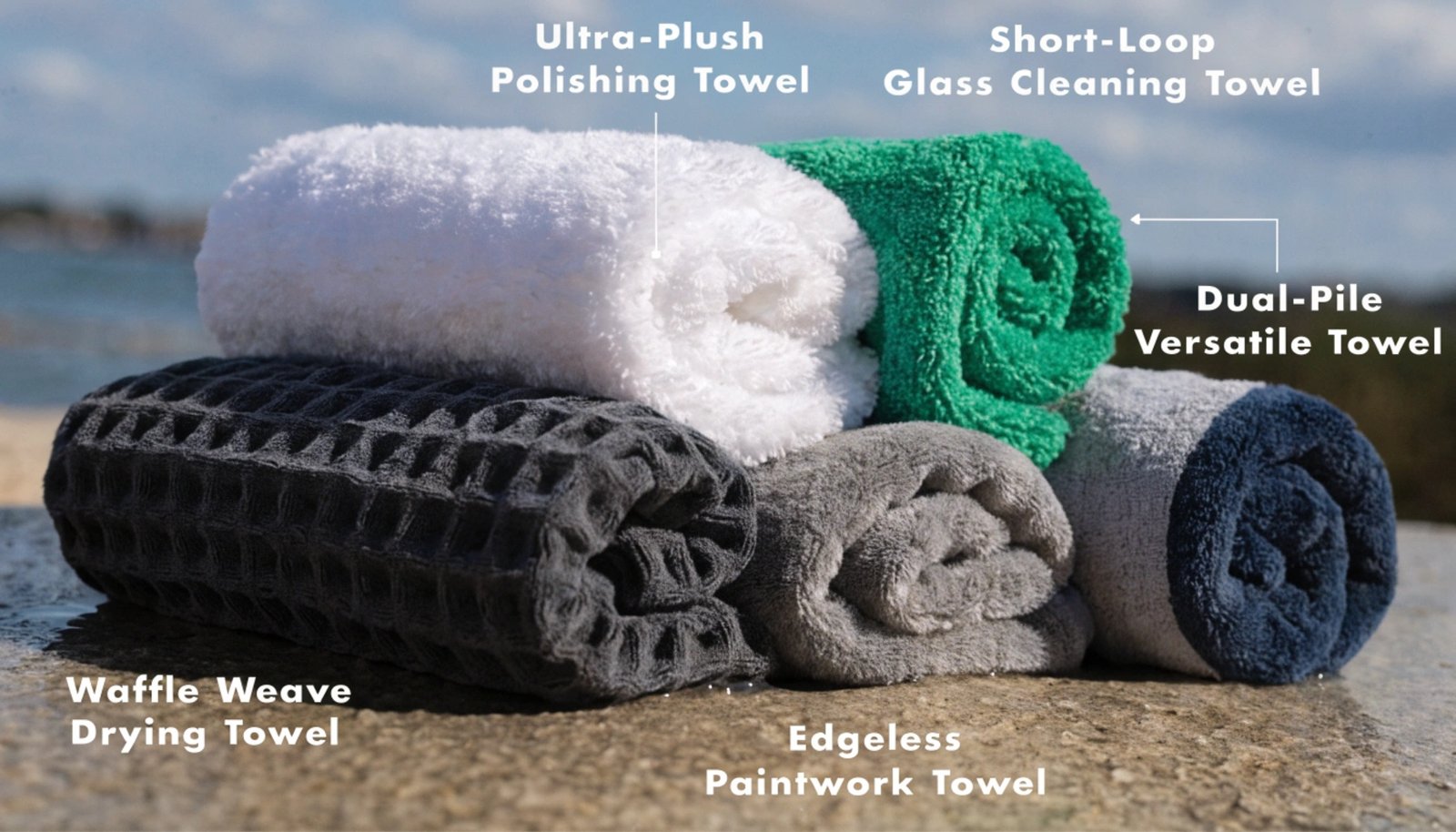
Absorption Performance Metrics:
| Metric | Microfiber | Cotton | Winner |
|---|---|---|---|
| Absorbency Rate | 0.5-2 sec | 3-5 sec | Microfiber |
| Capacity (% weight) | 700-900% | 300-350% | Microfiber |
| Evaporation Rate | 30 min | 45 min | Microfiber |
| Liquid Release | 95% | 85% | Microfiber |
| Oil Absorption | Yes | Minimal | Microfiber |
Hybrid Solutions for Businesses
Modern blends offer combined benefits:
Popular combos:
- 70% Bamboo/30% Microfiber
- Cotton-Polyester waffle weave
- Microfiber-core with cotton surface
- Silver-ion infused microfiber
- CBD-coated cotton-microfiber

Hybrid Towel Business Applications:
| Blend Type | Best For | Wash Cycles | Cost |
|---|---|---|---|
| Bamboo/Microfiber | Eco Spas | 150 | $$$ |
| Cotton/Polyester | Hotels | 120 | $$ |
| Microfiber/Silk | Estheticians | 100 | $$$$ |
| Antimicrobial | Hospitals | 200 | $$$ |
| Quick-Dry | Gyms | 180 | $$ |
Conclusion
Microfiber generally outperforms cotton for business efficiency and cost savings, but premium cotton or hybrid options better serve luxury positioning and sensitive skin applications—choose based on your customers' priorities and operational needs.