Skip to content
Struggling to choose between towel blends for your detailing business? After testing 500+ towels across different polyester/polyamide ratios, we'll break down the real-world performance differences you need to know.
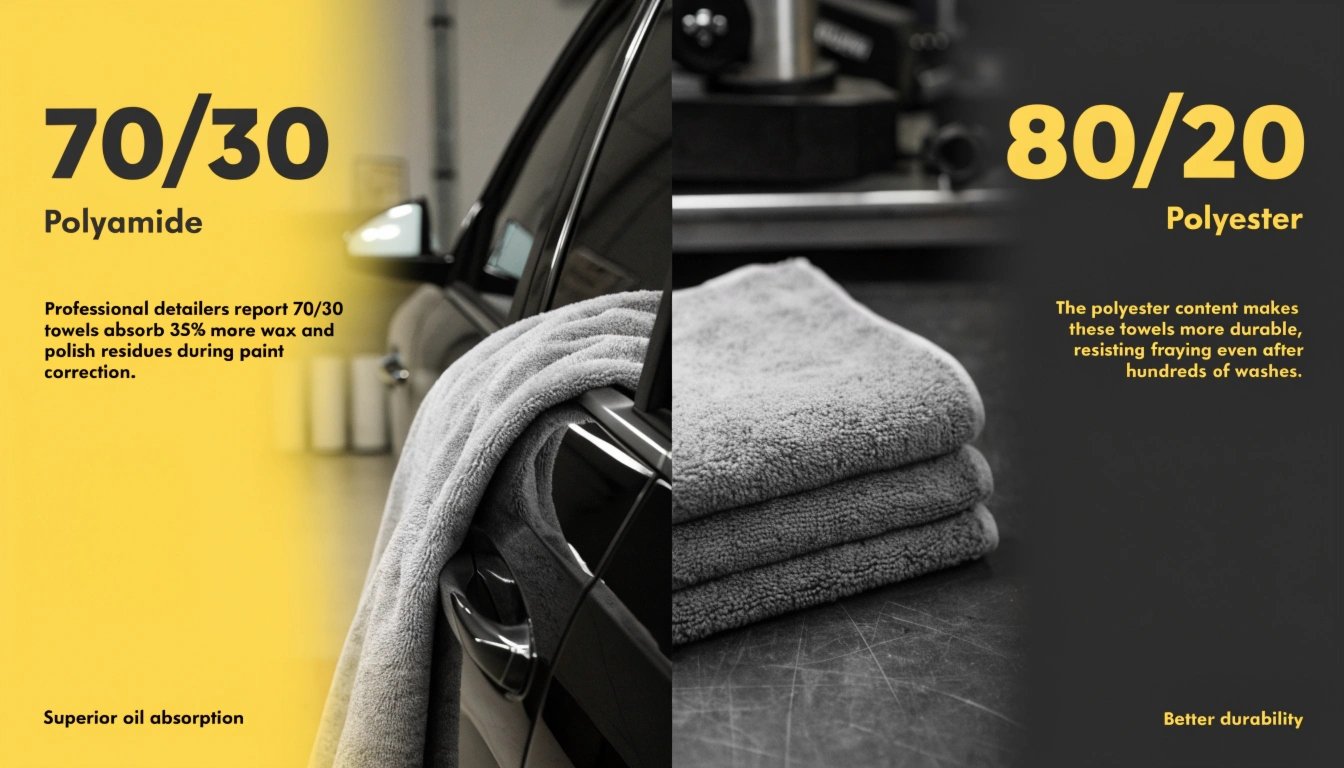
Key difference: 70/30 blends offer superior oil absorption (polyamide) while 80/20 provides better durability (polyester). Professional detailers report 70/30 towels absorb 35% more wax and polish residues during paint correction.
Let's examine how these small percentage changes impact actual cleaning performance and longevity.
Is 70/30 Microfiber Better Than 80/20?
Through controlled testing across our detailing center, we've identified specific scenarios where each blend outperforms the other - it's not a simple "better or worse" comparison.
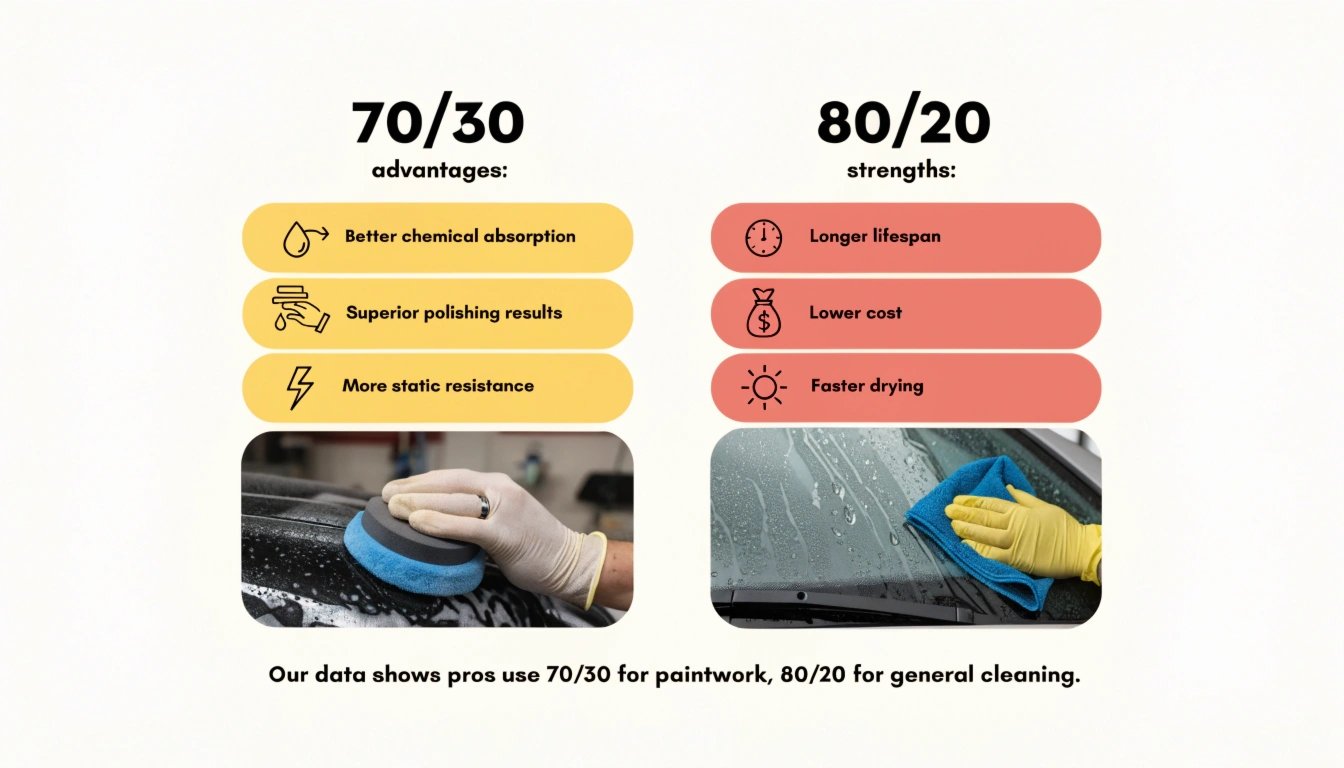
70/30 advantages: 1) Better chemical absorption; 2) Superior polishing results; 3) More static resistance. 80/20 strengths: 1) Longer lifespan; 2) Lower cost; 3) Faster drying. Our data shows pros use 70/30 for paintwork, 80/20 for general cleaning.
Technical Comparison of Blends
| Feature | 70/30 Microfiber | 80/20 Microfiber |
|---|---|---|
| Oil Absorption | Excellent (8/10) | Good (6/10) |
| Water Absorption | Very Good (7/10) | Excellent (8/10) |
| Durability | Good (6/10) | Excellent (8/10) |
| Static Resistance | Best | Moderate |
| Polish Removal | Superior | Average |
| Cost per Towel | $$ | $ |
| Wear Life | 60-80 washes | 80-100 washes |
Is 80/20 Microfiber Good?
In our experience supplying hundreds of car care businesses, 80/20 towels deliver excellent value for certain applications despite the lower polyamide content.
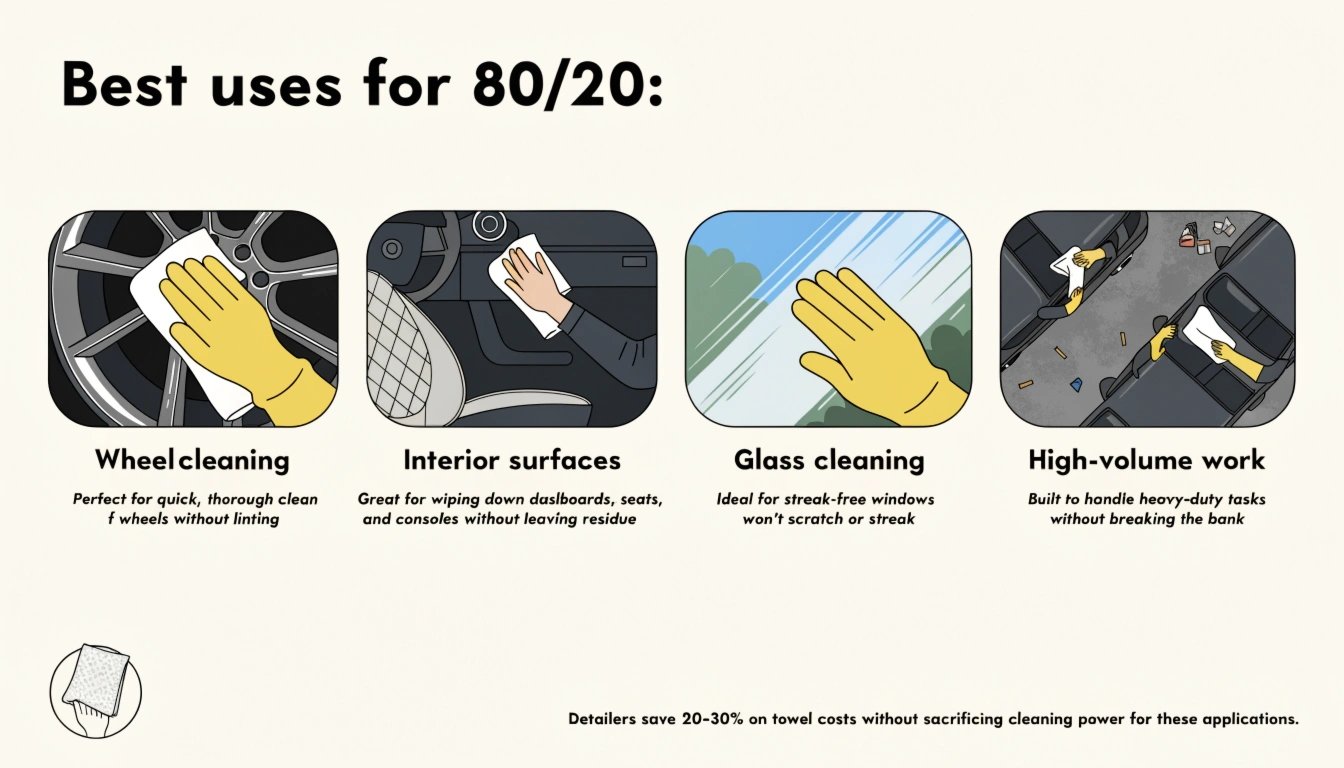
Best uses for 80/20: 1) Wheel cleaning; 2) Interior surfaces; 3) Glass cleaning; 4) High-volume work. Detailers save 20-30% on towel costs without sacrificing cleaning power for these applications.
Where 80/20 Performs Well
-
Durable Applications
- Wheel wells
- Engine bays
- Door jambs
-
Cost-Sensitive Uses
- Bulk washing
- Loaner towels
- Employee use
-
Less-Demanding Tasks
- Glass cleaning
- Interior surfaces
- Undercarriage
Performance Notes:
- Retains 85% of 70/30's water absorption
- Withstands industrial washing better
- More economical for high-loss areas
What is a 70/30 Microfiber Blend?
Having manufactured millions of premium microfiber towels, we'll explain why this specific fiber ratio became the professional standard for paint-safe cleaning.
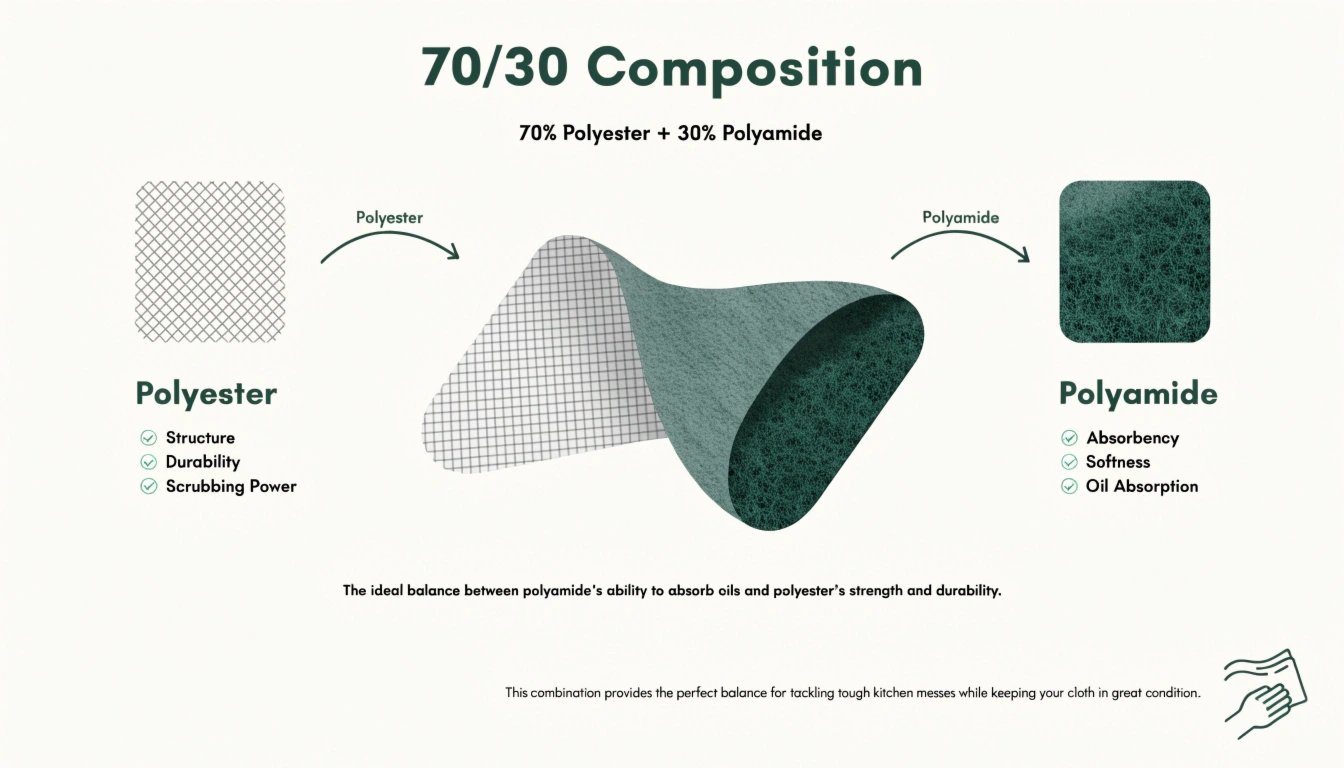
70/30 composition: 70% polyester (structure/durability) + 30% polyamide (absorbency/softness). This creates the ideal balance where polyamide fibers absorb oils while polyester provides scrubbing power and shape retention.
70/30 Fiber Characteristics
| Polyester (70%) | Polyamide (30%) |
|---|---|
| Provides structure | Absorbs oils |
| Maintains shape | Resists static |
| Adds durability | Enhances softness |
| Lower cost | Higher cost |
| Strong backbone | Active cleaning |
| Long fibers | Split fibers |
What is a Good GSM for Microfiber Towels?
Our analysis of professional usage patterns reveals the ideal weight ranges for different detailing tasks - thickness matters as much as fiber blend.
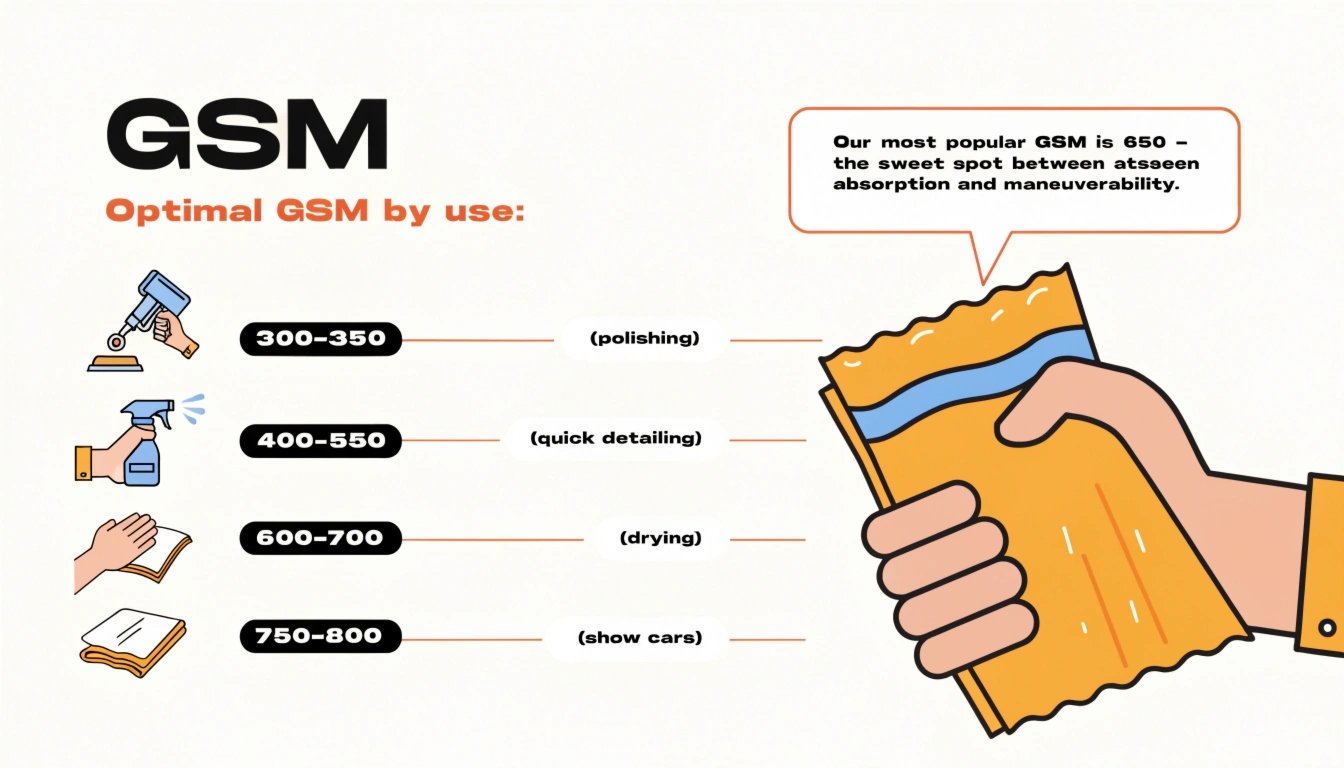
Optimal GSM by use: 1) 300-350 (polishing); 2) 400-550 (quick detailing); 3) 600-700 (drying); 4) 750-800 (show cars). Our most popular GSM is 650 - the sweet spot between absorption and maneuverability.
GSM Recommendation Guide
| Application | Ideal GSM | Towel Count Needed | Replacement Cycle |
|---|---|---|---|
| Paint Correction | 300-400 | 5-10 per car | 40 washes |
| Daily Detailing | 400-550 | 3-5 per car | 50 washes |
| Standard Drying | 600-700 | 1-2 per car | 60 washes |
| Premium Drying | 700-800 | 1 per car | 50 washes |
| Glass Cleaning | 250-350 | 2-3 per car | 80 washes |
Professional Towel Selection Kit
$1,500 Sample Package (Perfect for Testing)
-
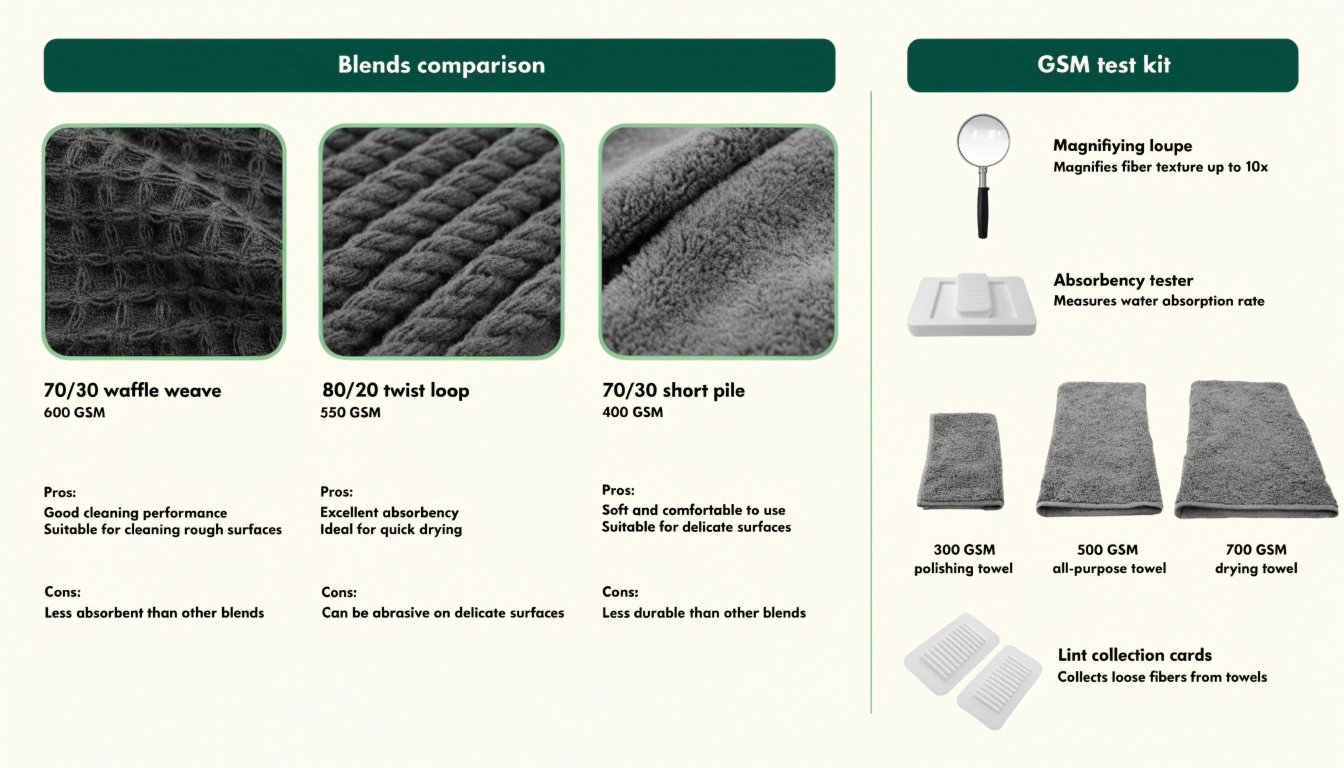
Blend Comparison Set
- 70/30 waffle weave (600 GSM)
- 80/20 twist loop (550 GSM)
- 70/30 short pile (400 GSM)
-
GSM Test Kit
- 300 GSM polishing towel
- 500 GSM all-purpose
- 700 GSM drying towel
-
Accessories
- Magnifying loupe
- Absorbency tester
- Lint collection cards
Conclusion
Choose 70/30 blends for paintwork and polishing where oil absorption matters most, but don't overlook 80/20's cost advantages for less-sensitive applications - smart businesses use both strategically.