Skip to content
Tired of lint and streaks ruining your cleaning results? Microfiber technology revolutionized cleaning performance across industries worldwide.
Microfiber cloths consist of ultra-fine synthetic fibers that trap dirt efficiently while being gentle on surfaces - outperforming traditional cotton fibers in every cleaning metric.
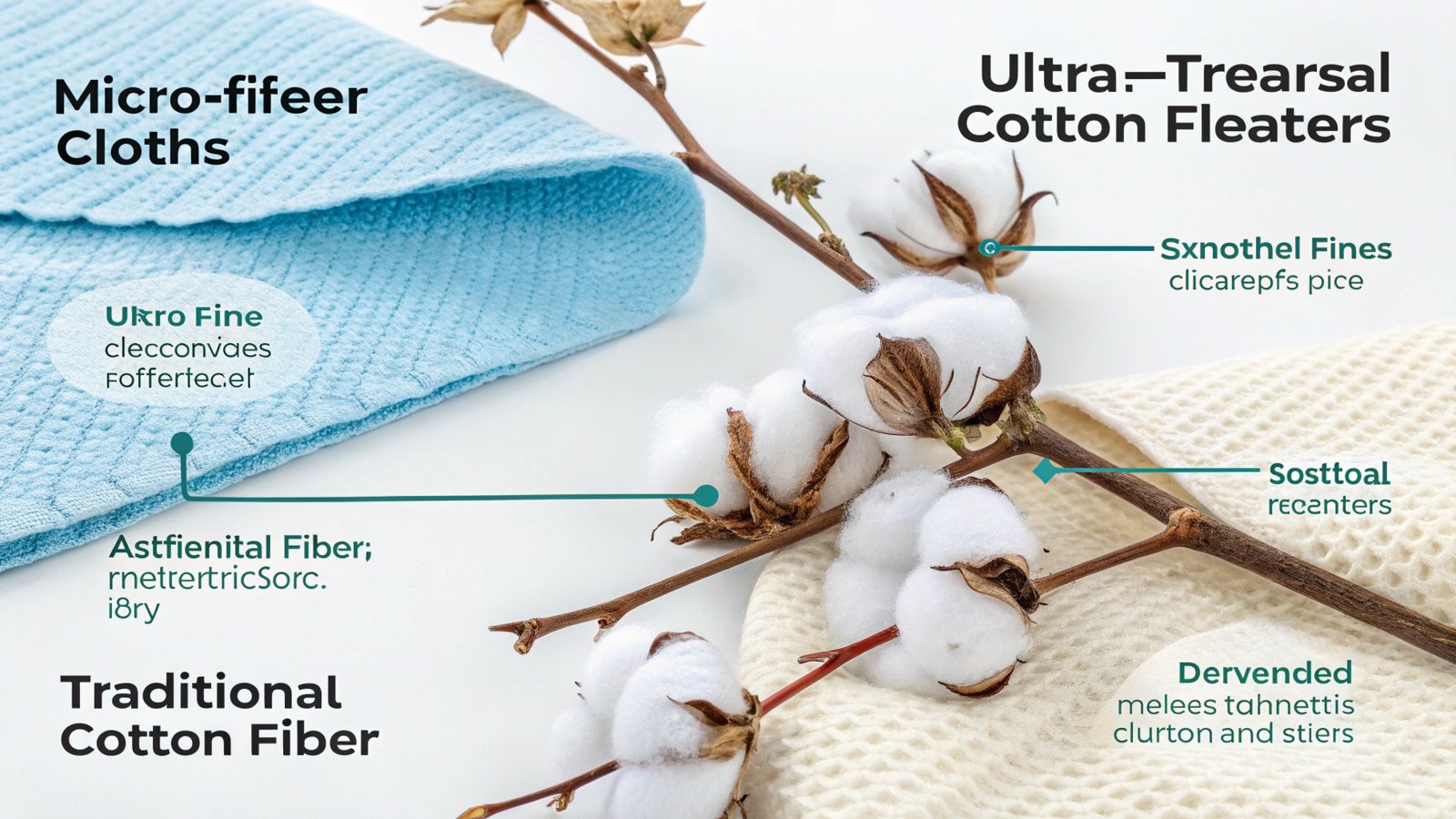
Professional cleaners and auto detailers switched almost entirely to microfiber cloths due to their superior performance and cost-effectiveness.
Why are microfiber cloths better for cleaning?
Their cleaning power comes from scientific fiber engineering combined with practical textile manufacturing advancements.
Key microfiber advantages:
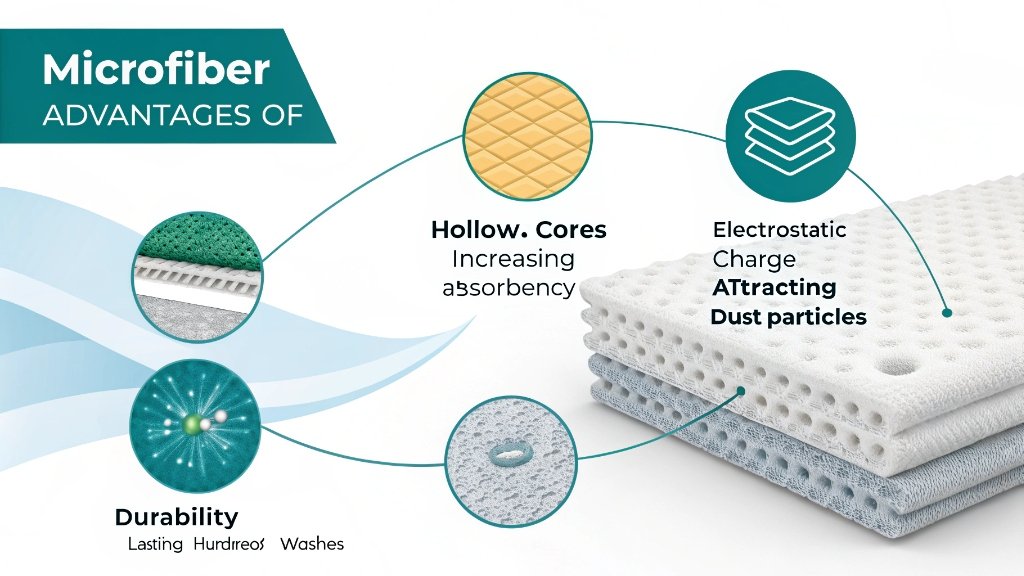
- Split fibers create more surface area
- Hollow cores increase absorbency
- Electrostatic charge attracts dust
- Tight weave prevents scratching
- Durability lasts hundreds of washes
Performance Comparison:
| Feature | Microfiber | Cotton | Paper Towel |
|---|---|---|---|
| Dirt Removal | 99% | 70% | 35% |
| Absorbency | 7x Weight | 3x Weight | 1x |
| Lint Production | None | Moderate | Heavy |
| Scratch Risk | Very Low | Medium | High |
| Wash Cycles | 300+ | 50 | Single Use |
Essential: Higher GSM (gram per square meter) indicates better quality.
What is a microfibre cloth?
Modern microfiber construction combines advanced materials science with textile manufacturing precision.
Material composition:
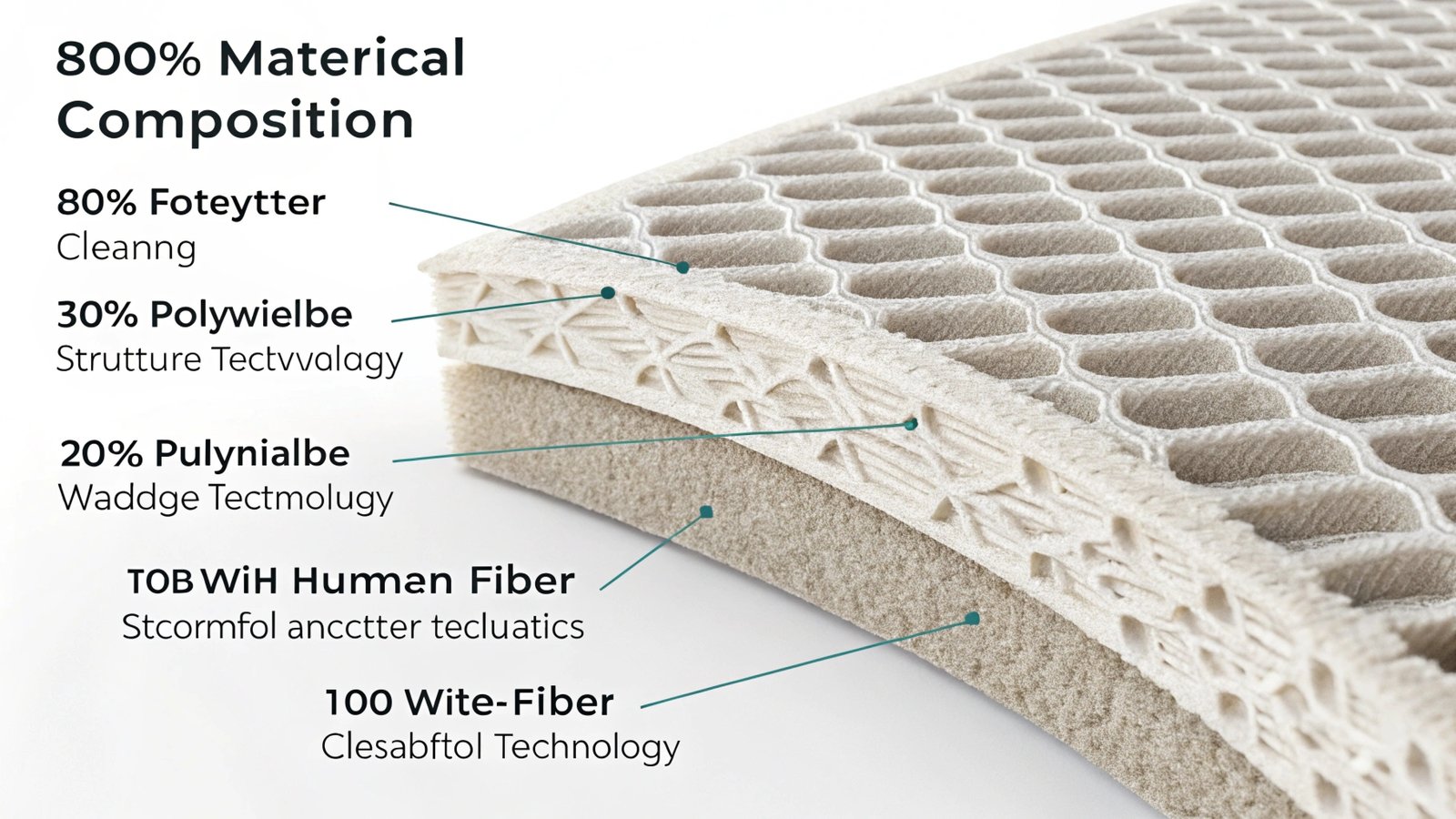
- 80% polyester (cleaning structure)
- 20% polyamide (absorption)
- Split fiber technology (~1/100 human hair)
- Wedge-shaped fiber profile
- Honeycomb weave pattern
Fiber Specifications:
| Measurement | Standard Microfiber | Premium Microfiber | Automotive Grade |
|---|---|---|---|
| Fiber Diameter | 0.5 denier | 0.3 denier | 0.1 denier |
| GSM Weight | 250 | 350 | 500 |
| Pile Height | Medium | Tall | Varied |
| Fiber Split | Partial | Complete | Extra Split |
| Edge Finish | Overlock | Laser Cut | Tagless |
Note: Denier measures fiber thickness (lower is finer).
What is the science behind microfiber cloths?
Physics and chemistry principles combine to create microfiber's exceptional cleaning properties.
Scientific mechanisms:
- Capillary action draws in liquids
- Van der Waals forces capture particles
- Electrostatic attraction holds dust
- Surface tension breaks down grease
- Micro-channels trap contaminants

Cleaning Mechanism Breakdown:
| Principle | Effect | Application Benefit |
|---|---|---|
| Capillarity | Liquid absorption | Streak-free drying |
| Electrostatics | Dust capture | Dry dusting |
| Surface Area | More contact points | Less wiping |
| Fiber Shape | Scraping action | Grease removal |
| Split Ends | Hook-like grabs | Particle trapping |
Critical: Wash new cloths before use to activate fibers.
Should you use a microfiber cloth wet or dry?
Application techniques maximize microfiber's natural capabilities for different cleaning scenarios.
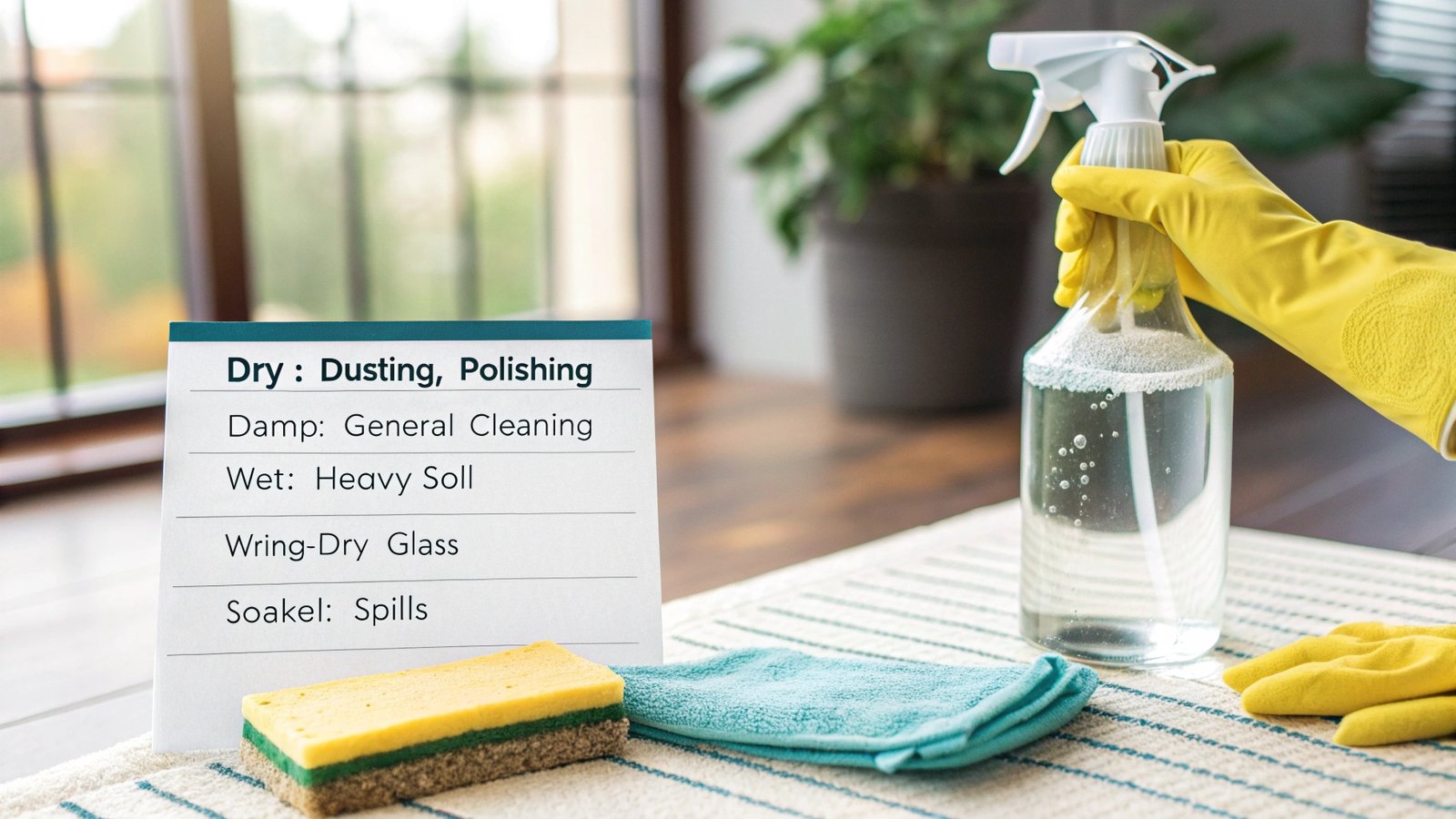
Optimal usage guide:
- Dry: Dusting, polishing
- Damp: General cleaning
- Wet: Heavy soil
- Wring-dry: Glass
- Soaked: Spills
Usage Matrix:
| Surface | Condition | Fold Style | Pressure |
|---|---|---|---|
| Glass | Damp | Quarter-fold | Light |
| Paint | Wet | Flat | Medium |
| Chrome | Dry | Rolled | Firm |
| Plastic | Moist | Square | Moderate |
| Leather | Dry | Flat | Gentle |
Warning: Never use fabric softener (coats fibers).
Conclusion
Microfiber cloths deliver superior cleaning through scientifically engineered fibers that outperform traditional materials across all cleaning applications and surfaces.