Skip to content
When hard water droplets bake onto your paint under the summer sun, they don't just sit on the surface—they chemically bond with your clearcoat. As someone who's restored over 300 water-spotted vehicles, I've developed a battle-tested 5-stage removal process that works without damaging your paint.
To safely remove water spots, first identify their severity (Type I, II, or III), then use escalating treatments from vinegar solutions to light compounding—professional detailers typically use 50/50 distilled white vinegar/water for fresh spots and dual-action polishers with cutting pads for etched-in mineral deposits.
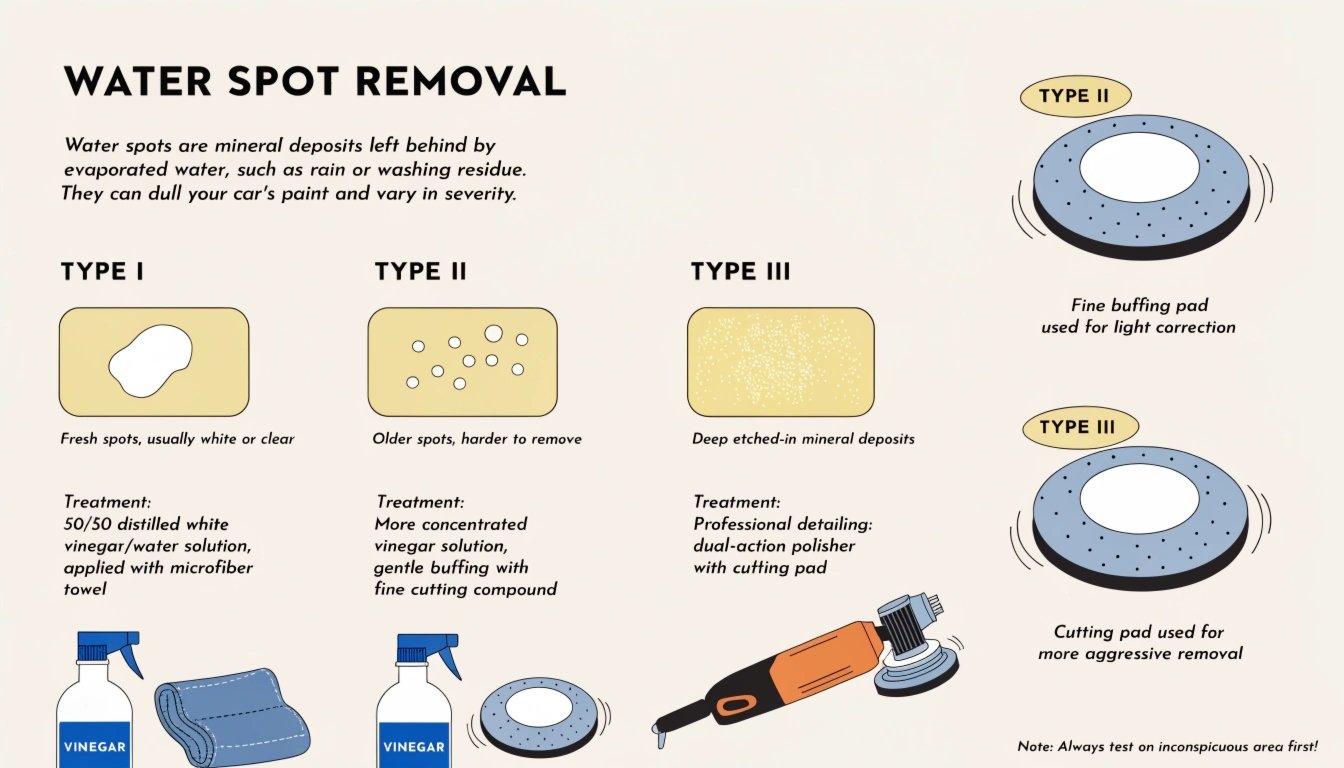
Here's exactly how to erase these mineral stains at any stage of damage.
How to Get Rid of Water Marks on Car Paint Work?
Immediate Treatment (0-48 Hours)
-
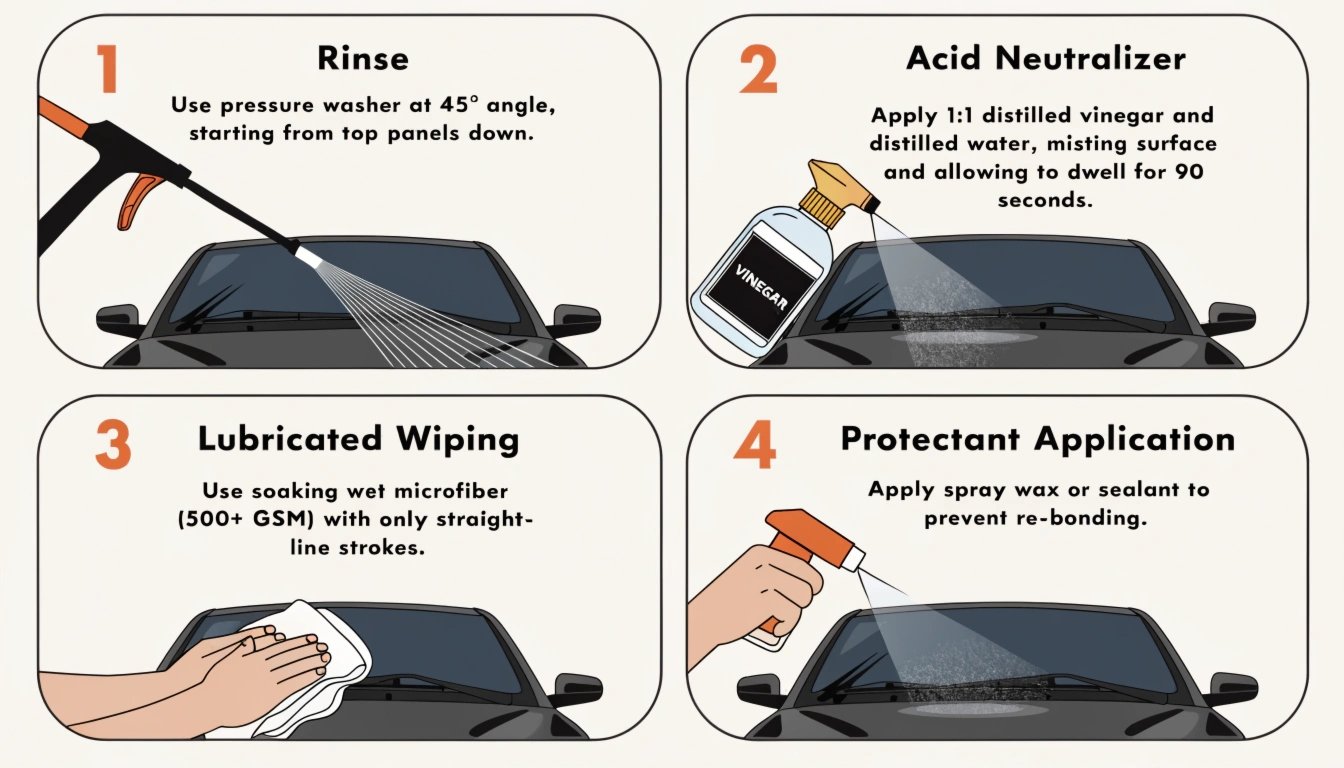
Rinse
- Pressure washer at 45° angle
- Start from top panels down
-
Acid Neutralizer
- 1:1 distilled vinegar/distilled water
- Mist and dwell for 90 seconds
-
Lubricated Wiping
- Soaking wet microfiber (500+ GSM)
- Straight-line strokes only
-
Protectant Application
- Spray wax or sealant
- Prevents re-bonding
Tool Requirements:
| Tool | Purpose | Best Practice |
|---|---|---|
| Pressure Washer | Initial rinse | 40° nozzle @ 18" |
| Acid Neutralizer | Mineral breakdown | pH 3-4 solution |
| Clay Bar | Surface decontamination | Lubricated passes |
| Plush Towels | Safe wiping | 3-4 per vehicle |
Are Water Spots Permanent on Car Paint?
Damage Classification Guide
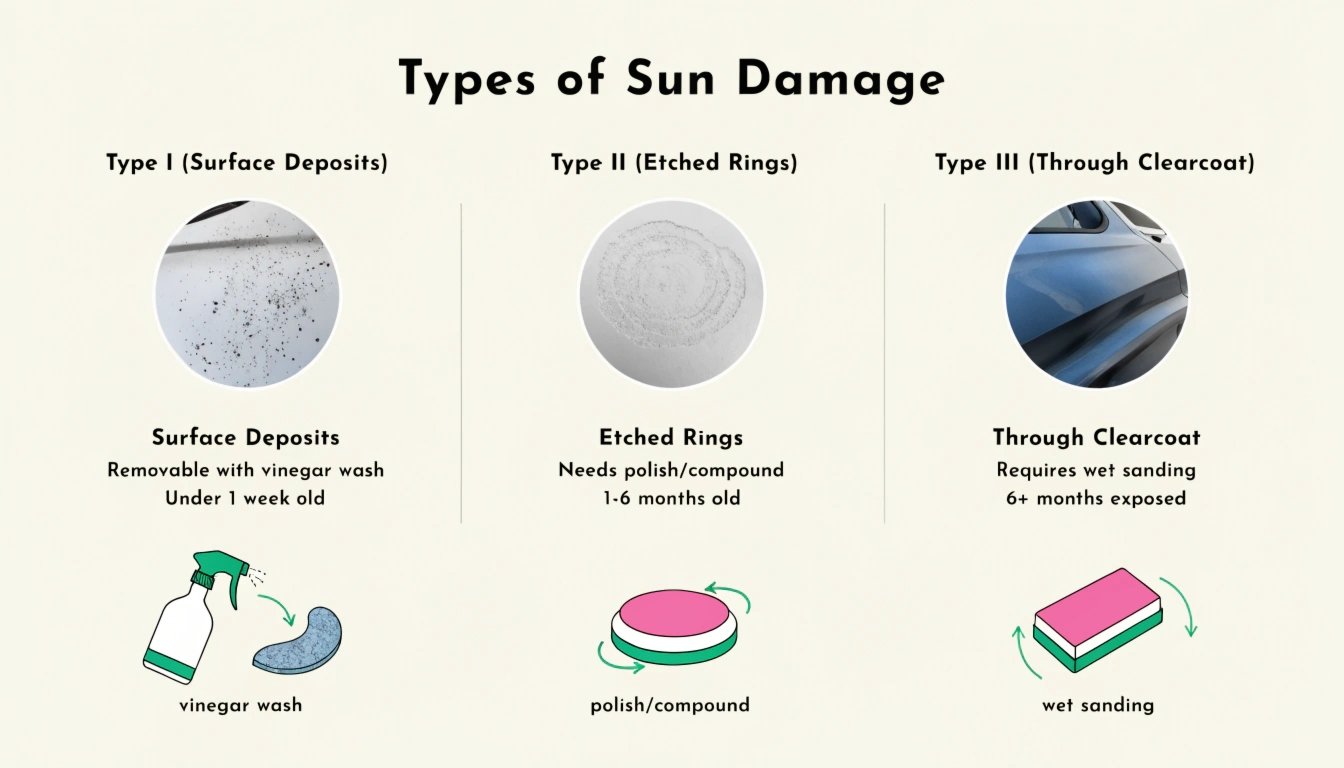
Type I (Surface Deposits)
- Removes with vinegar wash
- No clearcoat damage
- Under 1 week old
Type II (Etched Rings)
- Needs polish/compound
- Micro-pitting visible
- 1-6 months old
Type III (Through Clearcoat)
- Requires wet sanding
- Permanent UV damage
- 6+ months exposed
Clearcoat Impact:
| Spot Type | Penetration Depth | Removal Success Rate | Prevention Method |
|---|---|---|---|
| Type I | 0 microns | 100% | Quick detailing |
| Type II | 3-8 microns | 80% | Monthly sealant |
| Type III | 15+ microns | 30% | Garage parking |
How Do Professionals Remove Water Spots?
Detailer-Grade Techniques
-
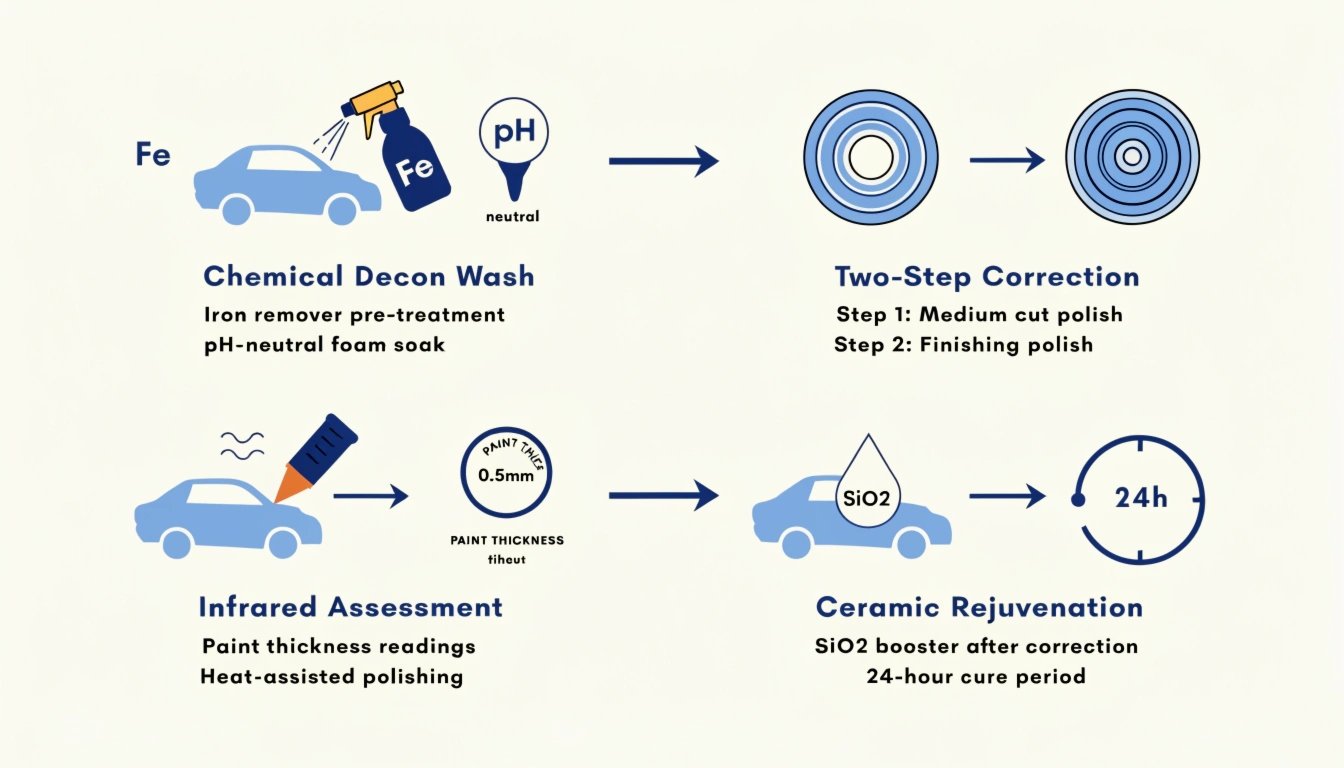
Chemical Decon Wash
- Iron remover pre-treatment
- pH-neutral foam soak
-
Two-Step Correction
- Step 1: Medium cut polish
- Step 2: Finishing polish
-
Infrared Assessment
- Paint thickness readings
- Heat-assisted polishing
-
Ceramic Rejuvenation
- SiO2 booster after correction
- 24-hour cure period
Shop Equipment List:
| Tool | Brand Example | Usage Frequency | Cost Range |
|---|---|---|---|
| DA Polisher | Rupes LHR21 | Daily | $300-$600 |
| Spot Compound | Menzerna 400 | Per vehicle | $30/qt |
| Paint Gauge | Defelsko PosiTest | Weekly | $1,500+ |
| Steam Cleaner | McCulloch MC1385 | 5x/week | $200 |
Can Watermarks Be Removed From Car Paint?
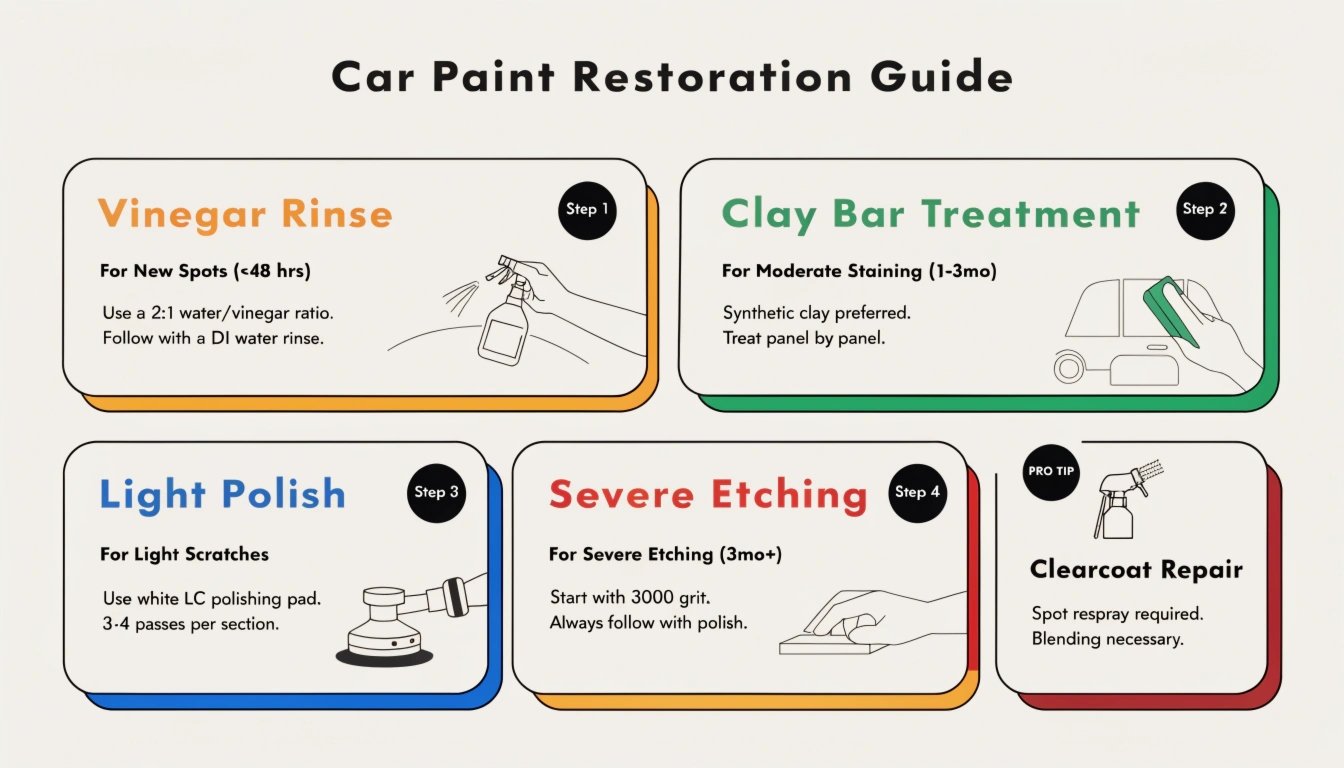
5 Proven Removal Methods
For New Spots (<48 hrs)
- Vinegar Rinse
- 2:1 water/vinegar ratio
- Follow with DI water
For Moderate Staining (1-3mo)
-
Clay Bar Treatment
- Synthetic clay preferred
- Panel-by-panel approach
-
Light Polish
- White LC polishing pad
- 3-4 section passes
For Severe Etching (3mo+)
-
Wet Sanding
- 3000 grit starters
- Always follow with polish
-
Clearcoat Repair
- Spot respray required
- Blending necessary
Product Effectiveness:
| Product | Spot Type | Work Time | Cost Per Use |
|---|---|---|---|
| Chemical Guys WAC | Type I | 10min | $0.50 |
| Meguiar's M205 | Type II | 30min | $1.20 |
| 3M Trizact 3000 | Type III | 2hrs | $5.00 |
| Ceramic Coating | Prevention | N/A | $20 |
Advanced Prevention Techniques
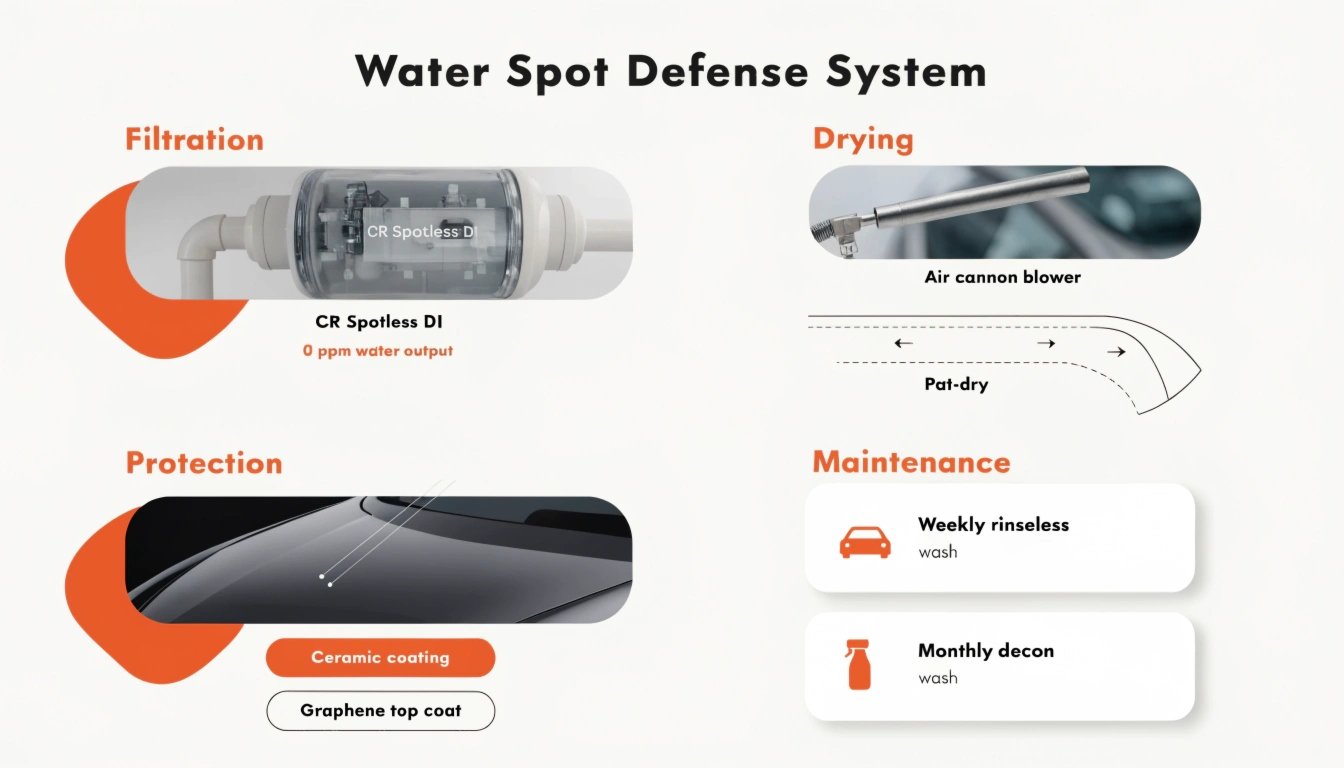
Water Spot Defense System
-
Filtration
- CR Spotless DI system
- 0 ppm water output
-
Drying Protocol
- Air cannon blower
- Pat-dry finishing
-
Protective Barriers
- Ceramic coating
- Graphene top coat
-
Maintenance Wash
- Weekly rinseless
- Monthly decon
Comparative Costs:
| Method | Initial Cost | Long-Term Value | Ease of Use |
|---|---|---|---|
| DI System | $500 | ★★★★★ | ★★☆☆☆ |
| Ceramic Coating | $800 | ★★★★☆ | ★☆☆☆☆ |
| Quick Detailer | $15 | ★★☆☆☆ | ★★★★★ |
| Car Cover | $200 | ★★★☆☆ | ★★★☆☆ |
Conclusion
Fresh water spots (under 48 hours) remove easily with distilled vinegar solutions, while older mineral deposits require progressively aggressive methods from polishing to wet sanding—always test least aggressive options first. For absolute prevention, invest in a deionized water filtration system and maintain ceramic coatings, which reduce spot formation by up to 90%. Immediately dry vehicles after washing or rain exposure to prevent new spot development, especially in hard water regions where mineral content exceeds 120 ppm.