Skip to content
The difference between a rushed wipe-down and professional-level cleaning comes down to 37 specific tools and techniques. Having detailed over 500 vehicles, I've perfected a systematic approach that delivers showroom results every time.
Professional car detailing requires 5 core systems: pressurized washing (100-200 psi), chemical dilution control, surface-specific tools (3+ brush types), proper lighting, and 2-stage paint correction capability. Quality results demand at least $600 in equipment and 50+ products for complete interior/exterior restoration.
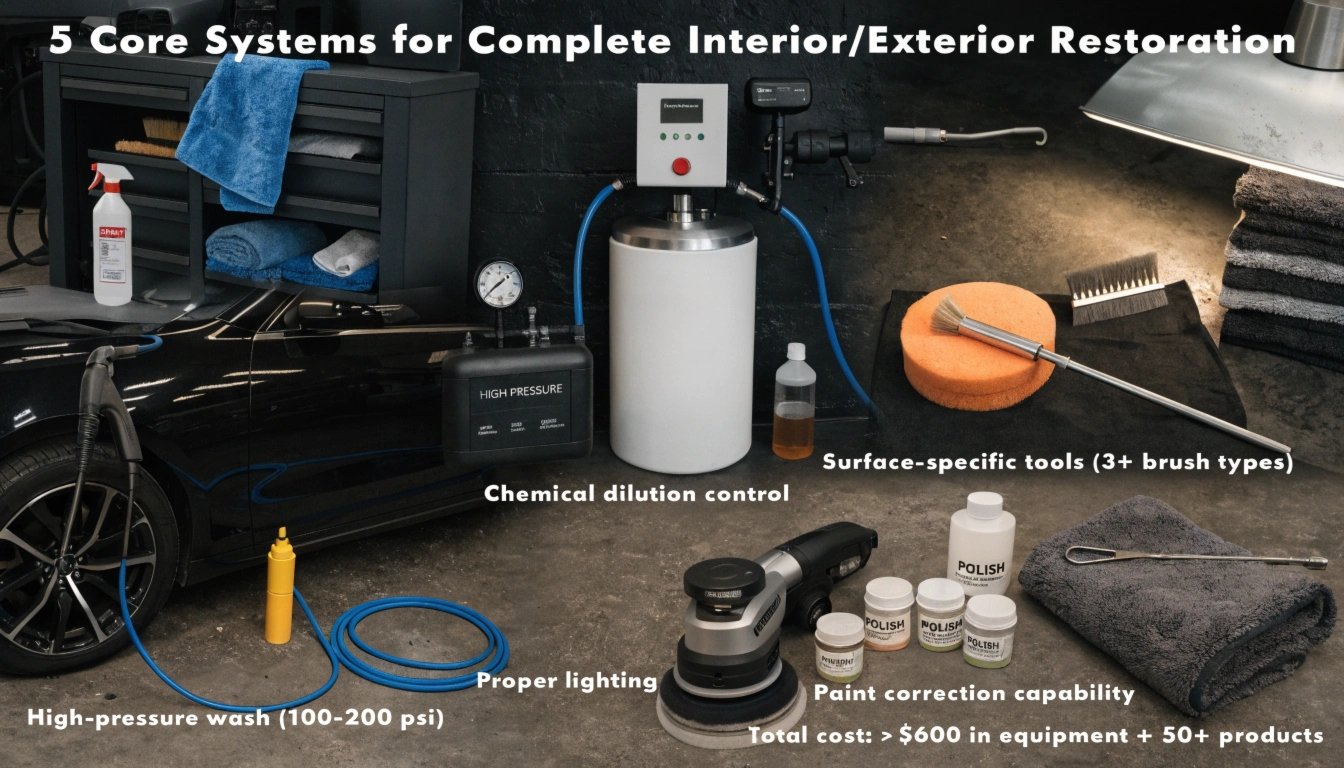
Here's exactly what separates amateur attempts from pro-grade results.
Can I Do Car Detailing Myself?
Essential Skills for DIY Success
-
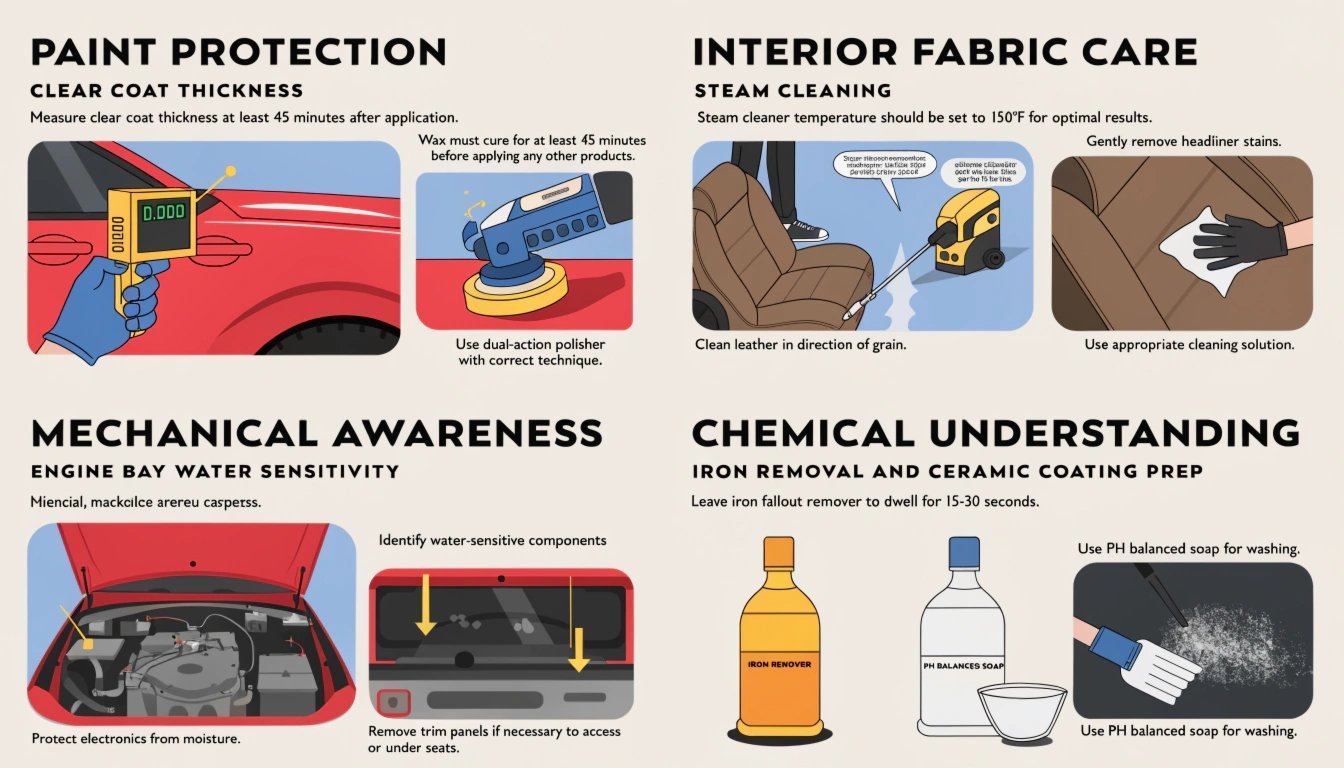
Paint Protection Knowledge
- Clear coat thickness measurement
- Dual-action polisher technique
- Proper wax curing times (45m min)
-
Interior Fabric Care
- Steam cleaner operation (150°F ideal)
- Leather grain direction cleaning
- Headliner stain removal
-
Mechanical Awareness
- Engine bay water-sensitive components
- Electronics moisture protection
- Trim panel removal
-
Chemical Understanding
- PH-balanced soap selection
- Iron fallout remover dwell time
- Ceramic coating prep
Realistic DIY Limitations:
| Area | DIY Capability | Pro Advantage |
|---|---|---|
| Paint Correction | Light swirls only | Deep scratch removal |
| Interior Sanitation | Surface cleaning | Bacterial eradication |
| Engine Bay | Basic degreasing | Complete restoration |
| Protective Coatings | Spray sealants | Multi-year ceramics |
How Much to Tip on a $200 Car Detail?
Professional tipping etiquette:
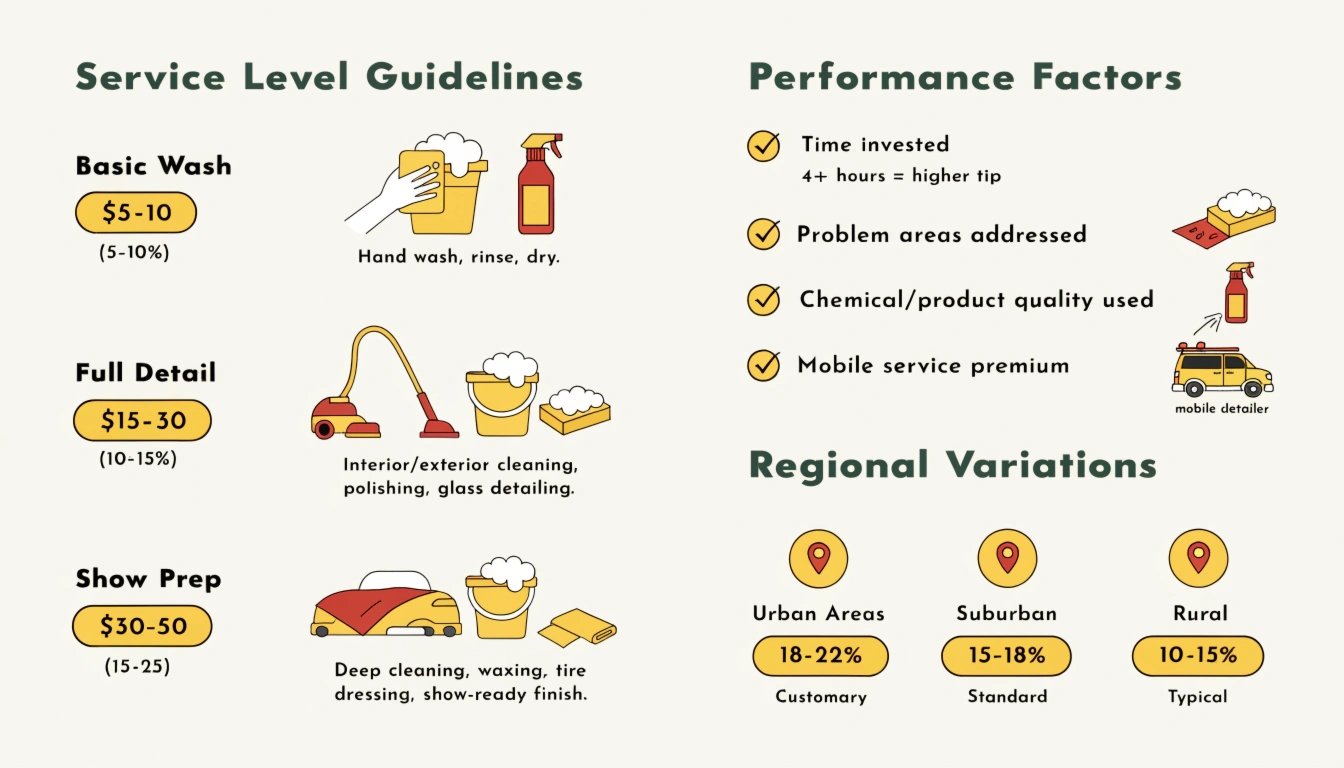
Service Level Guidelines
- Basic Wash: $5-10 (5-10%)
- Full Detail: $15-30 (10-15%)
- Show Prep: $30-50 (15-25%)
Performance Factors
✓ Time invested (4+ hours = higher tip)
✓ Problem areas addressed
✓ Chemical/product quality used
✓ Mobile service premium
Regional Variations
- Urban Areas: 18-22% customary
- Suburban: 15-18% standard
- Rural: 10-15% typical
Tip Calculation Examples:
| Service Cost | Standard Tip | Exceptional Tip | Mobile Surcharge |
|---|---|---|---|
| $100 | $15 | $25 | +$5 |
| $200 | $30 | $50 | +$10 |
| $350 | $50 | $75 | +$15 |
| $500 | $75 | $100 | +$20 |
Do You Need Certification to Detail Cars?
Industry credential reality:
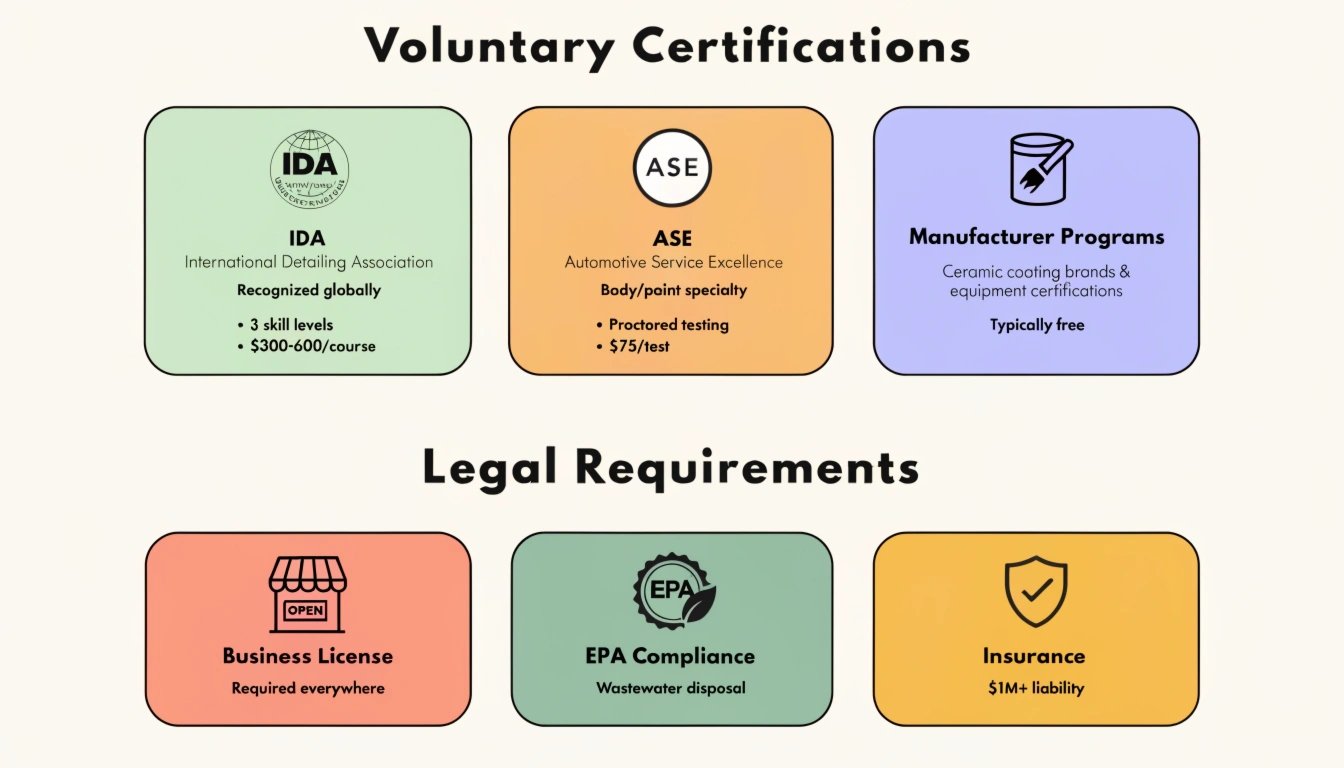
Voluntary Certifications
-
IDA (International Detailing Association)
- Recognized globally
- 3 skill levels available
- $300-600 per course
-
ASE (Automotive Service Excellence)
- Body/paint specialty
- Proctored testing
- $75 per test
-
Manufacturer Programs
- Ceramic coating brands
- Equipment certifications
- Typically free
Legal Requirements
- Business License: Required everywhere
- EPA Compliance: Wastewater disposal
- Insurance: Minimum $1M liability
Training Investment Comparison:
| Program | Cost | Duration | Recognition Value |
|---|---|---|---|
| IDA | $500 | 2 days | High |
| ASE | $225 | 1 day | Medium |
| Manufacturer | $0 | 4 hours | Brand-specific |
| College | $2,500 | 12 weeks | Limited |
What Do I Need for Basic Car Detailing?
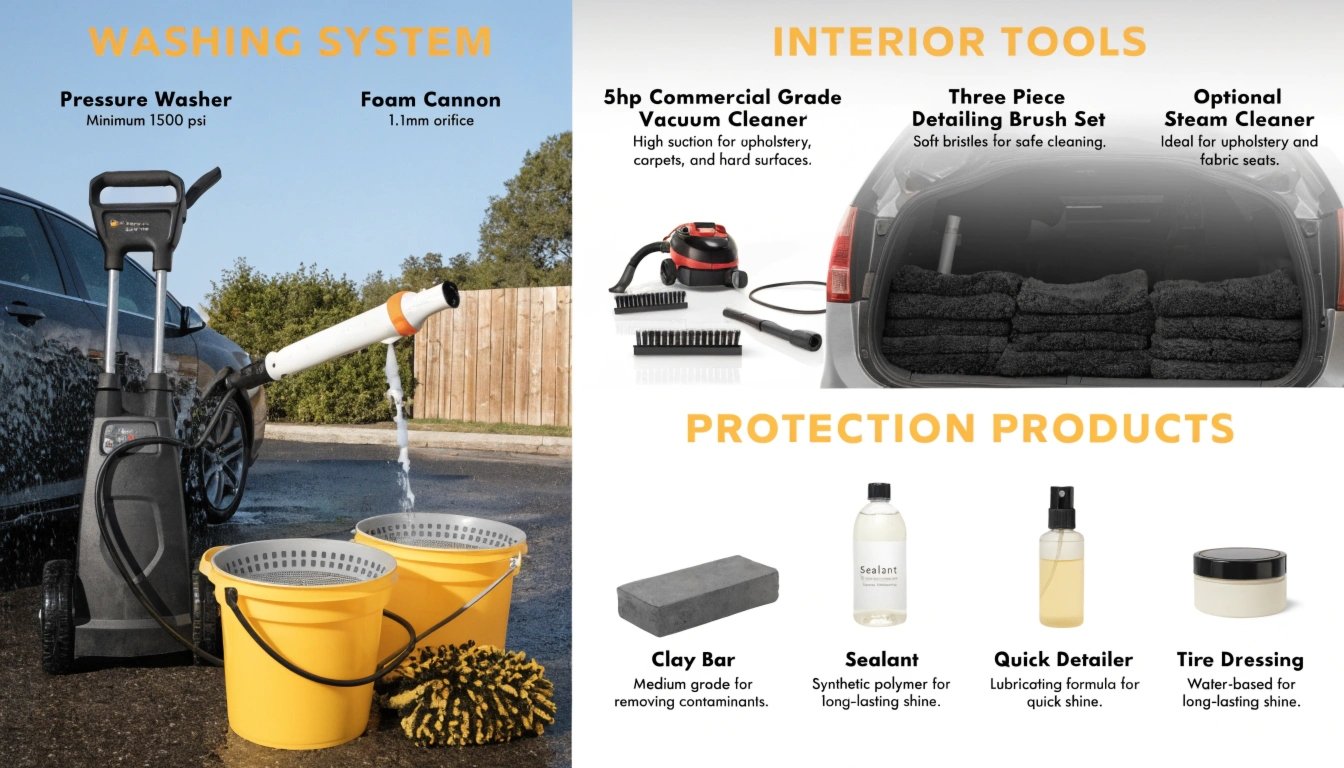
Entry-level essential kit ($300-500):
Washing System
- Pressure Washer: 1500 psi minimum
- Foam Cannon: 1.1mm orifice
- Two Buckets: Grit guards required
- Wash Mitt: Microfiber chenille
Interior Tools
- Vacuum: 5hp commercial grade
- Brushes: 3pc detailing set
- Steamer: Optional but recommended
- Microfibers: 10+ plush towels
Protection Products
- Clay Bar: Medium grade
- Sealant: Synthetic polymer
- Quick Detailer: Lubricating formula
- Tire Dressing: Water-based
Phase-by-Phase Requirements:
| Stage | Must-Have | Nice-to-Have | Pro-Grade |
|---|---|---|---|
| Washing | 2 buckets | Foam cannon | Deionized system |
| Debris Removal | Clay mitt | Iron remover | Paint thickness gauge |
| Correction | Hand polish | DA polisher | Rotary buffer |
| Protection | Spray wax | Ceramic coating | Infrared cure lamps |
Advanced Techniques for Better Results
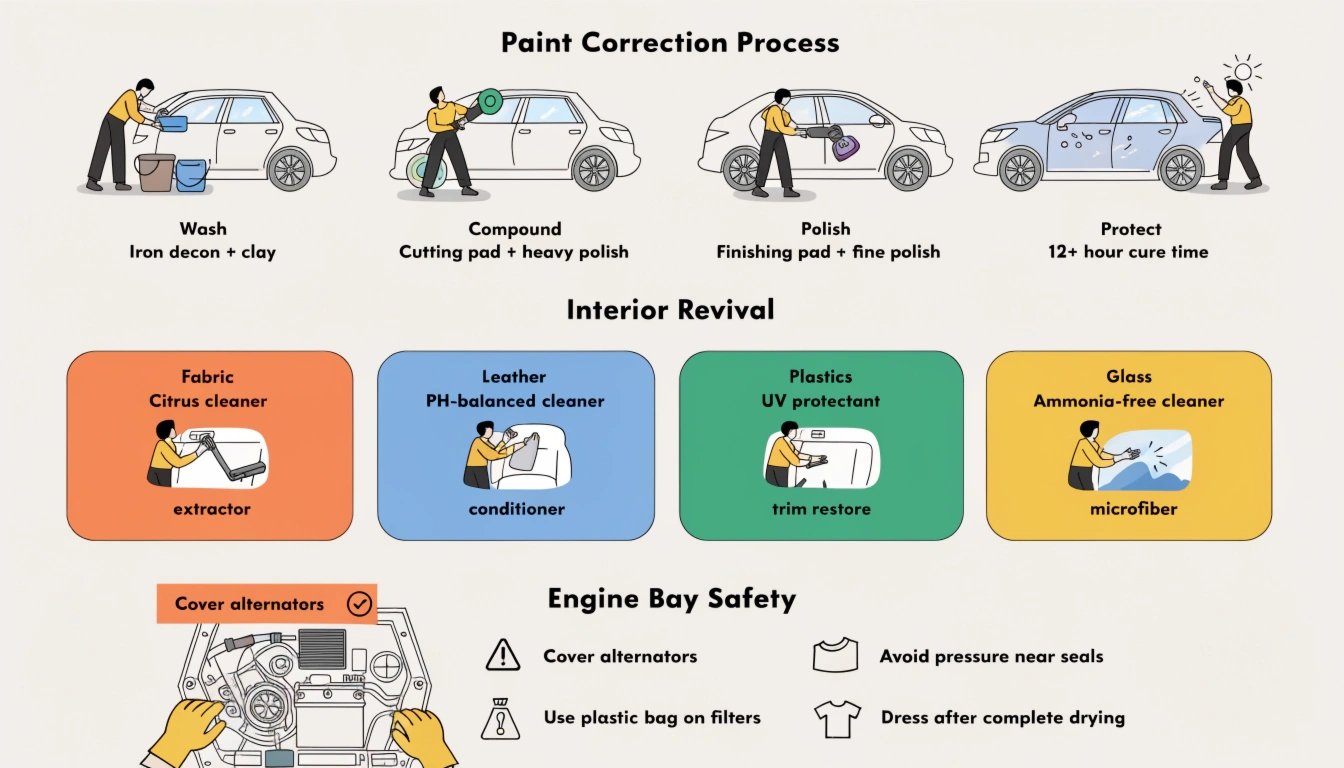
Paint Correction Process
- Wash (Iron decon + clay)
- Compound (Cutting pad + heavy polish)
- Polish (Finishing pad + fine polish)
- Protect (12+ hour cure time)
Interior Revival Steps
- Fabric: Citrus cleaner + extractor
- Leather: PH-balanced cleaner + conditioner
- Plastics: UV protectant + trim restore
- Glass: Ammonia-free cleaner + microfiber
Engine Bay Safety
✓ Cover alternators
✓ Avoid pressure near seals
✓ Use plastic bag on filters
✓ Dress after complete drying
Time Investment Breakdown:
| Vehicle Size | Basic Detail | Full Detail | Show Prep |
|---|---|---|---|
| Compact | 2-3 hours | 4-6 hours | 8-10 hours |
| Sedan | 3-4 hours | 6-8 hours | 10-12 hours |
| SUV | 4-5 hours | 8-10 hours | 12-15 hours |
| Truck | 5-6 hours | 10-12 hours | 15-20 hours |
Conclusion
Professional-grade detailing requires specialized tools (pressure washer, polisher, extractor), quality chemicals (pH-balanced soaps, ceramic coatings), and 20-30 hours of practice to master techniques. While beginners can achieve good results with a $300 starter kit, show-quality finishes demand $2,000+ in equipment and formal training. For most owners, investing in premium washes every 3-4 months with DIY maintenance in-between delivers optimal value and protection.