Why Do Microfiber Towels Smell?
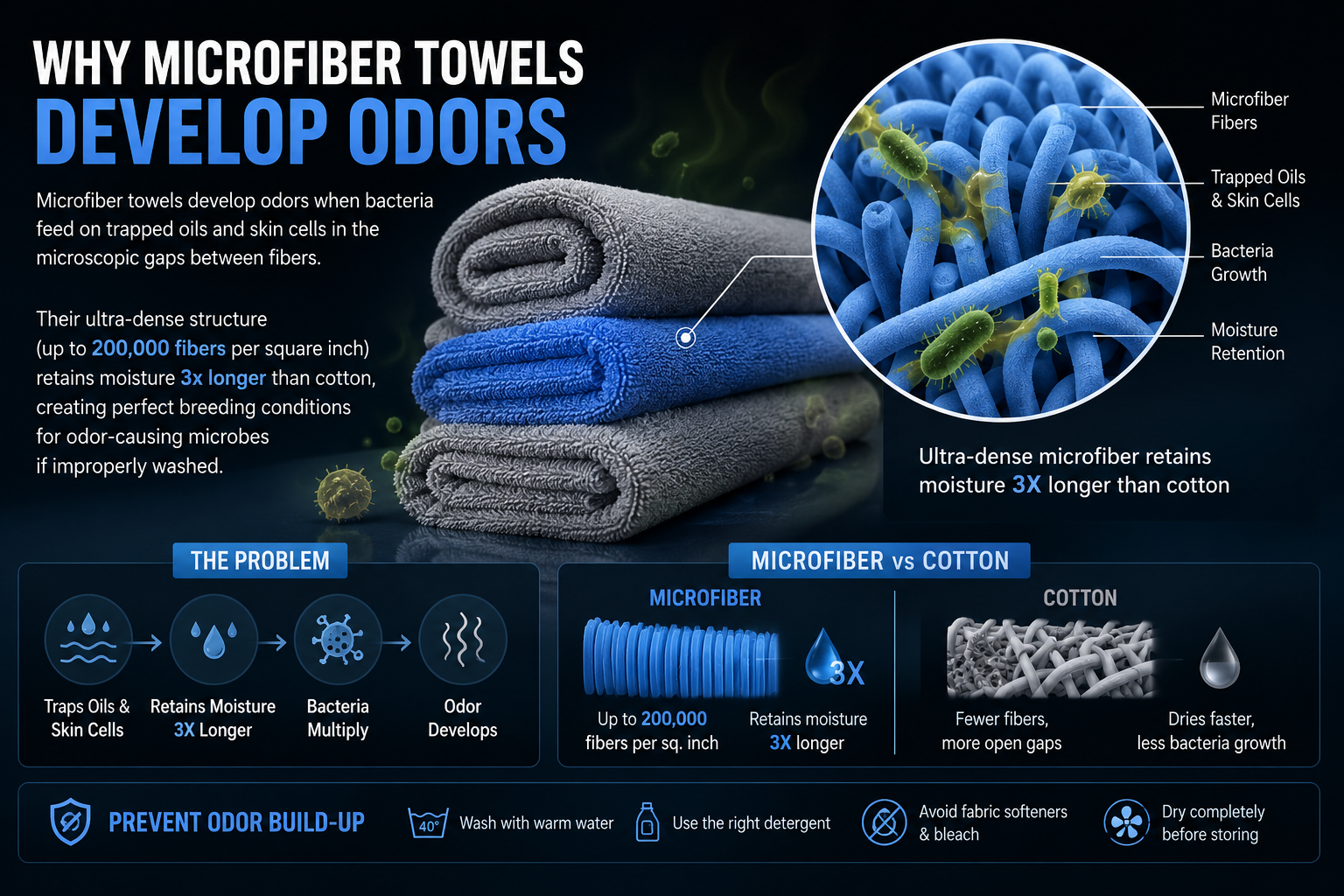
That musty odor coming from your microfiber towels isn't just unpleasant - it's a warning sign of bacterial colonies multiplying in the tiny spaces between synthetic fibers. Understanding the science behind the smell helps prevent it.
Microfiber towels develop odors when bacteria feed on trapped oils and skin cells in the microscopic gaps between fibers - their ultra-dense structure (up to 200,000 fibers per square inch) retains moisture 3x longer than cotton, creating perfect breeding conditions for odor-causing microbes if improperly washed.
The good news? With proper care, you can eliminate smells permanently. Here's exactly how professionals maintain fresh microfiber.
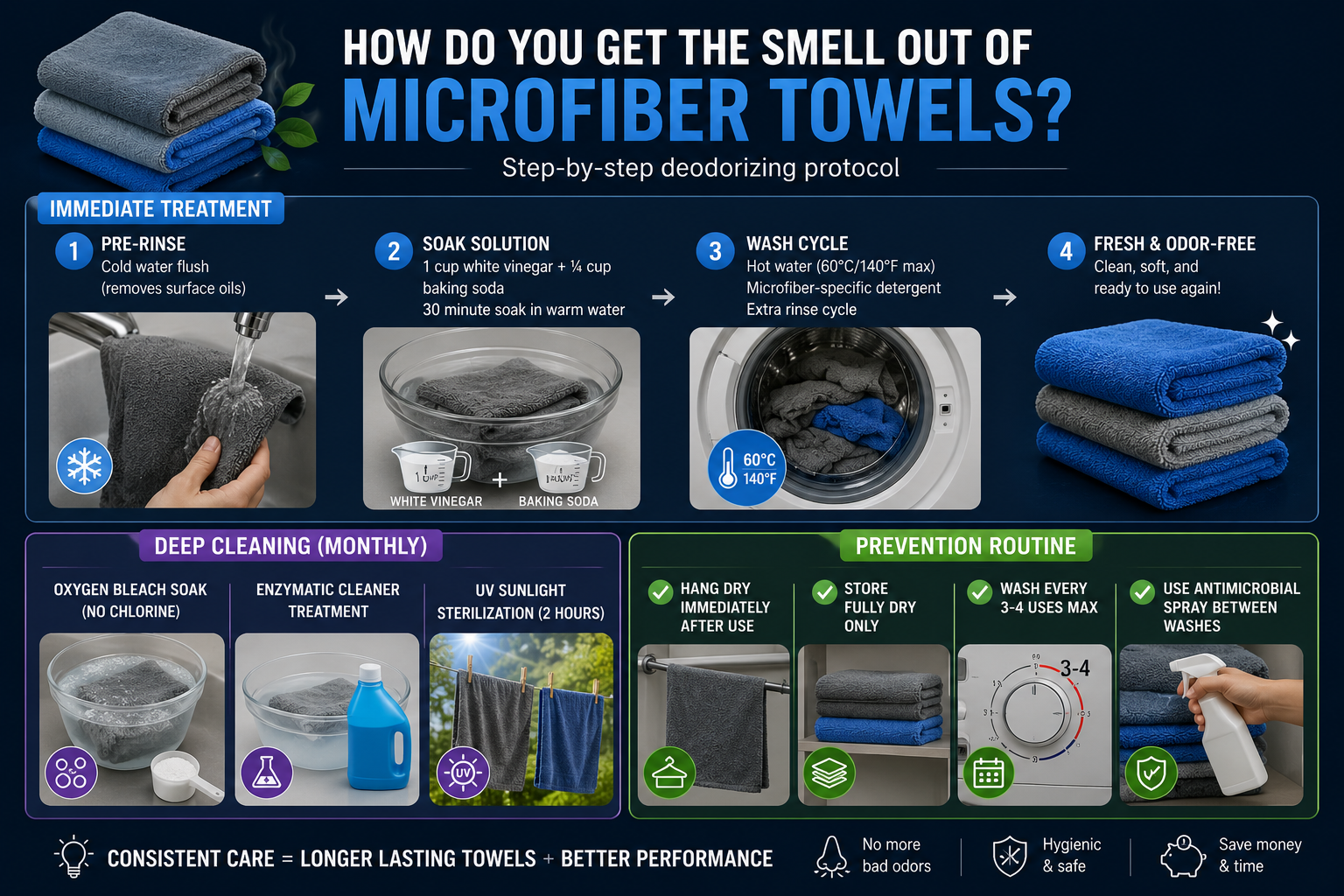
How Do You Get the Smell Out of Microfiber Towels?
Step-by-step deodorizing protocol:
Immediate Treatment:
- Pre-rinse: Cold water flush (removes surface oils)
- Soak Solution:
- 1 cup white vinegar + ¼ cup baking soda
- 30 minute soak in warm water
- Wash Cycle:
- Hot water (60°C/140°F max)
- Microfiber-specific detergent
- Extra rinse cycle
Deep Cleaning (Monthly):
- Oxygen bleach soak (no chlorine)
- Enzymatic cleaner treatment
- UV sunlight sterilization (2 hours)
Prevention Routine:
✓ Hang dry immediately after use
✓ Store fully dry only
✓ Wash every 3-4 uses max
✓ Use antimicrobial spray between washes
Wash Cycle Comparison:
| Method | Odor Removal | Fiber Protection | Cost |
|---|---|---|---|
| Vinegar Soak | 85% | High | $0.25/load |
| Bleach Wash | 95% | Low | $0.50/load |
| Enzyme Cleaner | 90% | Medium | $1.00/load |
| Dry Cleaning | 70% | High | $5.00/load |
When Should You Throw Out Microfiber Towels?
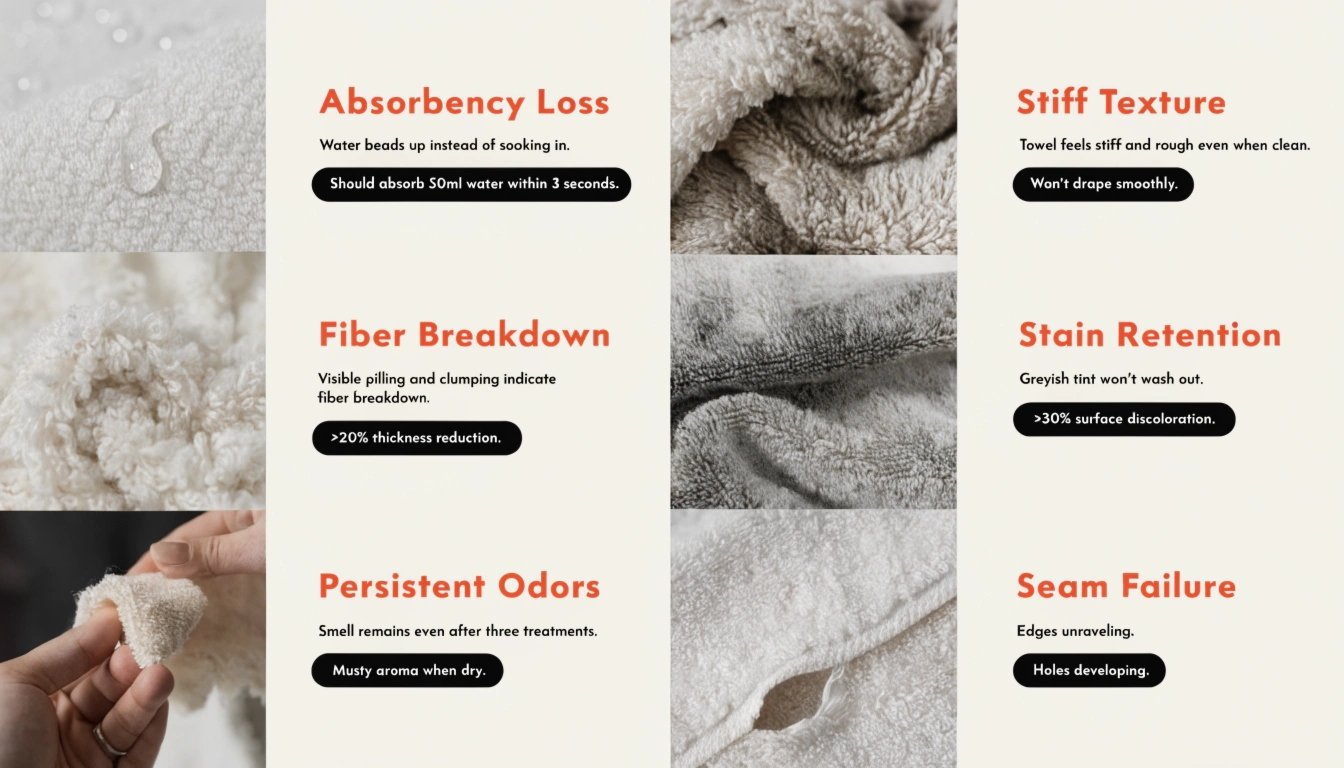
Six telltale signs of retirement:
-
Absorbency Loss:
- Water beads instead of soaking in
- Test with 50ml water (should absorb in <3 sec)
-
Fiber Breakdown:
- Visible pilling/clumping
-
20% thickness reduction
-
Persistent Odors:
- Smell remains after 3 treatments
- Musty aroma when dry
-
Stiff Texture:
- Rough feel even when clean
- Won't drape smoothly
-
Stain Retention:
- Greyish tint won't wash out
-
30% surface discoloration
-
Seam Failure:
- Edges unraveling
- Holes developing
Lifespan Guide:
| Use Case | Expected Lifespan | Replacement Cost |
|---|---|---|
| Auto Detailing | 6-9 months | $8-12/towel |
| House Cleaning | 1-2 years | $5-8/towel |
| Personal Care | 3-4 years | $10-20/towel |
| Industrial | 3-6 months | $15-30/towel |
What Are the Disadvantages of Microfiber Towels?
Seven often-overlooked drawbacks:
-
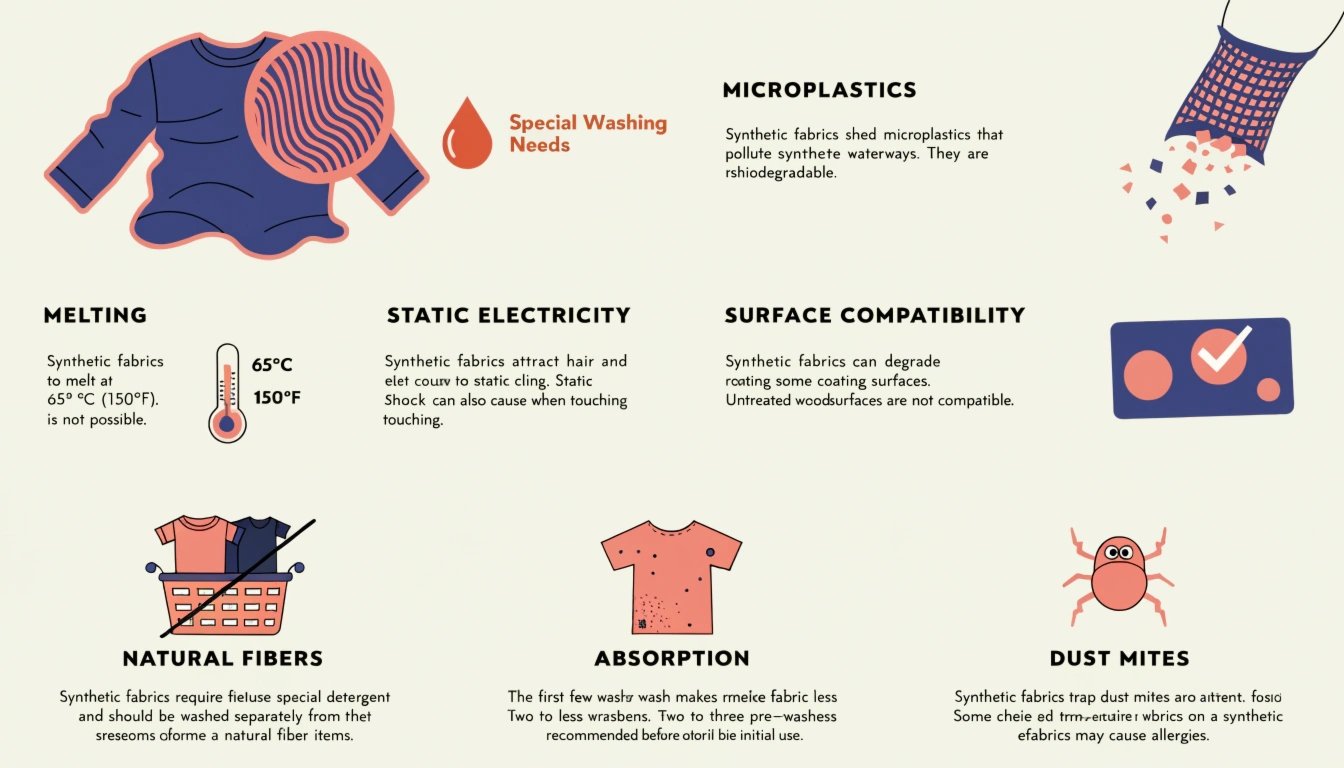
Special Washing Needs
- Separate from natural fibers
- Requires specific detergents
-
Heat Damage Risk
- Melts at 65°C (150°F)
- No ironing possible
-
Static Cling Issues
- Attracts pet hair/lint
- Can shock users
-
Environmental Impact
- Sheds microplastics
- Non-biodegradable
-
Surface Compatibility
- Some coatings degrade
- Not for untreated wood
-
Initial Performance
- Requires 2-3 pre-washes
- First uses less absorbent
-
Allergy Potential
- Traps dust mites
- Some chemical treatments
Trade-off Analysis:
| Feature | Advantage | Disadvantage |
|---|---|---|
| Absorbency | Holds 7x weight | Slow drying |
| Durability | 300+ washes | Plastic waste |
| Cleaning Power | Chemical-free | Special care |
| Texture | Scratch-free | Static prone |
| Cost | Long-term savings | High upfront |
Are You Not Supposed to Wash Microfiber Towels?
Critical washing rules:
Do This:
✅ Wash separately (first 10 washes)
✅ Use warm water (40-60°C)
✅ Mild detergents (pH neutral)
✅ Air dry or low heat
✅ Wash every 3-4 uses
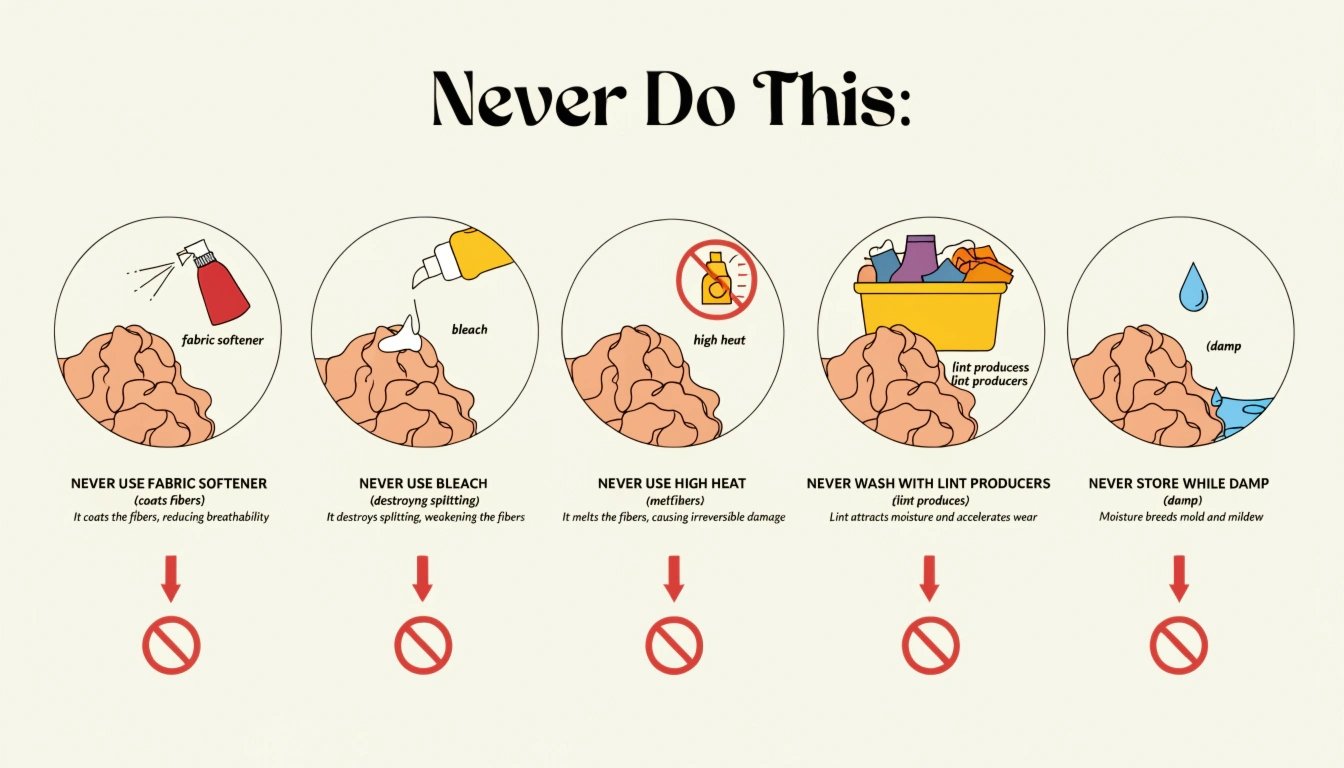
Never Do This:
❌ Fabric softener (coats fibers)
❌ Bleach (destroys splitting)
❌ High heat (melts fibers)
❌ Wash with lint producers
❌ Store while damp
Washing Frequency Guide:
| Usage | Ideal Wash Cycle | Max Uses Between Washes |
|---|---|---|
| Car Detailing | After every use | 1 |
| Bath Towels | Every 3 days | 3 |
| Gym Towels | Each session | 1 |
| Cleaning Rags | Per room | 2 |
| Glass Cleaning | Immediately | 0 |
Microfiber Maintenance Schedule
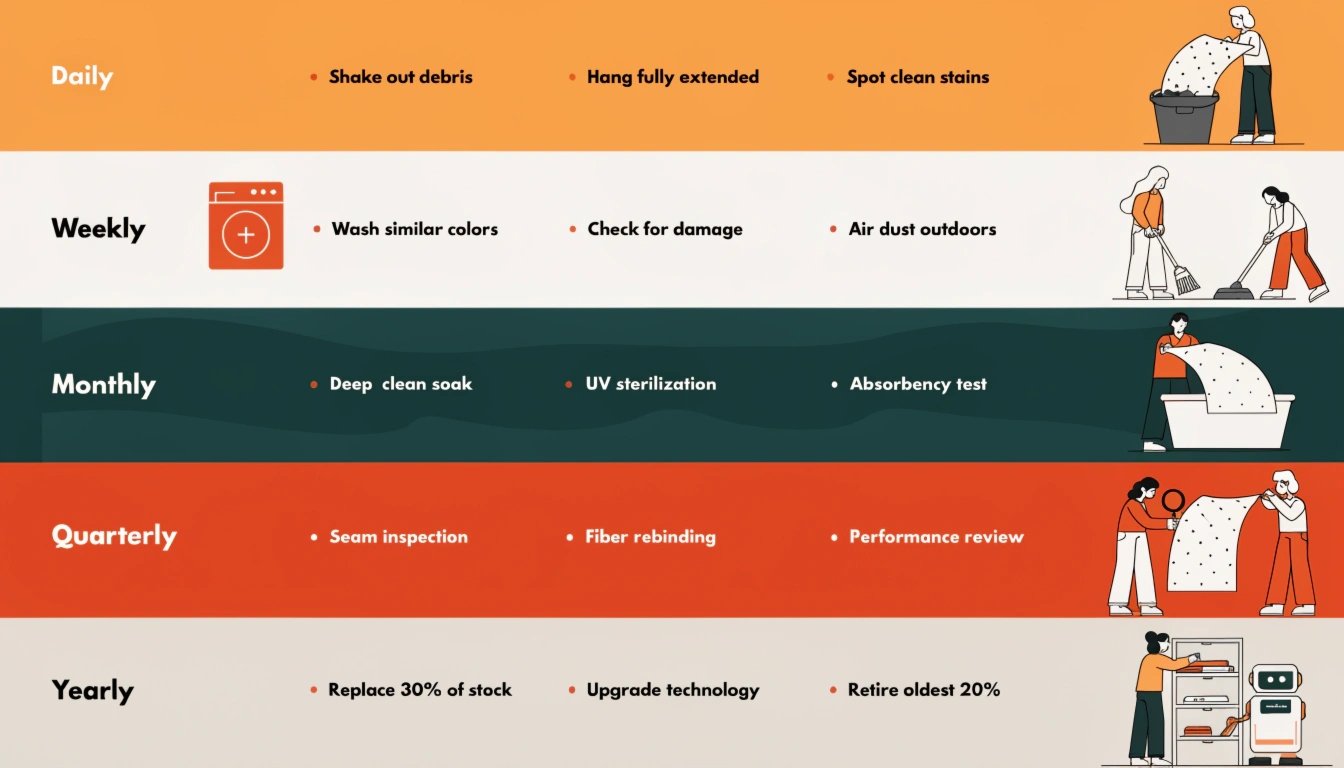
Professional-grade care routine:
Daily:
- Shake out debris
- Hang fully extended
- Spot clean stains
Weekly:
- Wash similar colors
- Check for damage
- Air dust outdoors
Monthly:
- Deep clean soak
- UV sterilization
- Absorbency test
Quarterly:
- Seam inspection
- Fiber rebinding
- Performance review
Yearly:
- Replace 30% of stock
- Upgrade technology
- Retire oldest 20%
Cost of Ownership:
| Year | Care Costs | Replacement | Total |
|---|---|---|---|
| 1 | $15 | $20 | $35 |
| 2 | $18 | $25 | $43 |
| 3 | $20 | $30 | $50 |
| 4 | $25 | $40 | $65 |
| 5 | $30 | $50 | $80 |
Conclusion
Microfiber odors stem from bacterial growth in their dense fibers - combat this with vinegar washes (monthly), proper drying (immediately), and timely replacement (every 2-3 years). Avoid fabric softener and heat to maintain peak performance from these highly effective but demanding textiles.