Skip to content
Can You Clean Your Camera Lens with a Microfiber Cloth?
That dreaded moment when you spot dust and smudges on your expensive camera lens - should you risk using a microfiber cloth? The answer depends on the fiber quality and your technique.
Premium 250-300 GSM microfiber cloths specifically designed for optics are absolutely safe for camera lenses when used correctly. These ultra-fine (0.3 denier) polyester/polyamide blend cloths gently lift dust and oils without scratching when employed with proper circular motions from center to edge.
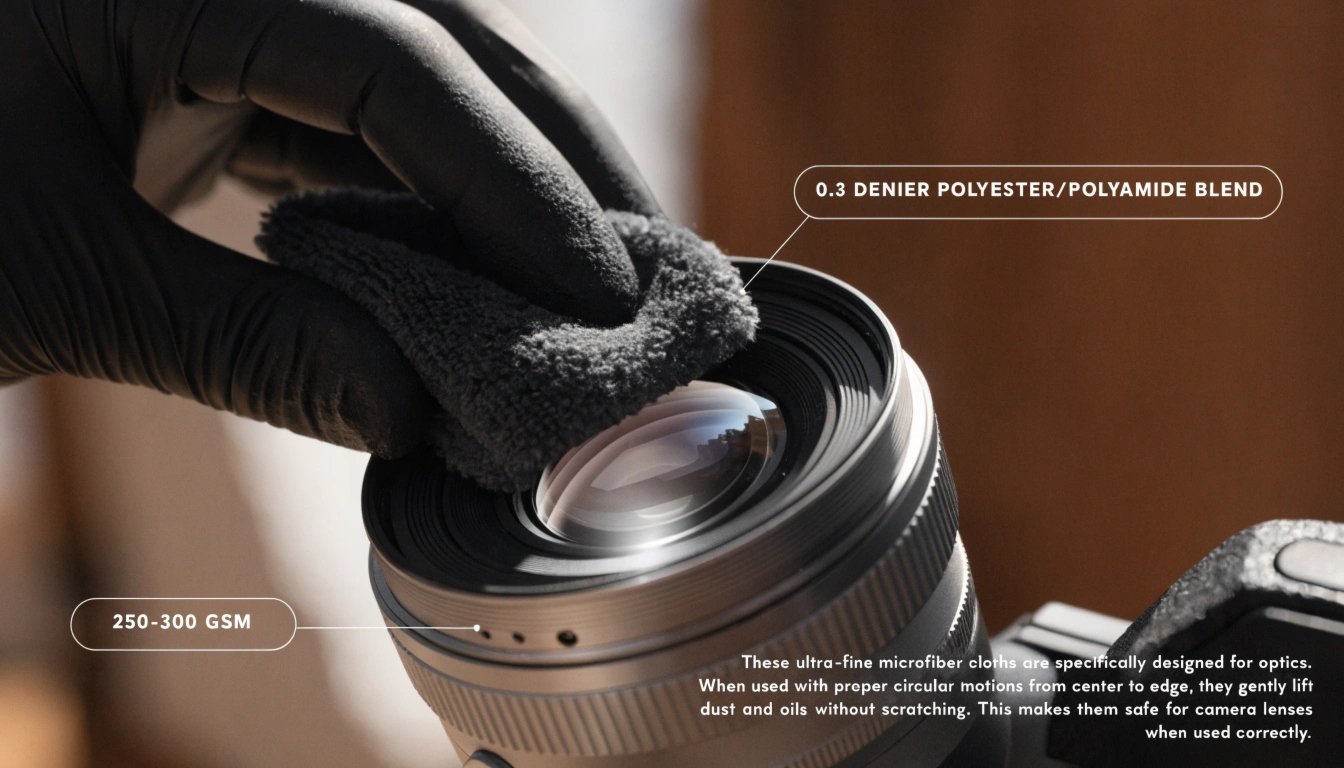
However, not all microfiber performs equally. Here's how professionals maintain flawless optics without damage.
Is It Safe to Use Microfiber Cloth on Camera Lenses?
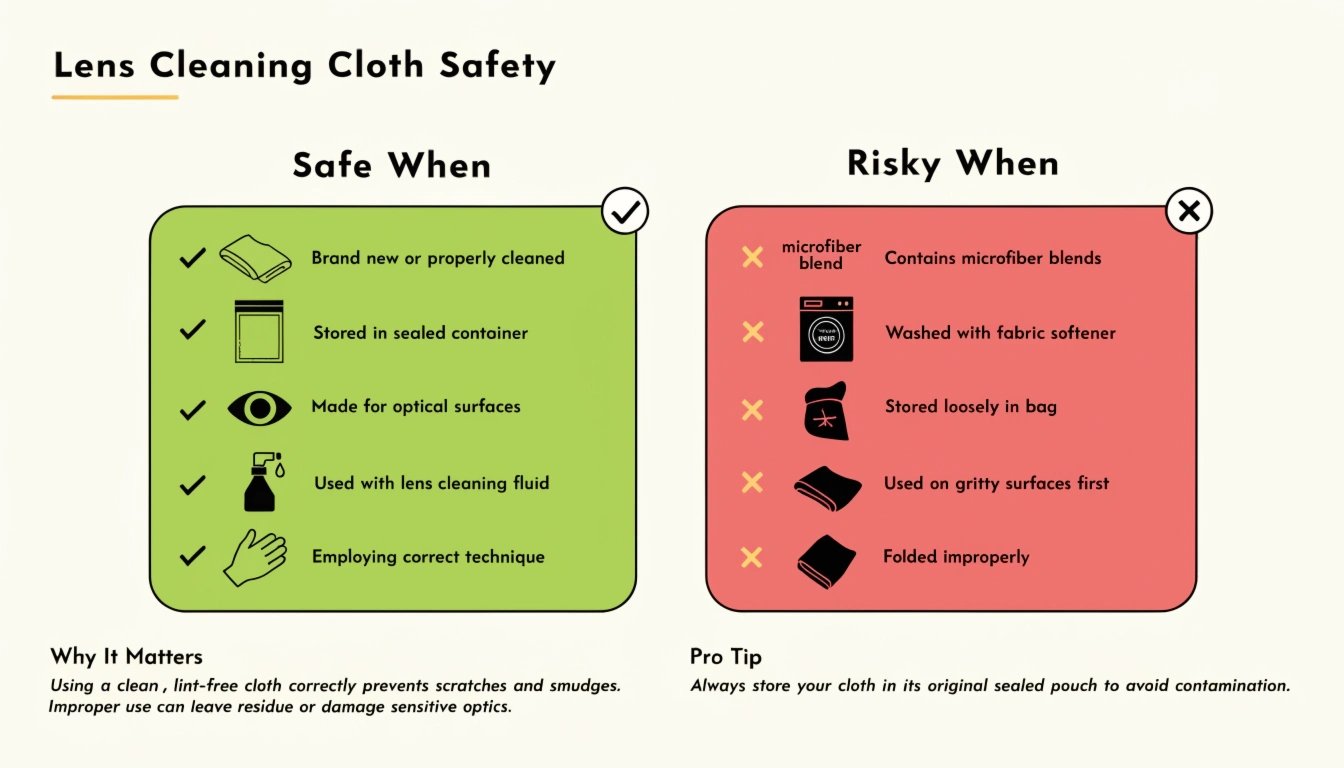
Microfiber safety depends on these factors:
Safe When:
✓ Brand new or properly cleaned
✓ Stored in sealed container
✓ Made for optical surfaces
✓ Used with lens cleaning fluid
✓ Employing correct technique
Risky When:
× Contains microfiber blends
× Washed with fabric softener
× Stored loosely in bag
× Used on gritty surfaces first
× Folded improperly
Lens Cleaning Cloth Grading:
| Grade | Fiber Denier | GSM | Safe For | Our Pick |
|---|---|---|---|---|
| Industrial | 1.2 | 400 | Body Only | Not Recommended |
| Standard | 0.5 | 350 | UV Filters | Basic Care |
| Optical | 0.3 | 250 | Lens Elements | Pro Optic |
| Premium | 0.1 | 200 | Coatings | Master Nano |
What Is the Best Thing to Clean a Camera Lens With?
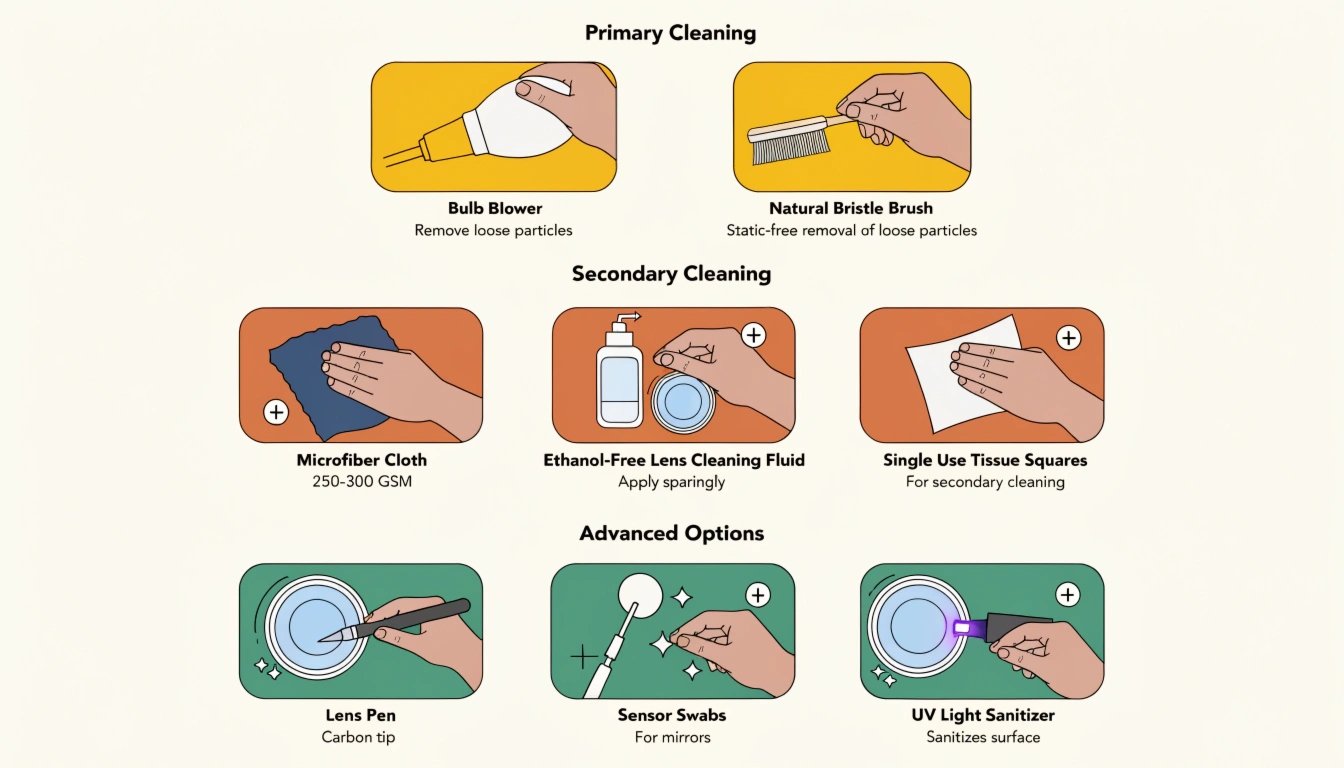
Professional optic cleaning kit:
-
Primary Cleaning:
- Bulb blower (remove loose particles)
- Natural bristle brush (static-free)
-
Secondary Cleaning:
- Microfiber cloth (250-300 GSM)
- Lens cleaning fluid (ethanol-free)
- Tissue squares (single use)
-
Advanced Options:
- Lens pen (carbon tip)
- Sensor swabs (for mirrors)
- UV light sanitizer
Cleaning Solution Comparison:
| Type | Pros | Cons | Best For |
|---|---|---|---|
| Isopropyl | Evaporates quickly | Can strip coatings | Glass elements |
| Ethanol | Safe on plastics | Leaves residue | Polycarbonate |
| Commercial | Balanced formula | Expensive | Multi-coatings |
| Distilled Water | Non-chemical | Poor on oils | Light cleaning |
What Cloth Can I Use to Clean My Camera Lens?
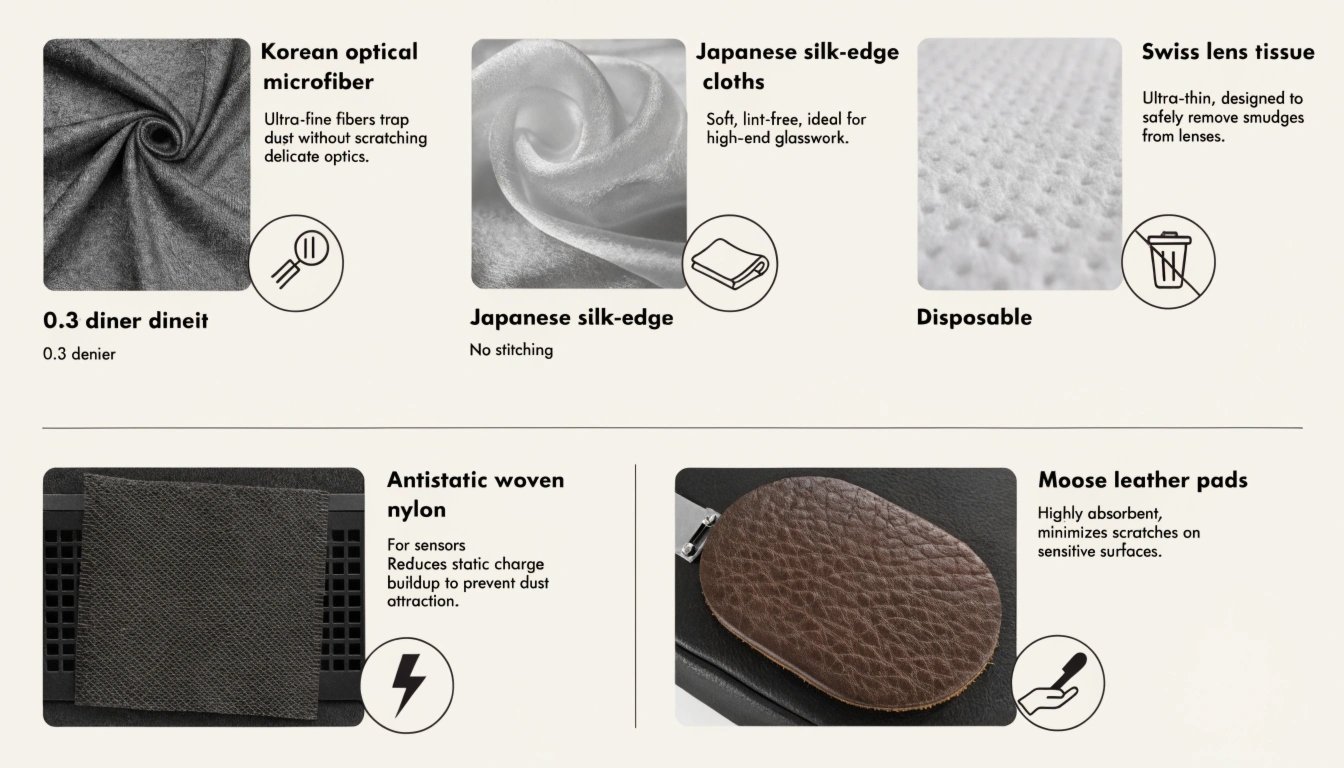
Approved lens-safe materials:
Top Choices:
- Korean optical microfiber (0.3 denier)
- Japanese silk-edge cloths (no stitching)
- Swiss lens tissue (disposable)
- Antistatic woven nylon (for sensors)
- Moose leather pads (for professionals)
Avoid:
- Paper towels (wood fibers)
- Cotton t-shirts (lint)
- Coffee filters (abrasive)
- Regular cleaning rags (grit)
- Synthetic blends (scratch)
Cloth Performance Matrix:
| Material | Scratch Risk | Absorbency | Reusability | Cost |
|---|---|---|---|---|
| Microfiber | Lowest | High | 50+ uses | $$ |
| Lens Tissue | Low | Medium | Single | $ |
| Leather | Medium | Low | 100+ | $$$ |
| Nylon | Medium | High | 30 uses | $$ |
| Chamois | High | High | 20 uses | $ |
Do Microfiber Cloths Scratch Lenses?
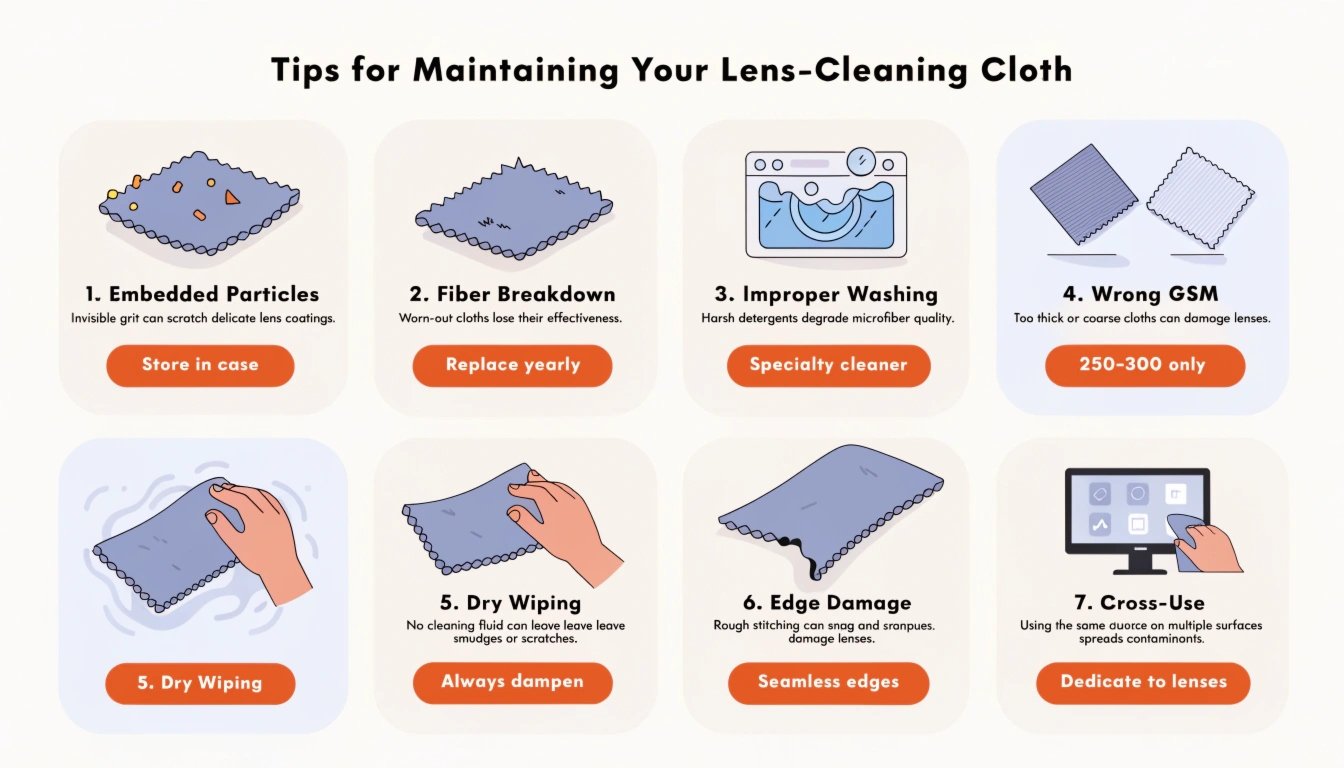
Seven causes of microfiber scratches:
-
Embedded Particles:
- Invisible grit in fibers
- Solution: Store in case
-
Fiber Breakdown:
- Worn-out cloths
- Solution: Replace yearly
-
Improper Washing:
- Harsh detergents
- Solution: Specialty cleaner
-
Wrong GSM:
- Too thick/coarse
- Solution: 250-300 only
-
Dry Wiping:
- No cleaning fluid
- Solution: Always dampen
-
Edge Damage:
- Rough stitching
- Solution: Seamless edges
-
Cross-Use:
- Used on other surfaces
- Solution: Dedicate to lenses
Preventing Scratches:
| Step | Action | Importance |
|---|---|---|
| 1 | Blow air first | Critical |
| 2 | Brush loose particles | Essential |
| 3 | Apply solution to cloth | Mandatory |
| 4 | Spiral wiping motion | Required |
| 5 | Single-direction strokes | Recommended |
| 6 | Final air blow | Optional |
Professional Cleaning Technique
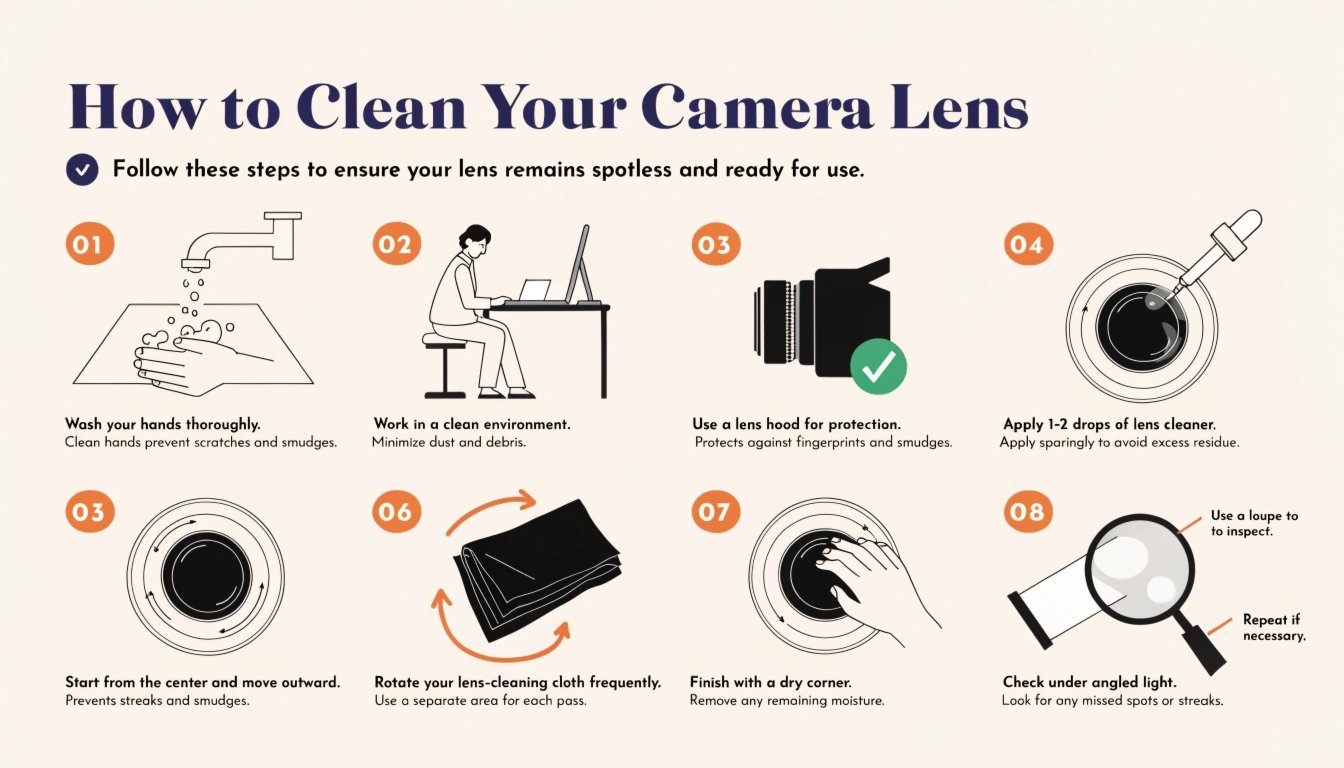
Step-by-step perfection:
-
Preparation:
- Wash hands thoroughly
- Work in clean environment
- Use lens hood for protection
-
Cleaning Process:
- Apply 1-2 drops solution
- Start from center outward
- Rotate cloth frequently
- Use separate area for each pass
- Finish with dry corner
-
Verification:
- Check under angled light
- Use loupe for inspection
- Repeat if necessary
Cleaning Frequency Guide:
| Situation | Frequency | Recommended Method |
|---|---|---|
| Professional Use | Every Shoot | Blower + Microfiber |
| Travel | Weekly | Lens Pen + Tissue |
| Storage | Monthly | Full Cleaning |
| Accidents | Immediate | Specialized Treatment |
| Humid Climate | Bi-weekly | Antifungal Wipes |
Conclusion
Quality 250-300 GSM microfiber remains the safest everyday option for camera lenses when used with proper technique - always combine with lens cleaning solution and replace cloths annually to prevent micro-scratches on expensive optics.