Struggling to choose among hundreds of microfiber options that all promise superior performance? The "best" towel depends entirely on your specific application – here’s how the pros select their tools.
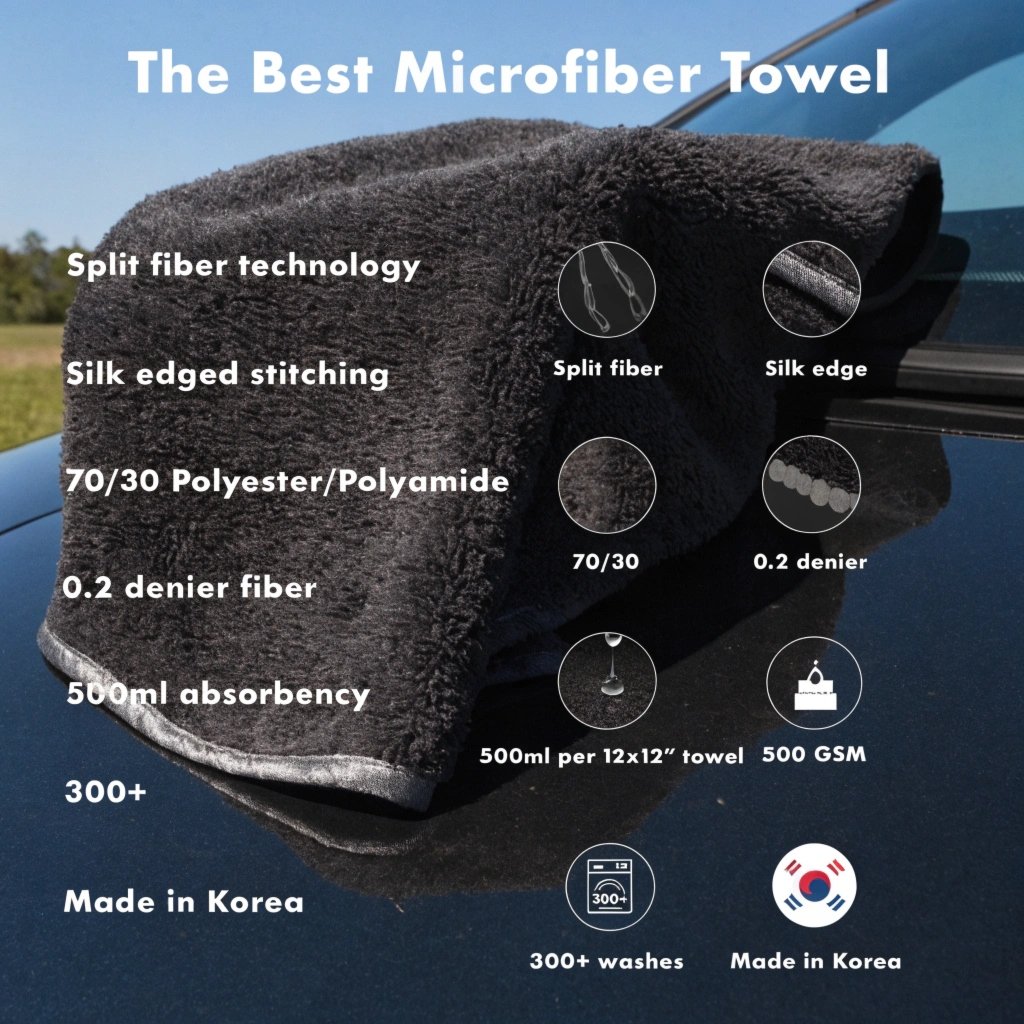
The best microfiber towel is a Korean-made 500 GSM 70/30 polyester/polyamide blend with split fibers and silk-edged stitching, offering the perfect balance of absorbency (500ml per 12x12" towel), softness (0.2 denier fibers), and durability (300+ washes) for most automotive, household, and personal care applications.
Not all GSMs and weaves perform equally. Here's your definitive guide to matching towel specs with real-world needs.
What Kind of Microfiber Towel Is Best?
Specialized towels for every purpose:
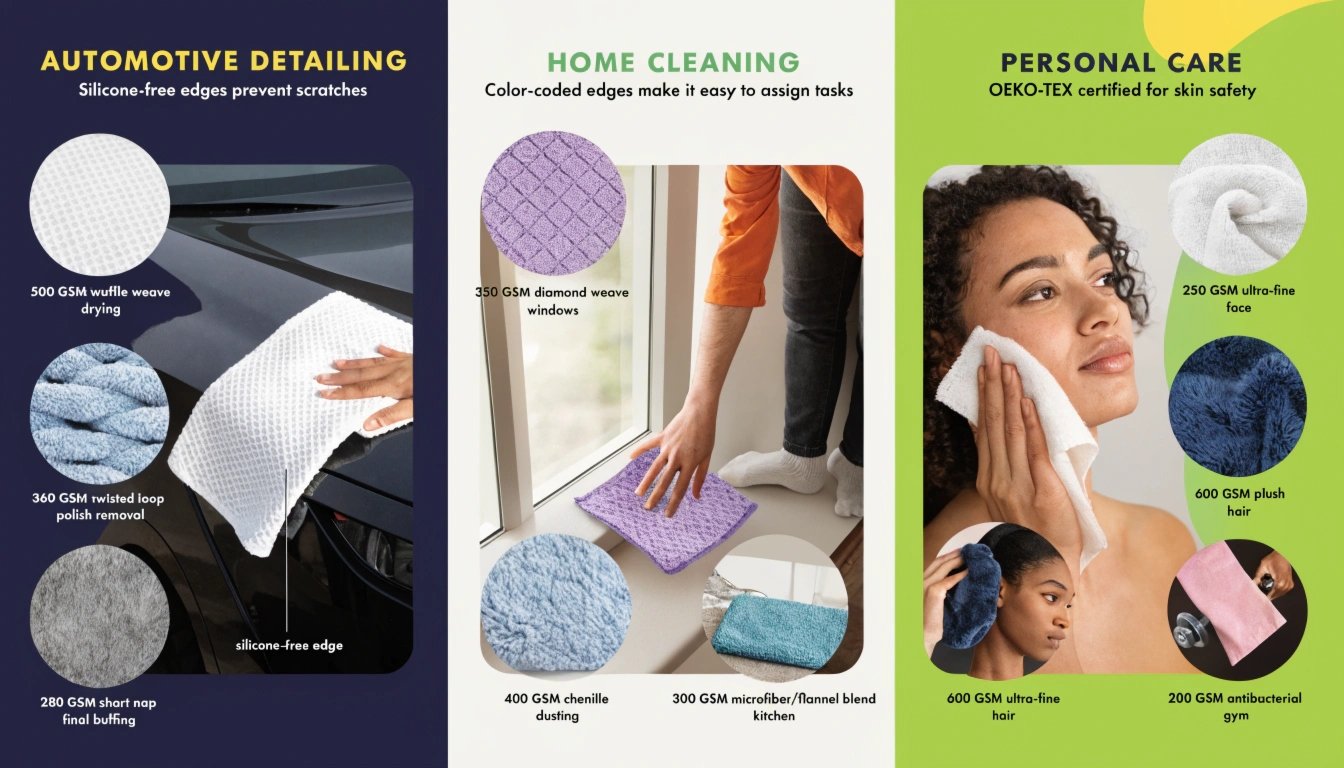
Automotive Detailing:
- 500 GSM waffle weave (drying)
- 360 GSM twisted loop (polish removal)
- 280 GSM short nap (final buffing)
- Key feature: Silicone-free edges
Home Cleaning:
- 350 GSM diamond weave (windows)
- 400 GSM chenille (dusting)
- 300 GSM microfiber/flannel blend (kitchens)
- Key feature: Color-coded edges
Personal Care:
- 250 GSM ultra-fine (face)
- 600 GSM plush (hair)
- 200 GSM antibacterial (gym)
- Key feature: OEKO-TEX certification
Performance Comparison by Use:
| Use Case | Ideal GSM | Fiber Length | Special Feature |
|---|---|---|---|
| Car Drying | 500 | 5-7mm | Water-channeling |
| Glass Cleaning | 350 | 2-3mm | Lint-free |
| Face Towel | 250 | 1-2mm | Silver ions |
| Kitchen | 400 | 3-5mm | Antibacterial |
| Dusting | 300 | 4-6mm | Electrostatic |
Which Is Better, 500 GSM or 800 GSM?
The GSM sweet spot revealed:
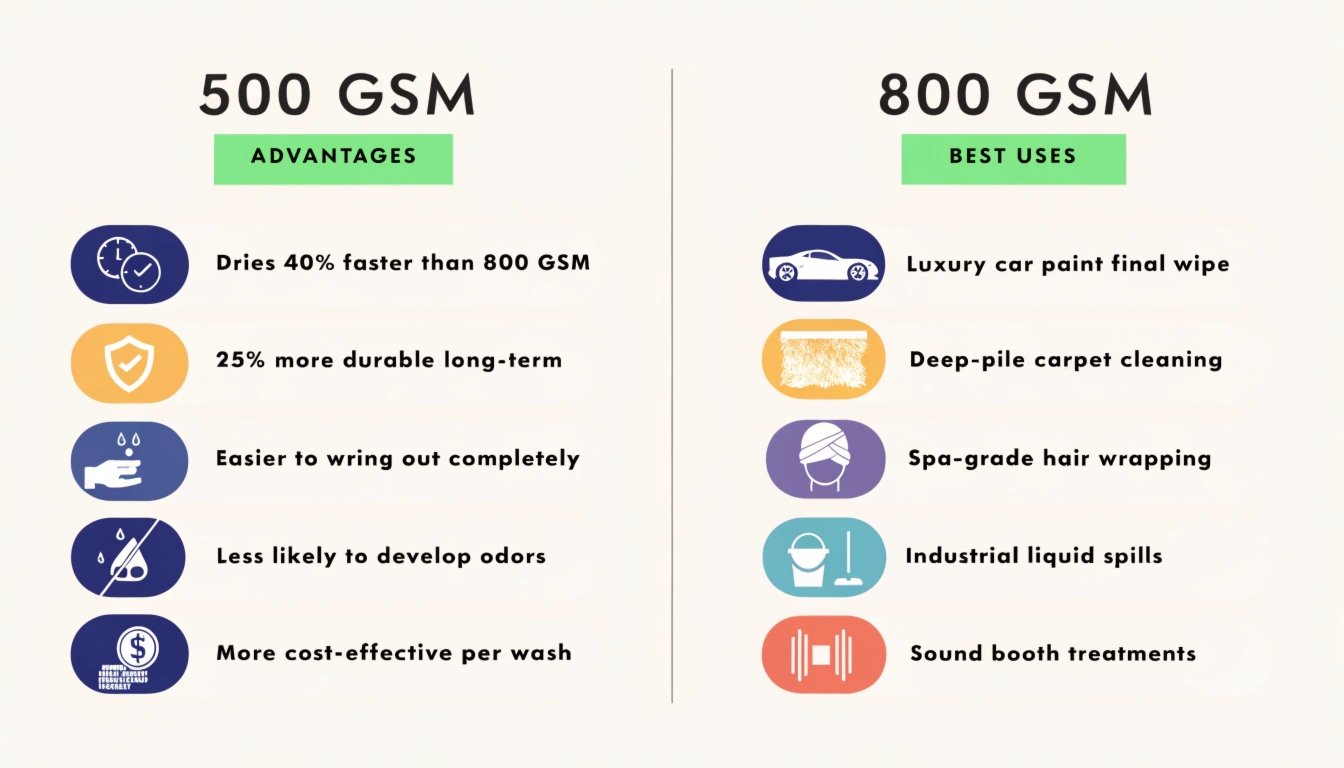
500 GSM Advantages:
- Dries 40% faster than 800 GSM
- 25% more durable long-term
- Easier to wring out completely
- Less likely to develop odors
- More cost-effective per wash
800 GSM Best Uses:
- Luxury car paint final wipe
- Deep-pile carpet cleaning
- Spa-grade hair wrapping
- Industrial liquid spills
- Sound booth treatments
GSM Performance Trade-offs:
| Metric | 500 GSM | 800 GSM |
|---|---|---|
| Absorbency | 500ml | 700ml |
| Drying Time | 35 min | 55 min |
| Wash Cycles | 300+ | 200 |
| Cost | $8-12 | $15-20 |
| Best Surface | Paint | Glass |
Who Makes the Best Microfiber Drying Towel?
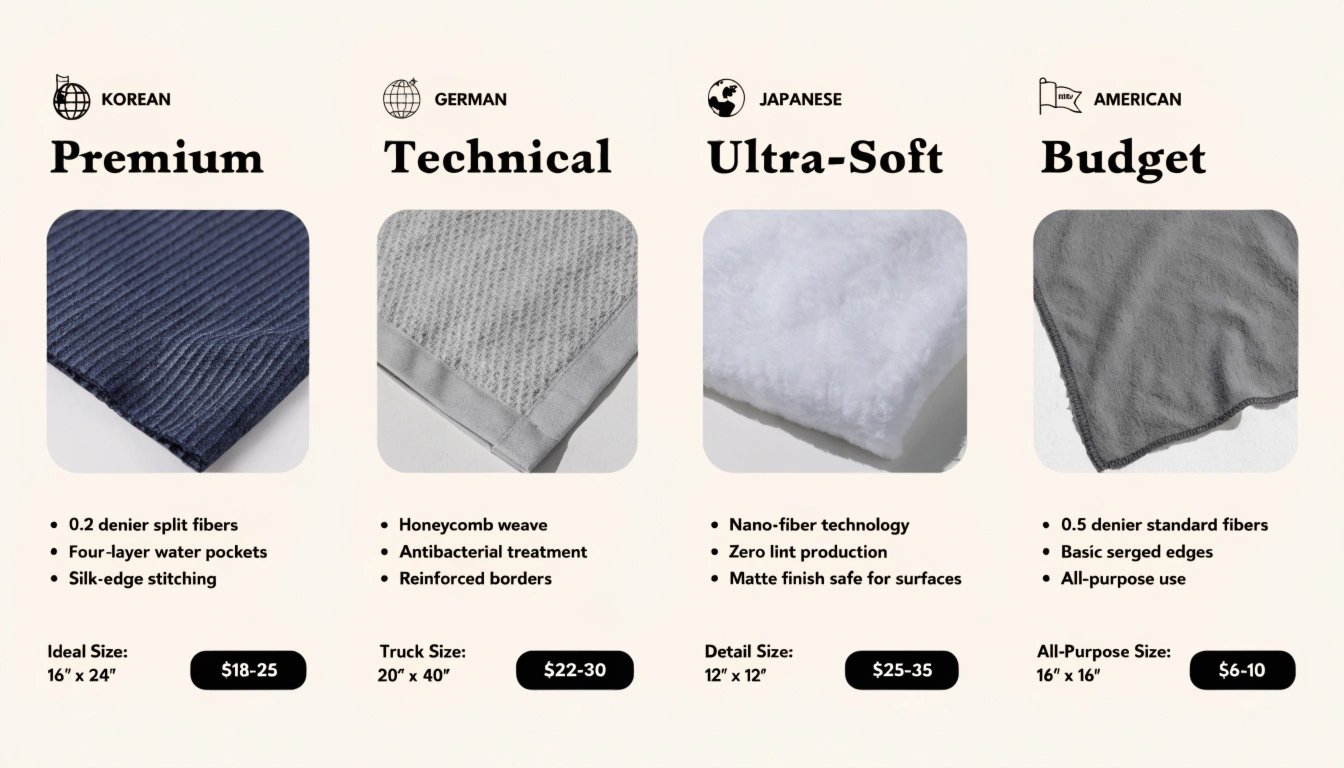
Top manufacturers compared:
-
Korean-Made (Premium):
- 0.2 denier split fibers
- Four-layer water pockets
- Silk-edge stitching
- 16" x 24" ideal size
- Cost: $18-25
-
German-Made (Technical):
- Honeycomb weave
- Antibacterial treatment
- Reinforced borders
- 20" x 40" truck size
- Cost: $22-30
-
Japanese-Made (Ultra-Soft):
- Nano-fiber technology
- Zero lint production
- Matte finish safe
- 12" x 12" detail size
- Cost: $25-35
-
American-Blended (Budget):
- 0.5 denier standard fibers
- Basic serged edges
- 16" x 16" all-purpose
- Cost: $6-10
Manufacturer Scorecard:
| Brand Origin | Absorbency | Paint Safety | Durability | Value |
|---|---|---|---|---|
| Korean | 10/10 | 10/10 | 9/10 | 8/10 |
| German | 9/10 | 9/10 | 8/10 | 7/10 |
| Japanese | 8/10 | 10/10 | 7/10 | 6/10 |
| American | 6/10 | 7/10 | 6/10 | 9/10 |
What Should I Avoid When Using Microfiber Cloths?
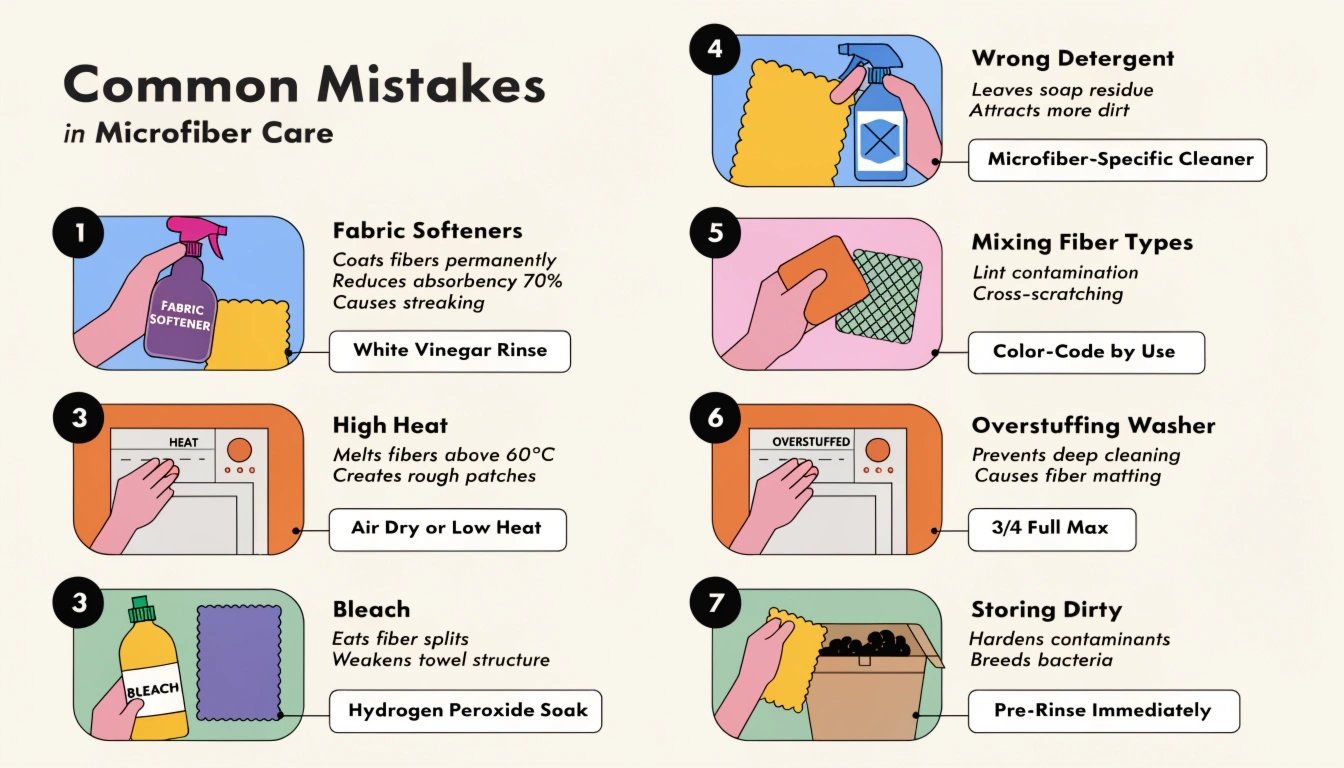
Seven deadly sins of microfiber:
-
Fabric Softeners:
- Coats fibers permanently
- Reduces absorbency 70%
- Causes streaking
- Solution: White vinegar rinse
-
High Heat:
- Melts fibers above 60°C
- Creates rough patches
- Solution: Air dry or low heat
-
Bleach:
- Eats fiber splits
- Weakens towel structure
- Solution: Hydrogen peroxide soak
-
Wrong Detergent:
- Leaves soap residue
- Attracts more dirt
- Solution: Microfiber-specific cleaner
-
Mixing Fibers:
- Lint contamination
- Cross-scratching
- Solution: Color-code by use
-
Overstuffing Washer:
- Prevents deep cleaning
- Causes fiber matting
- Solution: 3/4 full maximum
-
Storing Dirty:
- Hardens contaminants
- Breeds bacteria
- Solution: Pre-rinse immediately
Care Mistake Consequences:
| Error | Absorbency Loss | Scratch Risk | Odor Issue |
|---|---|---|---|
| Softener | 70% | High | Medium |
| High Heat | 40% | Medium | Low |
| Bleach | 90% | Severe | High |
| Wrong Soap | 50% | Medium | Medium |
| Mixing Load | 30% | High | High |
Prolonging Towel Life
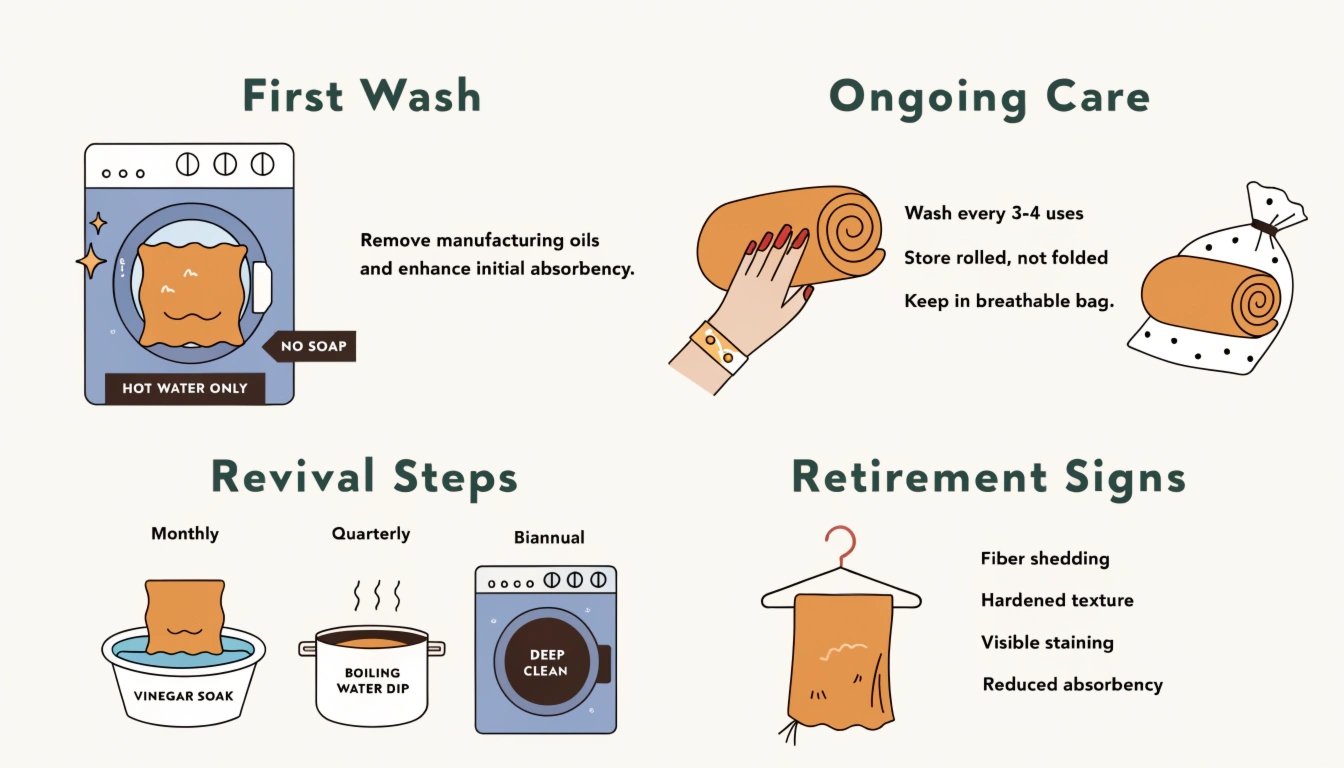
Expert maintenance routine:
-
First Wash:
- Hot water only (no soap)
- Remove manufacturing oils
- Enhance initial absorbency
-
Ongoing Care:
- Wash every 3-4 uses
- Store rolled, not folded
- Keep in breathable bag
-
Revival Steps:
- Monthly vinegar soak
- Quarterly boiling water dip
- Biannual deep clean
-
Retirement Signs:
- Fiber shedding
- Hardened texture
- Visible staining
- Reduced absorbency
Conclusion
The ideal microfiber towel combines Korean 70/30 construction with 500 GSM weight for most applications—avoid common care mistakes and match weave type to your specific needs for maximum performance and lifespan.